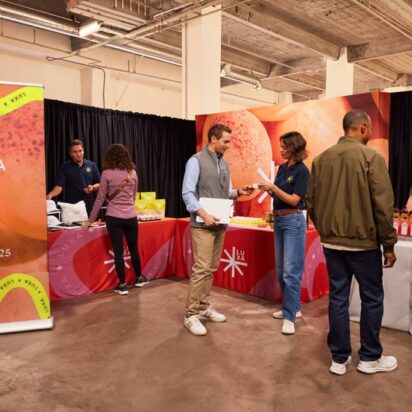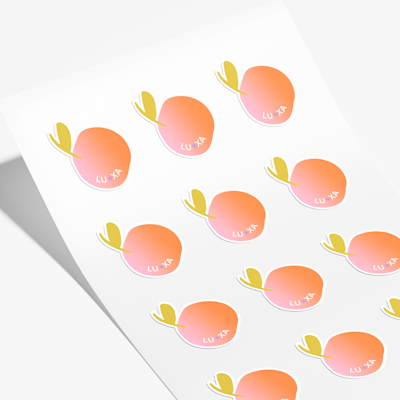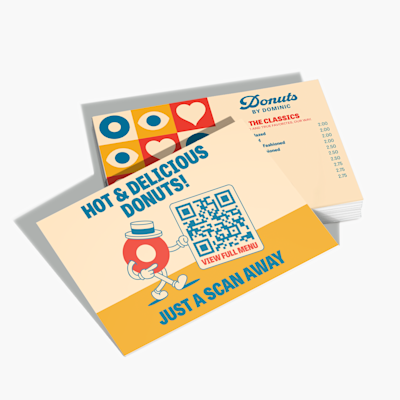
Looking to make a big impact at a trade show? The key lies in your trade show booth design. With the right combination of striking trade show banners and engaging displays, your booth can truly stand out.
Trade show booth design goes beyond aesthetics – it’s about drawing visitors in, capturing their interest and leaving a lasting impression. A well-crafted trade show booth influences how attendees perceive your brand, turning passersby into potential customers and opening doors to new business opportunities.
For small and medium-sized businesses, impressive trade show displays are a game-changer. They’re your chance to showcase products, connect with industry leaders and generate valuable leads. Dive into our guide for essential tips and tricks to captivate and convert, making sure your booth is the main event of the trade show.
- Choosing the right booth structure – inline, corner, peninsula or island – directly affects your foot traffic and budget, so match your choice to your goals before you spend anything.
- Your back wall graphic and lighting are the two highest-impact investments you can make; everything else is where you save.
- Colors shift dramatically from screen to large-scale fabric print under convention lighting, so always request a CMYK proof before your full print run.
- A modular “base” booth designed around a 10×10’ footprint can be expanded for larger spaces, saving you from a full redesign every time you exhibit.
- Digital touchpoints like QR codes and tablet sign-ups can be built seamlessly into your physical booth design and they make lead capture dramatically easier post-show.
- Measuring ROI starts before the event: Set a primary metric (leads, conversions or partnerships), then track cost per lead and attributed revenue over 90 days.
Layout and trade show booth design ideas
Stepping into a trade show can feel like walking into a carnival. Every booth is shouting for attention, and you’ve got to make sure yours stands out. Designing a booth that not only grabs attention but also keeps visitors engaged is all about striking the right balance between eye-catching design and smart functionality.
Booth structure
When it comes to trade show booth design ideas, the structure you choose lays the groundwork for everything else. Each type of booth structure – inline, corner, peninsula and island – has its advantages, and picking the right one can make a huge difference in whether you meet your trade show goals.
Inline booths
These are the most common and budget-friendly options, making them ideal for new exhibitors or smaller businesses looking to make a professional impact without breaking the bank. Inline booths (also known as linear booths) line up in a row with booths on either side. They’re compact and focus visitor attention straight ahead, suitable for straightforward presentations and displays.
Corner booths
A step up in visibility, corner booths are inline booths with an exposed end, allowing access from two sides and increasing foot traffic. These open and inviting booths are perfect for exhibitors who want a bit more space and visibility than an inline booth offers without a steep increase in cost.
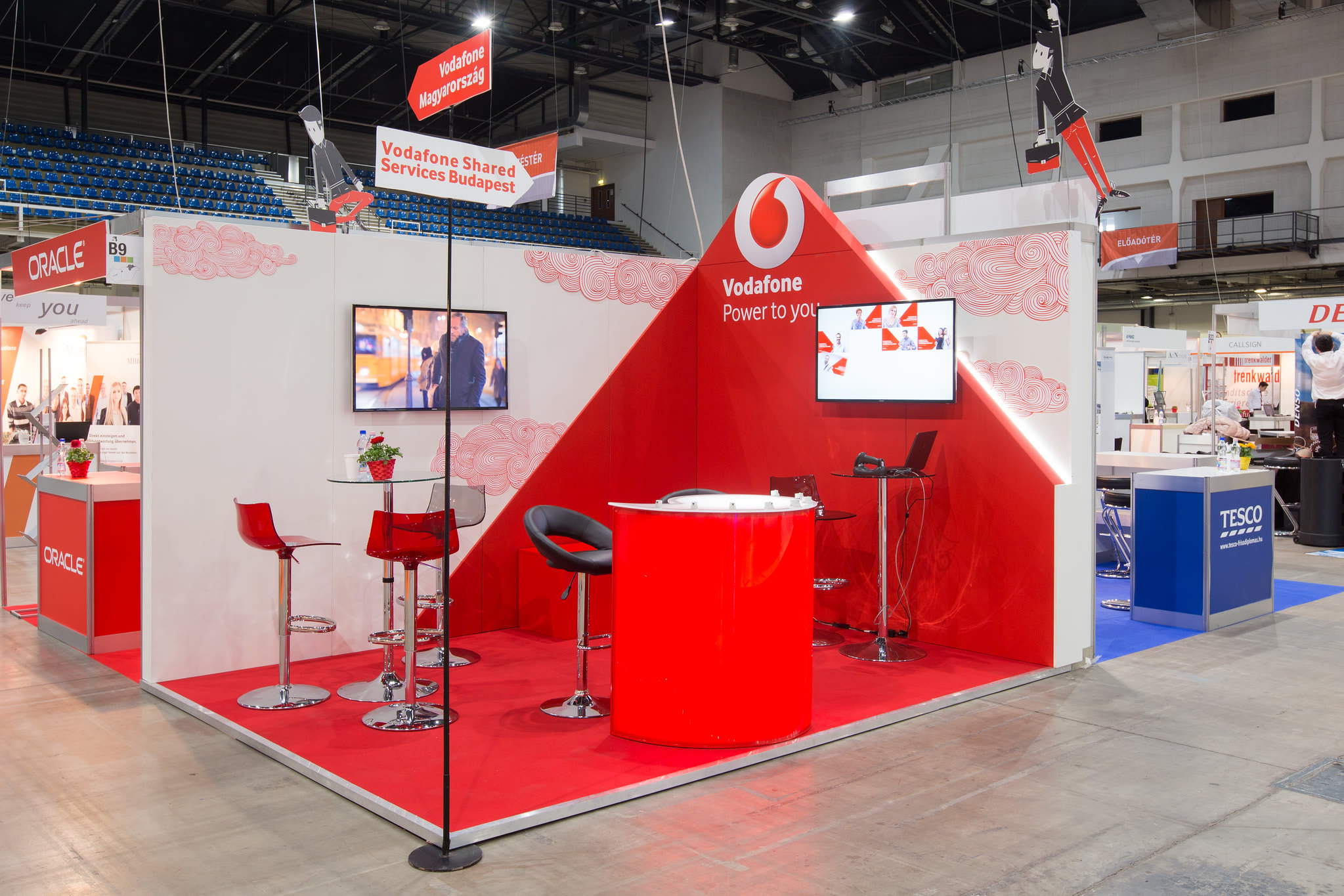
Source: A Vodafone corner booth at a trade show by TorTer Design via Flickr
Peninsula booths
Accessible from three sides, these booths are backed by either a neighboring booth or a wall. Peninsula booths can host more extensive displays and demonstrations, suited for exhibitors looking to make a bigger splash. They’re a good middle ground for businesses ready to invest a bit more for higher visibility and interaction without springing for an island booth.

Source: Omnova Solutions peninsula trade show booth via The Rogers Company
Island booths
The pinnacle of trade show real estate, island booths are freestanding and accessible from all four sides. They offer the highest level of visibility and flexibility in design, ideal for established businesses ready to dominate the trade show floor. Island booths are best for exhibitors with a larger budget who want to create a standout, immersive experience that attracts and retains visitors.
Choosing the right booth structure depends on your specific goals and budget. If you have the resources and are aiming to make a strong first impression, an island or peninsula booth is the way to go. For those focusing on cost-effectiveness, inline or corner booths can still make an impact. Consider what you want to achieve at the trade show, whether it’s branding, sales or lead generation, and let that guide your decision on the booth structure.
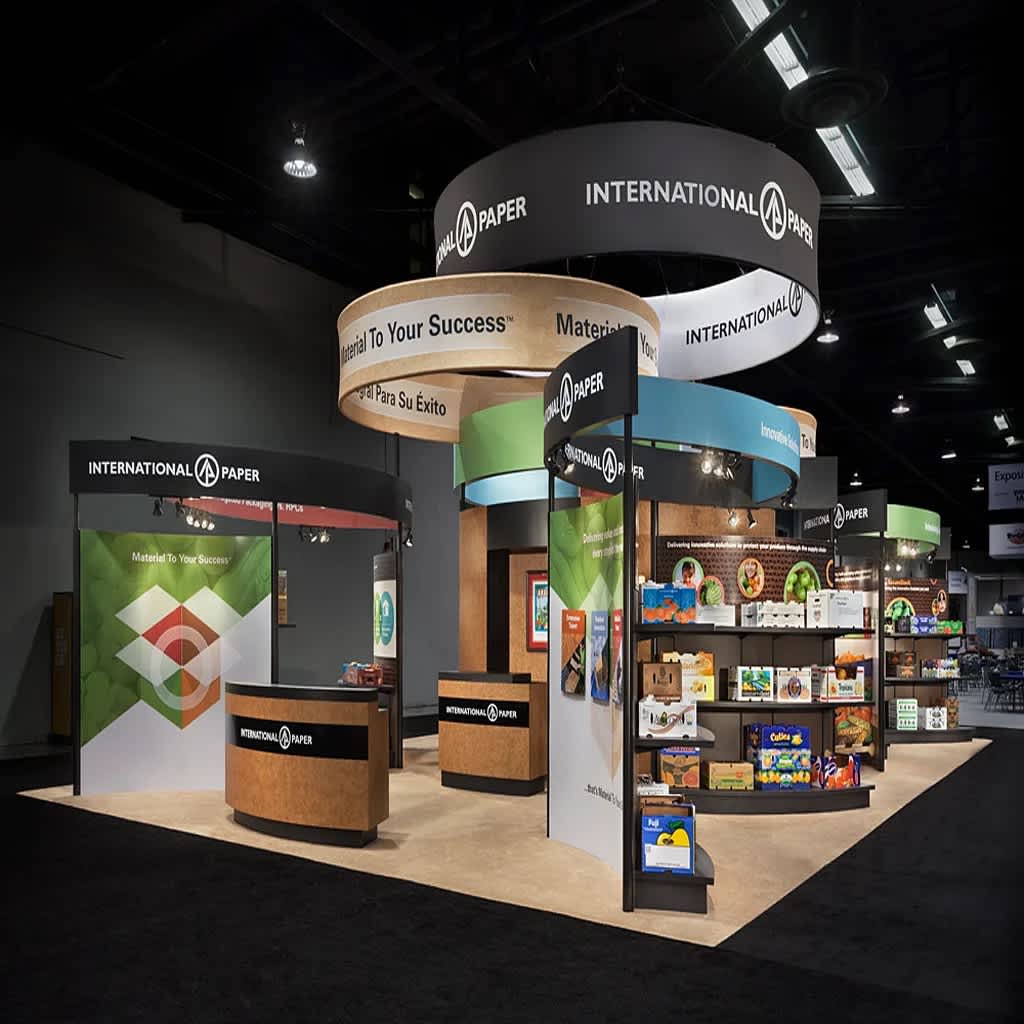
Source: International Paper island trade show booth via Angela Chapin
Graphics and branding
Graphics and branding are the heartbeat of your trade show booth design ideas. They’re what catch the eye, communicate your message and create a memorable impression, distinguishing you from the sea of competitors. With the right visuals and consistent branding, your booth doesn’t just say who you are; it shouts it across the trade show floor.
And, of course, it wouldn’t hurt to incorporate some graphic design trends into your trade show booth design, instantly communicating to attendees that you’re an on-trend brand with your finger on the pulse. A trendy booth is also more likely to be featured in the post-event gallery and news coverage of the trade show.
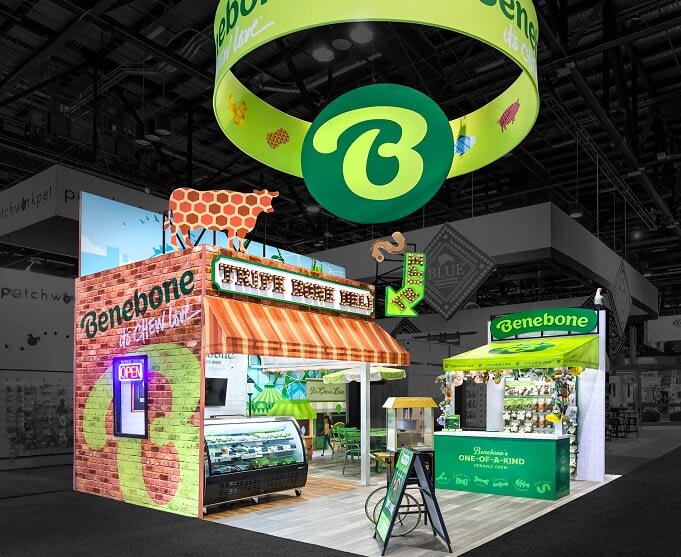
Source: Branded trade show booth design via Condit
Lighting
Lighting at a trade show booth can make or break the visitor experience. Sometimes, the lighting at event venues leaves much to be desired – too dim, too harsh or unevenly distributed. Plan your booth’s lighting meticulously to ensure that all the elements of your design are perfectly visible and engaging to visitors, both from afar and up close.
Spotlights
Used to highlight key products or displays, spotlights draw attention to specific elements and create focal points to organize visitor flow around. Consider strategic placements to maximize impact.
Ambient lighting
Soft, evenly distributed lighting makes your space feel more welcoming, contrasting the often harsh lighting of the venue. It’s great for filling in shadows created by spotlights, ensuring everything is well-lit.
Accent lighting
This lighting adds drama or flair to your booth. LED strips, for instance, can outline shapes, highlight edges or even create patterns.
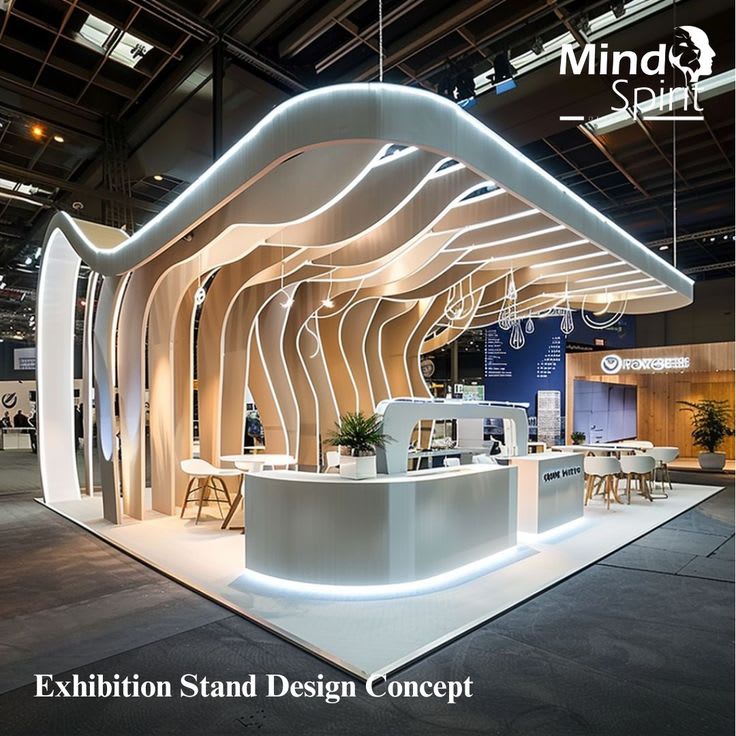
Source: Trade show booth concept with accent lighting by Mind Spirit Designs LLC via Instagram
Color temperature
Pay attention to the color temperature of your lights and pick the one that matches your brand’s personality. Warmer tones make a space feel cozy and inviting, while cooler tones are energizing and enhance focus.

Source: Trade show booth lighting design via True Blue Exhibits
The psychology of color in large-scale printing
Most booth design guides skip that your brand colors will look different on a 10-foot fabric wall than they do on your laptop screen. Convention center lighting typically uses cool fluorescent or harsh LEDs that shift warm tones yellow and can wash out pastels entirely. Blues and greens tend to hold up well. Reds and oranges can intensify.
A few practical rules before you send files to print:
- Always request a print proof. What looks rich on screen can print flat. Ask for a physical swatch before committing to a full run.
- Use CMYK color values, not RGB. Screen colors (RGB) don’t translate directly to print. Convert your brand palette to CMYK and share those values with your printer.
- Go slightly bolder than you think you need to. Large-format fabric printing under convention lighting rewards confidence. If your brand blue feels slightly intense on screen, it’ll likely look perfect at 10 feet.
- Check contrast at a distance. Text that’s readable on a monitor can disappear on a backlit banner. High contrast, dark text on light backgrounds, or vice versa, is always safer.
Functional elements of the trade show booth
Furniture and fixtures
Furniture and fixtures at your trade show booth should balance comfort and functionality. The furniture you select can greatly influence the visitor experience, making your booth a place where guests want to linger and engage with your products or brand for longer.
Counters
These are essential for any booth, serving as both a reception point and workspace. Choose visually appealing counters that also offer enough space for demonstrations or promotional materials. Consider counters with built-in storage to keep the area tidy.
Seating
Comfortable seating is key if you want visitors to stay and engage longer. Whether you opt for simple stools or plush lounge chairs depends on the image you want to project and the space available. Remember, the type of seating should reflect the intended interaction – more casual seating encourages relaxed conversations while formal setups are suitable for presentations or sales pitches.
Display fixtures
Displays should enhance the visibility of your products or information. From shelving units to display stands, ensure these fixtures are sturdy, easy to assemble and align with the booth’s overall aesthetic.
Technology integration
Integrating technology into your trade show booth is a smart strategy to boost visitor engagement and provide interactive experiences:
Large screens can display product demos, customer testimonials or engaging visuals that tell your brand story to capture the attention of passersby. Smaller screens or digital kiosks allow visitors to explore your offerings at their own pace.
Tablets are handy ways for visitors to navigate your digital catalogs, sign up for newsletters or even participate in on-the-spot surveys. Perfect for interactive experiences, tablets can be easily secured to booth counters for convenient access.
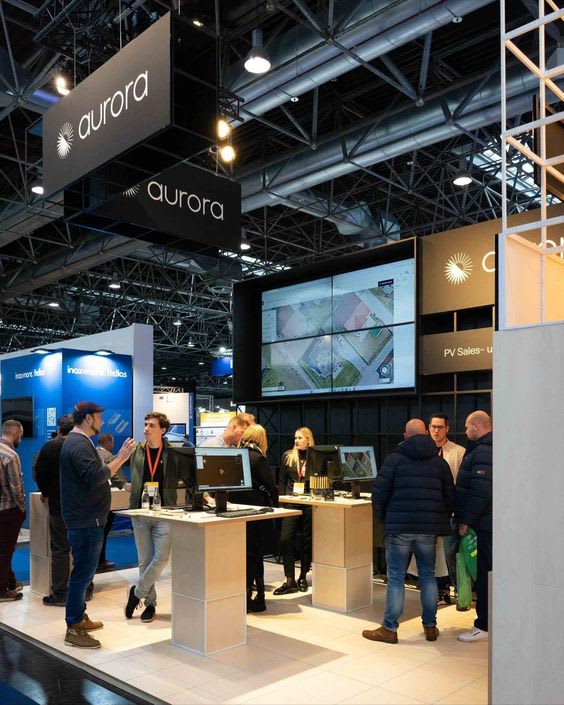
Source: Aurora trade show booth design with screens via Abi Lambert
Storage solutions
Effective storage solutions are key to maintaining a sleek, professional look at your trade show booth by managing and concealing clutter. Integrating these smart storage solutions means your booth remains orderly and attractive throughout the show, making a better impression on visitors.
Use these two storage methods to keep everything organized:
- Built-in storage: Counters and display pedestals that come with built-in storage compartments allow you to neatly stow away promotional materials and personal items out of sight but within easy reach.
- Hidden compartments: Decorative panels or drapes can create hidden storage areas for extra stock or equipment, keeping the public-facing areas of your booth clean and uncluttered.
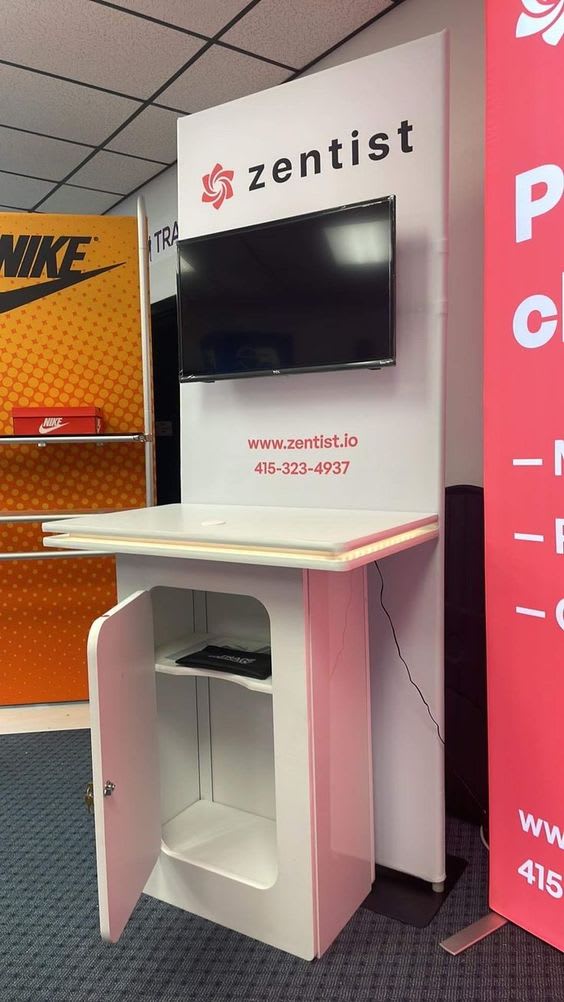
Source: Storage solution for a trade show booth via Trade Show House
Sustainable and modular trade show booth design
One of the smartest things a small business can do is design a “base” booth that flexes across different footprints and industries. Instead of building a bespoke setup for every event, a modular approach means you invest once and adapt often.
How to build a modular base booth
Start with a 10×10’ inline setup as your foundation; it’s the most common trade show footprint. Design your core graphic panels, banner stands and table covers so they work independently. Then, when you’re booked for a larger corner or peninsula space, you simply add panels rather than starting from scratch.
Key elements to make modular:
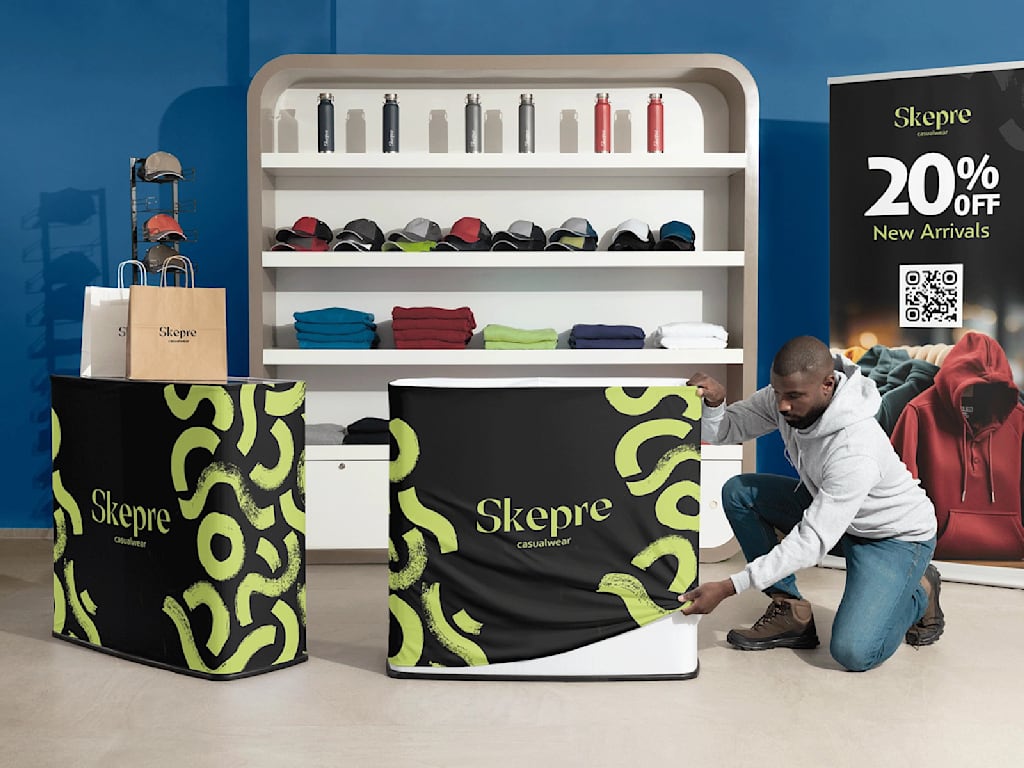
- Retractable banner stands are lightweight, self-contained and interchangeable. Swap the graphic, keep the hardware.
- Tension fabric displays are easy to update by reprinting just the fabric, not the frame.
- Branded table covers are a constant across any booth size, and one of your best investments for cost-per-impression.
- Consistent graphic templates where you design all panels on a shared grid so new additions always look intentional.
Sustainable choices that save money
Sustainability and budget-consciousness go hand in hand here. Choose:
- Fabric displays over foam board (lighter to ship, reusable, recyclable)
- LED lighting (lower power draw, often required by venues)
- Digital lead capture instead of printed forms (cheaper and easier to act on post-show)
For more event planning ideas, see our guide to corporate event planning.

Best practices in trade show booth design
Clearly define your goals
Without defined goals, your trade show booth might end up being a directionless island in a sea of competitors. Whether you’re aiming for any one of the following, your goals will dictate the design choices you make.
Product launch
If you’re rolling out a shiny new product, use dynamic displays, interactive demonstrations and bold signage to highlight features. Make your product the star of the show with well-lit display cases and areas where attendees can interact with it.
Brand awareness
When your mission is to get your brand on everyone’s radar, your booth needs to be a visual extension of your brand identity using cohesive colors, logos and messaging. Create an inviting space that reflects your brand’s personality and incorporate large graphics, eye-catching banners and branded giveaways to leave a lasting impression.
Lead generation
If your primary goal is to walk away with a stack of promising leads, your booth needs to facilitate easy and engaging interactions. Include comfy seating areas for casual chats, quick-access info stations with iPads or tablets for data capture, and perhaps a fun activity or contest to draw people in.
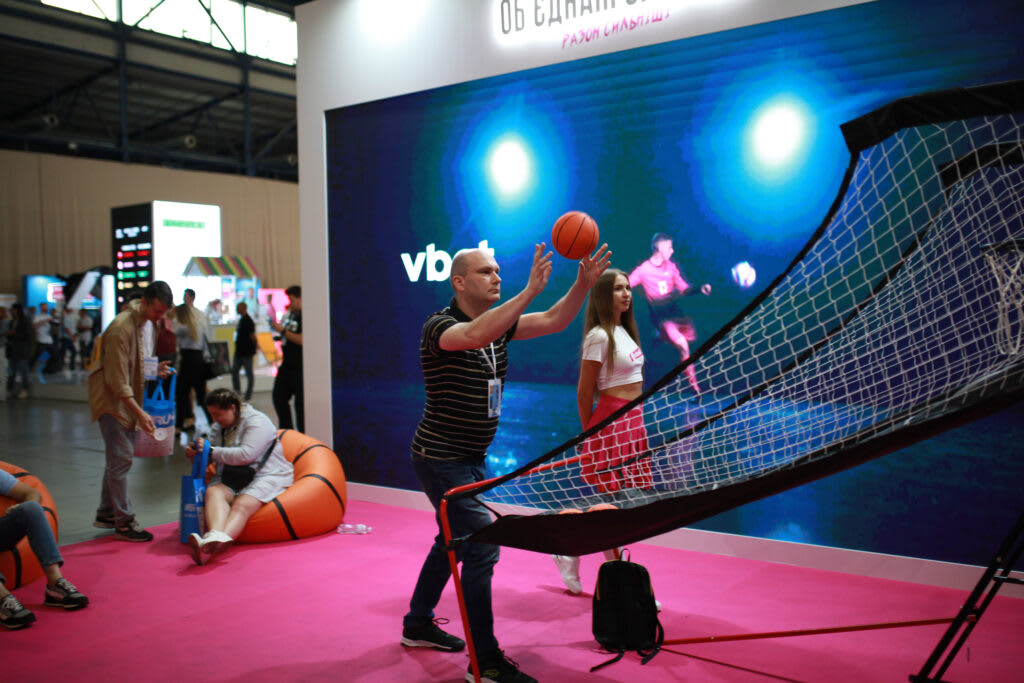
Source: Entertaining trade show booth design for networking via iForum2023
Sales
Aiming to close deals right on the trade show floor? Then your booth should be part showroom, part meeting room. Set up areas for private discussions, complete with comfortable seating and maybe even some refreshments. Display your products in a way that highlights their selling points and make sure you have plenty of knowledgeable staff on hand to answer questions and seal the deal.
Networking
Sometimes, the goal is simply to make connections. In this case, your booth should be designed for socializing. Create open, welcoming spaces with plenty of room for mingling. Networking-friendly design focuses on facilitating conversations, so ensure there’s enough space for people to gather and chat.
Know your target audience
Understanding your audience shapes every design decision, from the height of your signage to the type of seating you provide.
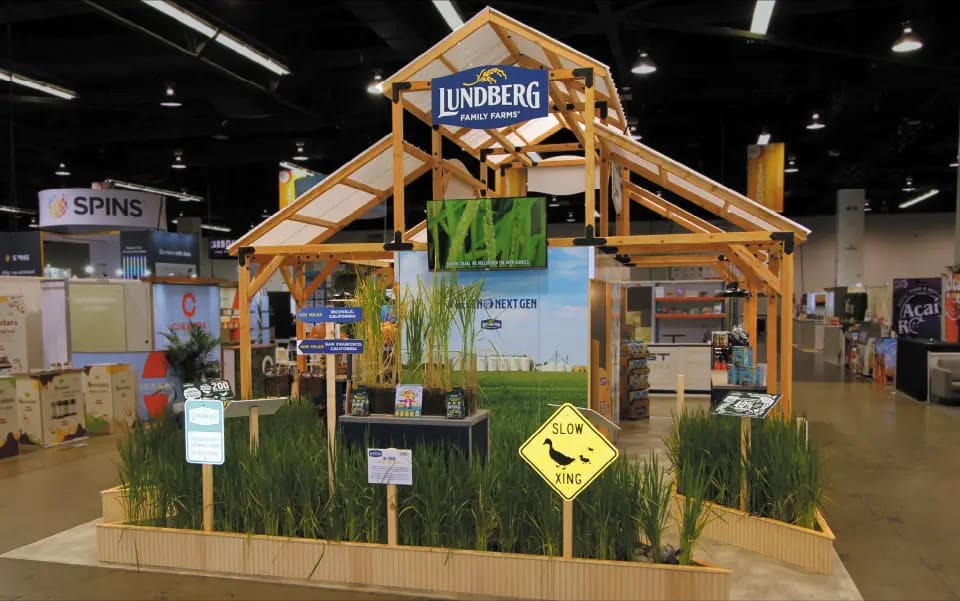
Source: Sustainable trade show booth design via DisplayCraft
Research the trade show participants and venue
Understanding who else will be at the trade show and what they bring to the table will help you create a booth that stands out. Look up past participants and their setups via media galleries from past events. What worked for them? What didn’t? Use this to inform your design and strategy.
Equally important is researching the venue itself. Consider the following, as it will impact your booth design:
Source: TechCrunch Disrupt 2024 event info
- Location: Where is the venue located? But more importantly, where on the trade show floor is your booth located? A prime spot near the entrance or central area can attract more foot traffic, while a corner booth might need a more eye-catching design to draw people in.
- Flow of attendees: Understand the expected flow of attendees. Design your booth to be accessible and engaging from multiple directions.
Venue limitations: Be aware of any restrictions or limitations the venue might have. This includes ceiling height, power availability and lighting. Do your research and plan your booth setup accordingly to avoid last-minute surprises.
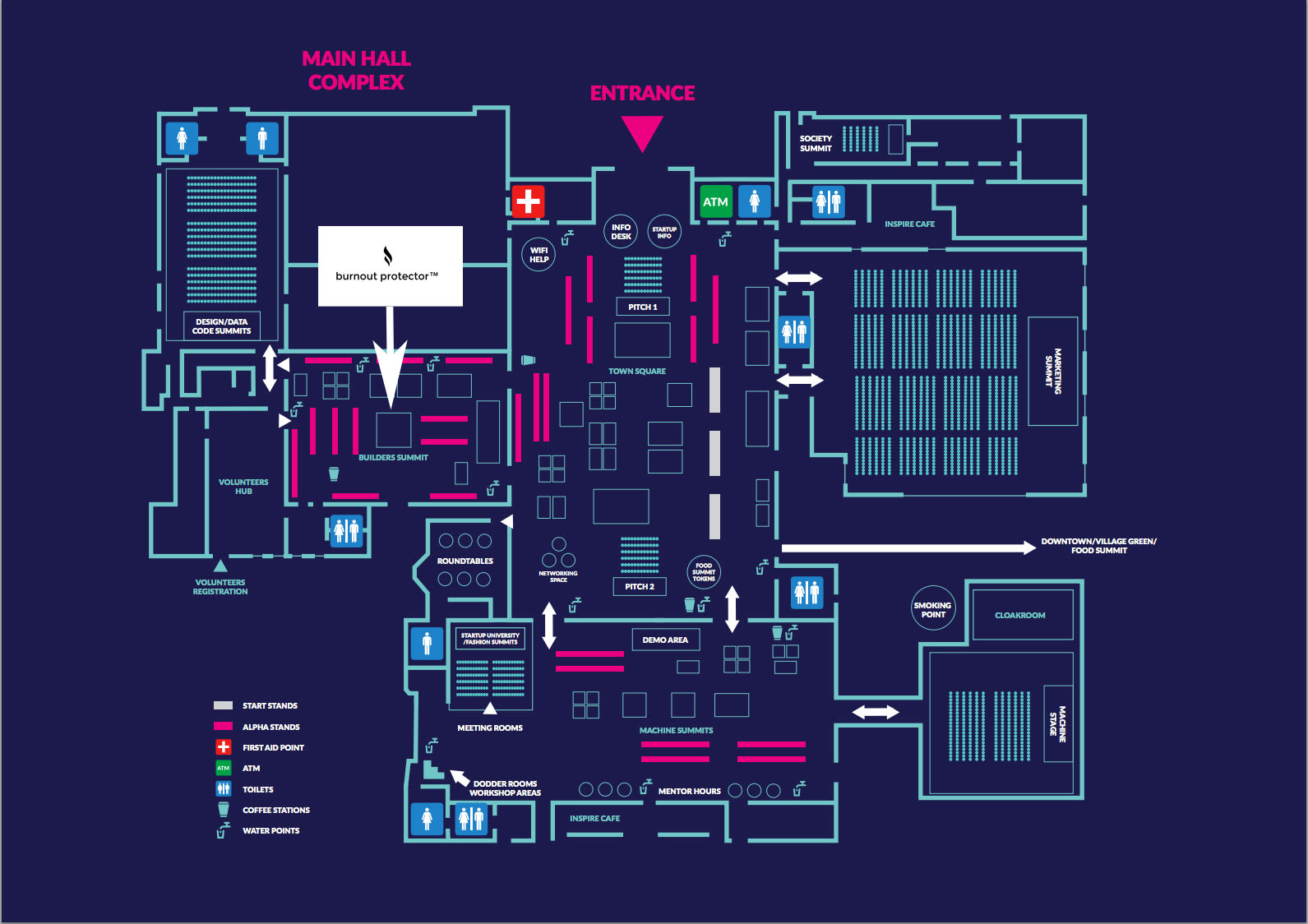
Source: The floor plan of WebSummit Dublin 2015 via Burnout Protector
Create a mood board
Once you’ve gathered enough ideas, create a mood board of the following to help you consolidate your thoughts and ensure your design stays cohesive and focused.
- Colors: Identify a color scheme that reflects your brand and catches the eye.
- Decor: Include images of furniture, lighting, signage and other elements.
- Materials: Visualize the types of materials and textures you’ll use to attract attendees.
- Branding elements: Feature your logo, tagline and other branding components.
Keep branding front and center
Because your trade show booth is an extension of your brand, attendees should recognize it immediately. Consistent, prominent branding helps reinforce your brand identity and increase brand recognition.
- Logo placement: Make sure your logo is visible from various angles and distances. It should be one of the first things people see.
- Color scheme: Stick to your brand colors throughout your booth.
- Tagline and messaging: Your tagline and key messages should be displayed in a clear and concise way to instantly convey what your brand is about.
- Branded materials: Hand out branded giveaways, brochures and business cards.
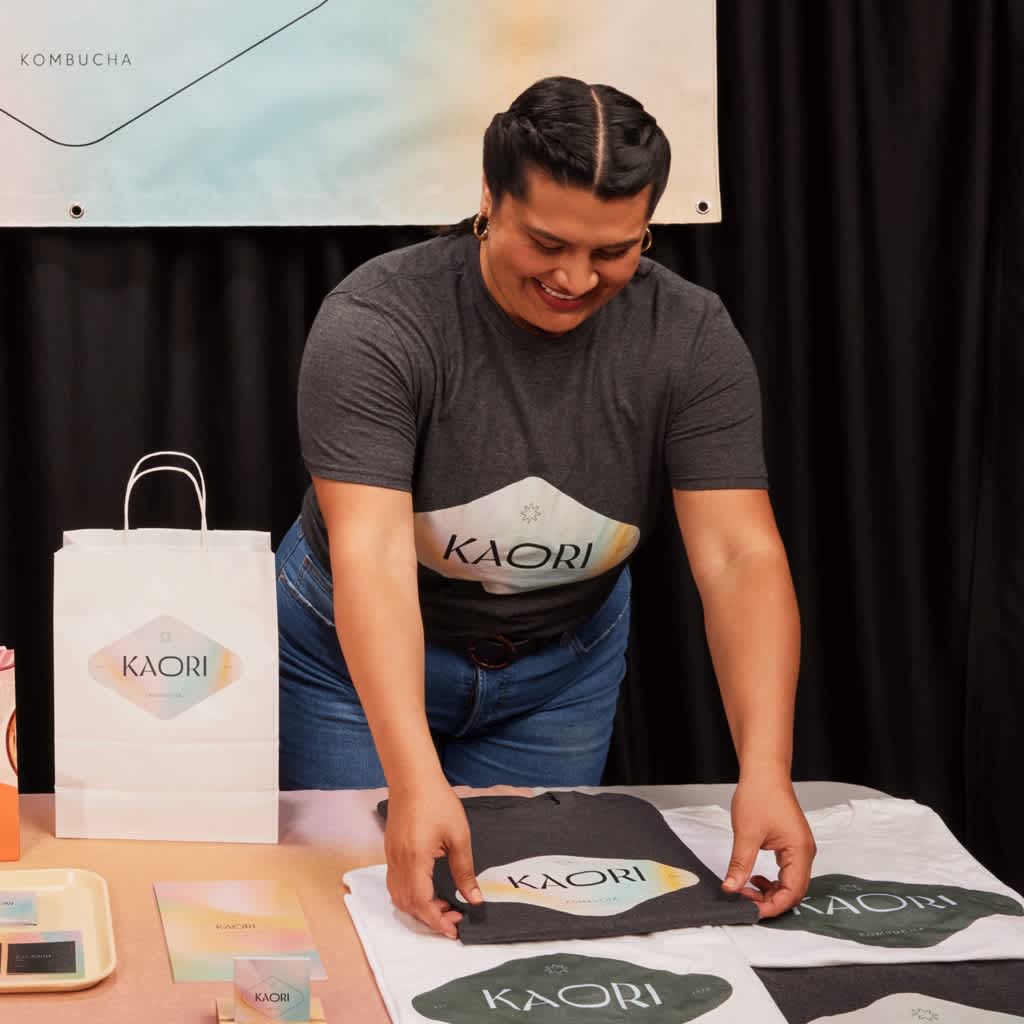
- Attire: Staff dressed in branded attire, such as custom t-shirts, communicates professionalism and strengthens your brand identity. This branded attire can even double up as giveaway items.
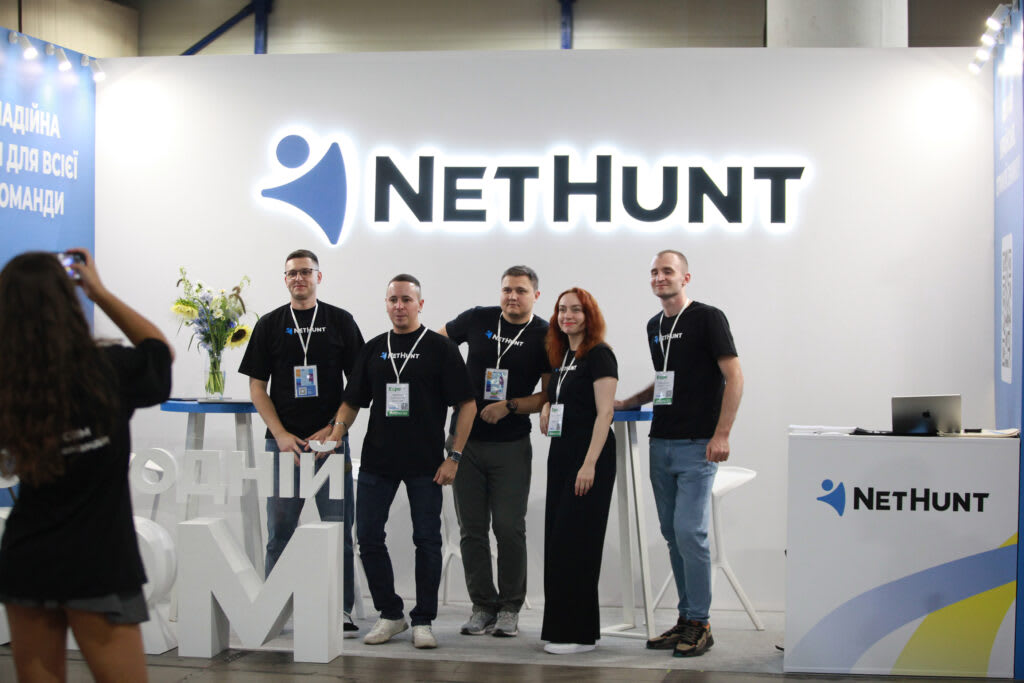
Source: Branded booth and staff wearing branded attire via iForum2023
Focus on visibility
To ensure your booth stands out on the floor, catch the eye both from up close and at a distance:
- Use tall, eye-catching signs that can be seen from across the exhibition hall, helping attendees locate your booth even from afar.
- Opt for bright, bold colors that attract attention. Make sure these colors align with your brand.
- Use strategic, well-placed lighting to highlight important booth elements.
- Unique shapes or structures differentiate your booth from the rest while creating a memorable impression.
Optimize space and layout
Even the largest trade show booths come with space limitations, so make every inch count:
- Plan a layout that guides attendees naturally through your booth. Use pathways and zones to create a flow that encourages exploration.
- Design areas that serve multiple purposes. For example, a demo station can double as a meeting space.
- Utilize vertical space for signage, displays and storage to keep the floor area open and inviting.
Ensure accessibility
Accessibility is an important aspect of trade show booth design. Making sure your booth is accessible to everyone shows consideration while maximizing your potential reach. Use the following to improve the accessibility of your booth:
- Accessible entrances: All entry points to your booth should be easily accessible and free of obstacles.
- Wide aisles: Ensure pathways are wide enough for wheelchairs and strollers to navigate easily.
- Clear signage: Use clear, readable signs at appropriate heights for all visitors, standing or seated.
- Seating options: Provide seating options for visitors who may need to sit and rest. Include a mix of chairs and benches with armrests to accommodate different needs.

Marketing materials for your trade show booth
Having a wide array of marketing materials at your trade show booth captures the interest of visitors while ensuring they leave with something tangible to remember your brand by. Marketing materials not only provide vital information but also help to extend engagement beyond the event.
Brochures and flyers
Brochures and flyers give visitors a detailed overview of your products, services or company. Design flyers and create brochures that are informative and visually appealing, with engaging headlines, concise text and high-quality images. Ensure that they reflect your brand identity and values and include clear calls to action, such as visiting a website or getting in contact for more information.
Business cards
Business cards are an absolute necessity for trade shows, acting as a direct line between you and the contacts you make – whether leads or potential partners. Include all the essential business card information such as your name, position, company name, phone number, email and website address.
Keep the layout of your business card clean and professional, using your brand’s color scheme. To make your business card unique and stand out, use unconventional business card paper stock or make it an unusual shape.
Promotional items
Promotional products – or “swag” – are great for making a memorable impact on trade show booth visitors. Choose items that are practical and likely to be used often, such as pens, notebooks or USB drives. The more your swag is used, the more your brand stays in the minds of potential customers.
Phygital integration: Bridging your physical booth and digital experience
“Phygital,” the blend of physical and digital, is now often seen at trade shows. The good news is that integrating digital touchpoints into your booth design doesn’t have to be complicated or expensive.
QR codes
The simplest phygital tool. Place a large, high-contrast QR code at eye level on your back wall or counter, not buried in the corner of a flyer. Link it to a landing page, a product demo video or a lead capture form. Make the call to action explicit: “Scan to get our free guide” works better than “Scan here.”
Design note: QR codes need a minimum quiet zone (white border) around them to scan reliably. Don’t crowd them with other graphic elements, and always test before the event.
Tablet sign-ups
A tablet mounted or positioned on your counter lets visitors register their interest, enter a competition or explore your digital catalog without needing staff to manually collect details. Pair it with a simple, mobile-optimized form.
AR triggers
More advanced, but increasingly accessible. Augmented reality triggers are printed markers that activate a 3D experience when scanned with a phone. They can demonstrate a product that’s too large or complex to bring to the show floor. If your audience is tech-savvy, this is a genuinely memorable differentiator.
Whatever digital tool you use, make sure your Wi-Fi situation is sorted before the show. Venue Wi-Fi is notoriously unreliable. For anything business-critical, bring your own mobile hotspot.

Trade show booth design on a budget: Where to splurge vs. where to save
For first-time exhibitors especially, every dollar counts. Here’s how to allocate your budget for maximum impact.
Splurge on:
- Your back wall graphic. This is the single most-viewed element of your booth. A high-quality tension fabric display with a sharp, professionally designed graphic does more work than anything else in your setup.
- Lighting. Cheap lighting makes expensive graphics look bad. A few well-placed LED spotlights dramatically elevate the whole booth.
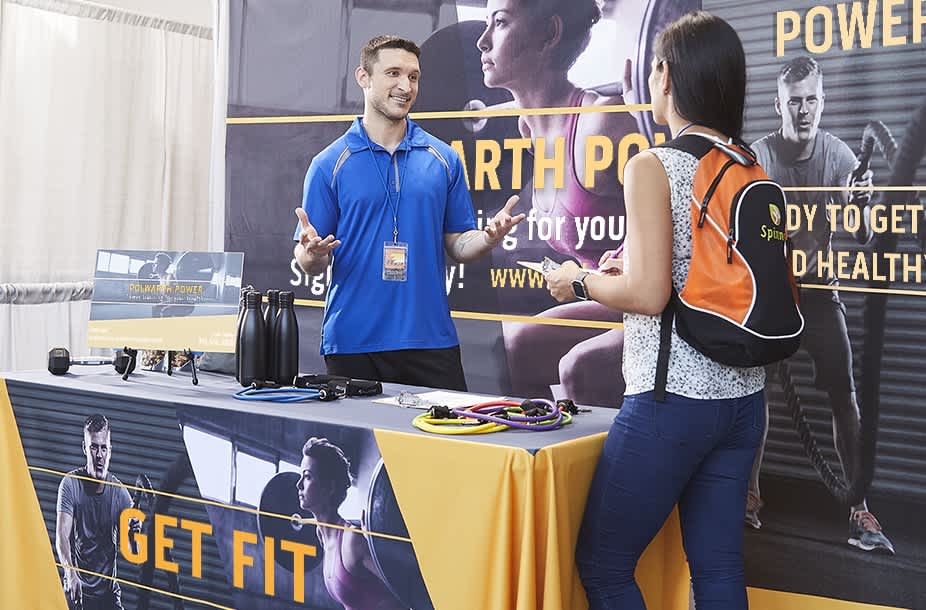
- Staff. Not technically a design line item, but the most important variable. Friendly, informed, well-presented people convert browsers into leads. Invest in branded staff attire, custom t-shirts at minimum.

Save on:
- Furniture. Rent from the venue or hire locally rather than shipping bulky items. Simple stools and a counter are often enough.
- Giveaways. Go for fewer, better items rather than a pile of forgettable plastic. A well-chosen branded notebook or quality tote bag gets used; a cheap pen doesn’t.
- Flooring. Interlocking foam tiles are a fraction of the cost of custom carpet and look perfectly professional.
- Print collateral. Print what you actually need, not what you think you might need. Brochures left in piles rarely get picked up. A QR code to a digital brochure is cheaper and often more effective.
Your biggest cost efficiencies come from reuse. A modular booth that works across multiple events gives you a much better cost-per-show than a bespoke build you use once.
How to measure the ROI of your trade show booth
A trade show is a significant investment in booth space, design, travel and staffing. Measuring return on that investment means knowing what to track before, during and after the event.
Set your goals first. ROI looks different depending on what you’re trying to achieve. Define your primary metric before you go: leads collected, sales closed on the floor, brand impressions, partnerships initiated or media coverage earned.
Key metrics to track include:
- Leads collected. How many contacts did you capture? Track the source (QR scan, tablet sign-up, business card, conversation).
- Cost per lead. Divide total booth costs by leads collected. This gives you a benchmark to improve against next time.
- Conversion rate. Of the leads you collected, how many became customers within 90 days? This is your true ROI number.
- Foot traffic. Many events provide this data. If not, count or estimate. A busy booth isn’t always a productive one, but it’s worth knowing.
- Social impressions. If your booth is photogenic, track how many times it’s shared. Tag your social handles on your signage.
- Sales attributed to the event. Tag leads in your CRM with the show name so you can track revenue over six to 12 months.
Also consider a post-show debrief. Within a week of the event, gather your team and answer: What worked? What didn’t? What would you change about the booth design? What did visitors respond to? This qualitative data is often more useful than the numbers for informing your next event.
For a broader event strategy, see our guide to event marketing.
Plan the perfect trade show booth
Designing a trade show booth that stands out involves strategic planning and creativity. Start with the basics: know your goals, your audience and your space. Then bring it to life with a clear visual direction, strong branding and a layout that’s easy to navigate. You can create a booth that not only attracts attention but also drives engagement and business opportunities.
Whether you’re exhibiting for the first time or refreshing a tired setup, great trade show booth design comes down to clarity: clear goals, clear branding and a clear experience for every visitor who walks past. Start with a modular base you can build on, invest where it matters and measure what you track.
For more on getting the most from your event presence, read our guide to making the most of your trade show booth.
Frequently asked questions
How much does it cost to design a trade show booth?
Costs vary widely. A basic inline setup with a retractable banner, table cover and printed collateral can come in under $500. A more polished 10×10 booth with a tension fabric back wall, lighting and branded furniture typically runs $1,500–$5,000. Island booths at larger shows can cost significantly more. The key is knowing where to invest for maximum visibility.
What makes a trade show booth successful?
Clear goals, strong branding and engaged staff. The best-designed booth in the hall won’t generate leads if the people running it aren’t actively starting conversations. Design gets people to stop; your team gets them to stay.
How do I choose the right colors for large-scale fabric printing?
Work in CMYK rather than RGB, request a print proof before full production and expect warm tones to shift slightly under convention lighting. High-contrast color combinations read better at a distance. When in doubt, go bolder than you think you need to – large-format printing rewards confidence.
How do you measure trade show booth ROI?
Start by defining your primary goal, leads, sales, partnerships or brand awareness. Then track cost per lead, conversion rate within 90 days and any revenue attributed to contacts made at the show. Tag leads in your CRM with the event name so you can follow the money over six to 12 months.
What are the best strategies for cost-effective booth design?
Invest in your back wall graphic and lighting because they do the most visual work. Save on furniture (rent locally), print collateral (go digital where possible) and giveaways (fewer, better items). Build modularly so your booth works across different footprints and events without a full redesign each time.