Running a small food business often means tight margins, limited time and marketing that gets pushed aside. Small food and beverage businesses are using AI in marketing in a real, practical way. AI tools can help with everyday tasks like drafting social media captions and promotional messaging, designing brand materials, answering customer messages and figuring out which campaigns to repeat. According to the recent VistaPrint survey of 284 business owners and managers across the food and beverage industry, including restaurants, cafés, bakeries, bars and food trucks, nearly half (47%) are already using AI.
This article explains how the survey respondents are already using AI in restaurants, what still needs a human touch and how to take AI-generated ideas and turn them into printed menus, signage and marketing materials that attract customers.
- Nearly half of Food & Beverage businesses (47%) are already using AI in their marketing—keeping pace with larger chains investing in the same tools.
- Most users of AI in the restaurant industry report saving 6-10+ hours per week on marketing tasks.
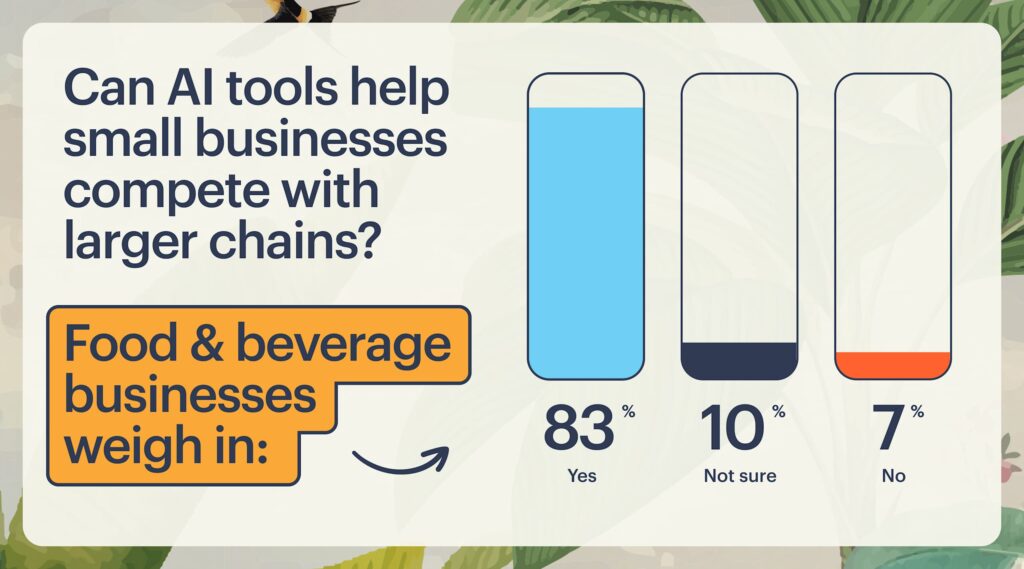
- Most survey respondents (83%) believe AI helps small food businesses compete with larger chains.
- Businesses are using AI to write social posts, create menus and signage and draft promo materials.
- Of those already using AI in restaurant marketing, 94% plan to expand their AI use in 2026.
- The gap between AI drafts and finished products is real—28% say outputs feel too generic or off-brand.
Small businesses are catching up to chains by using AI in marketing
In 2026, AI is a practical tool being used daily by food and beverage businesses to improve efficiency.
“AI is rapidly becoming embedded in the daily workflow of small F&B owners, shaping how they run, market, and grow their businesses. Beyond efficiency, it gives operators the ability to stay aligned with their brand voice and customer experience while keeping pace with the demands of the kitchen.”— Erin Shea, Sr. Director, North America Marketing at VistaPrint
1. Nearly half of small food and beverage businesses are already using AI
In the VistaPrint survey, 47% of food and beverage owners and managers said they’re already using AI in their marketing. That lines up with how big businesses are using AI. For example, Chipotle has leaned into personalization at scale and Yum! Brands is using AI for everything from customer experience to restaurant tech. The adoption curve is steep across the food industry, with over 70% of restaurant marketers in the process of integrating AI into their efforts.
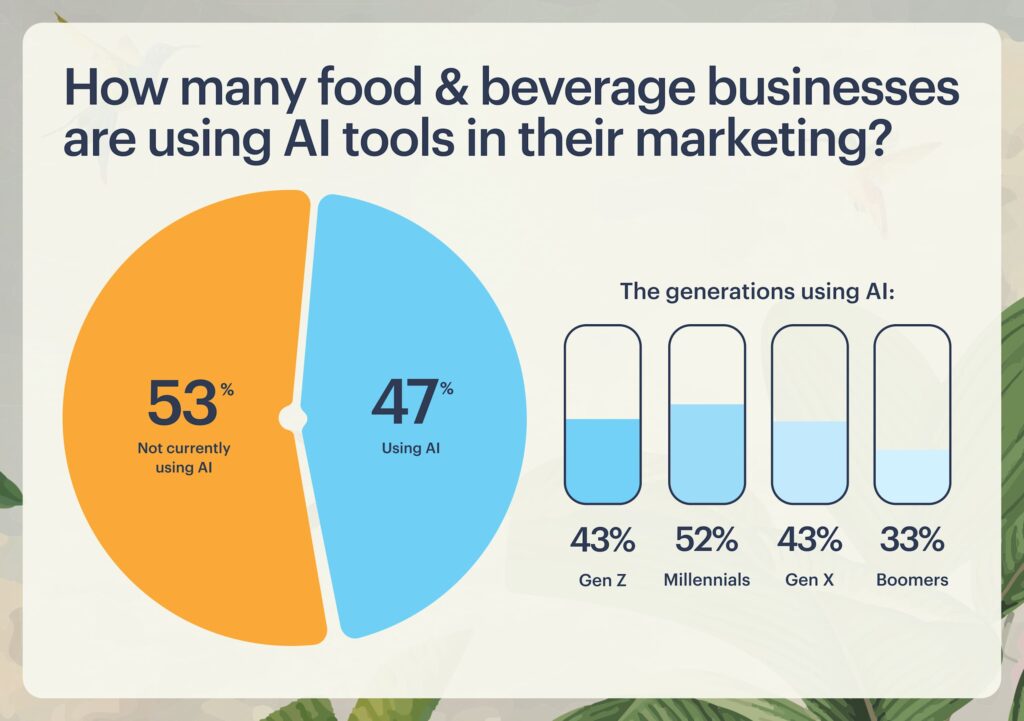
Tasks that used to require a large budget and team now can be done using quick, affordable tools that help with writing, design, automation and ideas testing. AI is being used across generations, which is a sign that it has evolved beyond initial hype.
2. AI is now part of the daily workflow for many food and beverage businesses
Among respondents who have already adopted AI, it assists an average of 47% of their marketing activities. And for many, it’s become routine. Nearly half of AI users (45%) say it’s part of their daily workflow, while another 17% rely on it across most marketing tasks. That “daily” use includes drafting captions, designing a quick promo flyer and wording new menu items.
3. Food and beverage businesses plan to use AI more in the future
Nearly all (94%) of current AI users surveyed plan to expand their use over the next year. Once AI becomes part of the workflow, the payoff is clear: less time spent starting from scratch and more consistency in how the business shows up. Respondents said that around 60% of their marketing could be done using AI in the future.
Don’t automate everything at once—choose one repeatable task, then build from there. Use AI for one recurring task for two weeks, then see how much time you’ve saved. If the time-savings are meaningful, incorporate AI into the next task on your list.
What small food and beverage businesses are using AI for
AI has worked its way into the day-to-day marketing tasks for many food and beverage businesses, but what are owners and operators actually doing with it?
4. Top AI tools food and beverage businesses are using for marketing tasks
Most businesses start using AI for basic tasks such as writing brand copy and social media. The most widely used tools are AI text generators like ChatGPT (56%) and AI-powered social media management platforms (55%), used to help write captions, draft promotions and turn an idea into something real and usable.
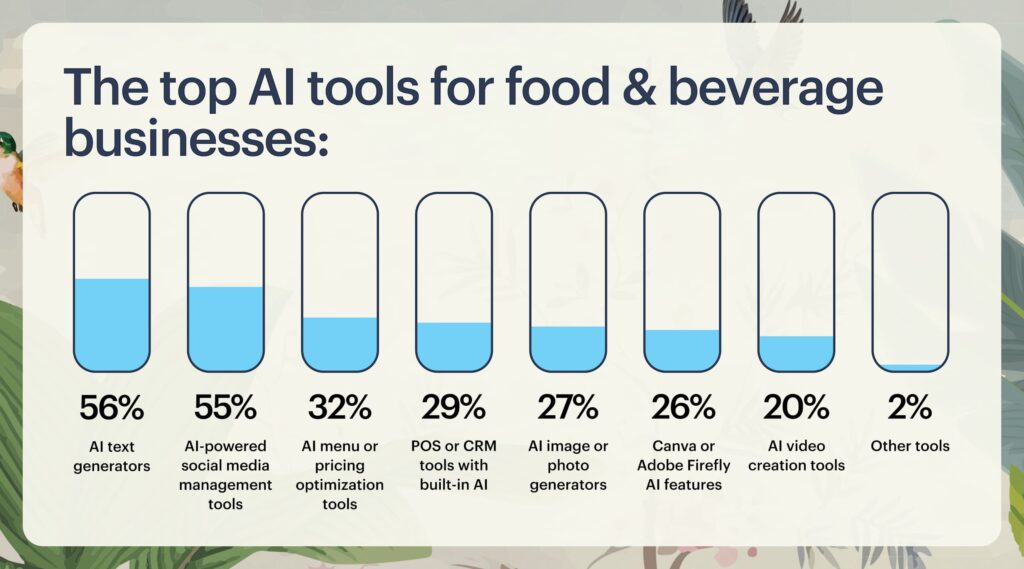
About a third of respondents (32%) are also using AI for menu or pricing optimization, while 29% of F&B businesses are using built-in AI features inside POS or CRM systems. Visual tools are also widely used, with 27% of respondents using AI image generators and 26% tapping into Canva or Adobe Firefly’s AI capabilities.
5. Top use cases for AI in food and beverage marketing
Businesses are most likely to use AI for creating visual and written marketing content, with 46% of respondents using AI to create promotional graphics, menus or signage; 43% to write social media posts and captions; 41% to generate website or menu copy; 35% for email campaigns or SMS offers. AI is also being used for smaller marketing tasks, like responding to customer reviews (32%) or brainstorming campaign ideas (29%).
Use simple AI prompts like:
- “Write 10 captions for this week’s lunch specials.”
- “Draft a short email promoting our new seasonal drink.”
- “Respond politely to this three-star review without sounding defensive.”
6. Using AI to create print marketing materials
As well as for digital content, AI is also being used to create physical marketing materials. Among survey respondents already using AI, 44% said they’ve used it to create flyers or posters, as well as:
- Menus (printed): 38%
- Promotional products (cups, stickers, bags): 31%
- Business cards: 29%
- Product packaging or labels: 25%
- Signage (indoor or outdoor): 23%
- Loyalty cards: 20%
- Branded apparel: 19%
![Infographic/bar chart showing the breakdown of most popular marketing materials businesses create with AI” (menus, flyers, signage, packaging)]](https://blogadmin.vpsvc.com/hub/wp-content/uploads/sites/14/2026/02/marketing-material-ai-1024x569.jpg)
The benefits of AI tools for restaurant businesses
Now we’ve covered where AI shows up in day-to-day food and beverage marketing, the next question is whether it delivers anything beyond convenience. The survey shows that small businesses using AI are saving time and money, staying visible as dining habits shift and finding it easier to keep up with larger competitors.
7. AI helps small food and beverage businesses to compete
For small businesses, the playing field has never been level. Chains have budgets, teams and systems built to pump out polished marketing at scale. But AI tools are helping to close that gap, with 83% of small business respondents stating that AI helps them to compete with larger competitors.
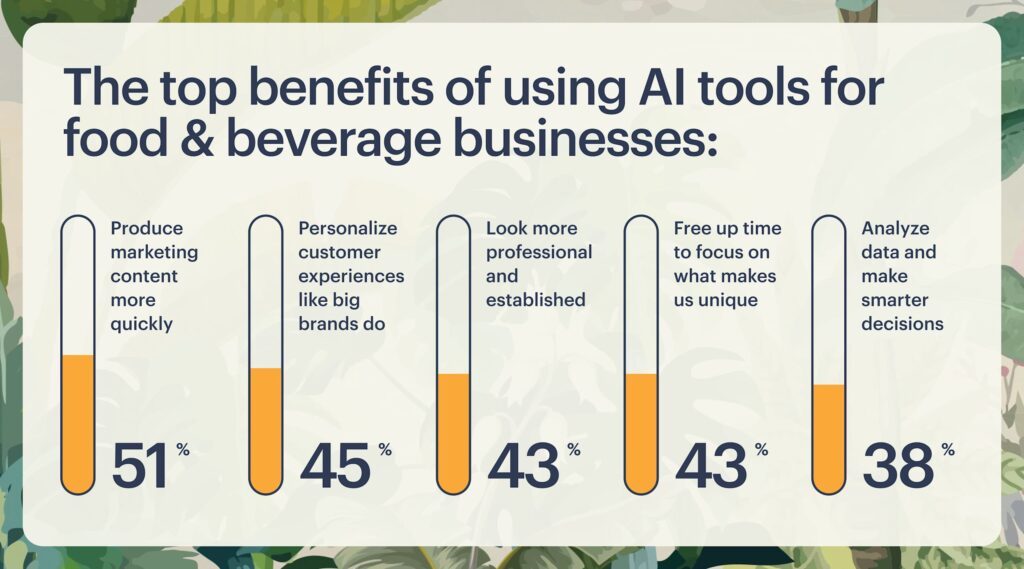
Over half (51%) of respondents said AI helps them to produce marketing content faster, 45% said it helps to personalize customer experiences and 43% pointed to it helping their business to look more professional and established, even without corporate resources behind them. Respondents (37%) also said AI makes branded merchandise and promotional products more affordable.
For a small taco shop or family-owned pizzeria, that matters. When the same AI tools that power consistency for chains are available to small businesses, they can show up with the professional polish customers expect.
8. As dining habits shift, restaurant marketing needs to work harder
Restaurant marketing has changed because dining habits have shifted. Guests are comparing options faster and paying closer attention to value. With generic promotions blending into the scroll, specificity stands out: tell customers what you serve, why it’s worth the trip and money, and what a visit today looks like.
With 43% of respondents saying AI helps free up time to focus on what makes their business unique, AI use means better brand storytelling and clearer positioning, and in turn, an increased or more loyal customer base. For example, a farm-to-table restaurant can highlight producers and seasonal ingredients, a craft cocktail bar can give each drink a unique name and a bakery can create on-brand descriptions and signage that sells the experience, not just the product.
9. AI tools help save food and beverage businesses time
Survey respondents said AI has helped them to save time (59%), increase social media engagement (49%) and craft better customer responses (44%). About a third of respondents reported saving 6-10 hours a week. One in five said they save more than 20 hours weekly. Those time savings might go toward training a new hire, delivering quality customer service or getting that updated menu printed and on tables.
10. AI also helps save food and beverage businesses money
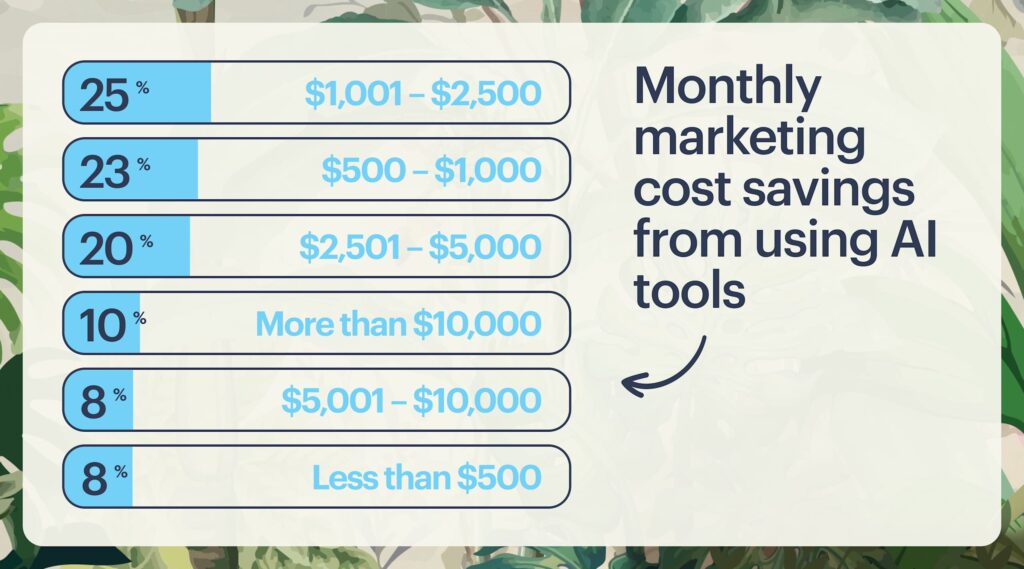
AI in the restaurant industry is also helping businesses reduce costs, especially for marketing tasks, instead of paying a freelancer to design a flyer or hiring someone to post on social media.
Over half (57%) estimate AI saves them $500 to $2,500 per month on marketing, with 25% saying it saves them between $1,000 and $2,500 monthly.
For an independent brewery designing promotional materials for a monthly event or a catering company juggling multiple campaigns, those cost savings can be redirected into higher quality, more consistent marketing materials and stronger brand touchpoints.
AI-generated materials aren’t the finish line
AI saves businesses time and money, but a draft of a caption and menu description or a flyer mockup are starting points, not finished marketing materials. The businesses getting the most out of AI are using it as a shortcut to the draft version, then applying the human layer that makes it sound, look and feel like them.
11. AI outputs often need refining by humans
AI can move fast, but it doesn’t automatically understand your brand. In our survey, 28% of AI users said AI-generated content often feels generic or off-brand, while 38% highlighted the time required to learn the tools or edit what AI produces.
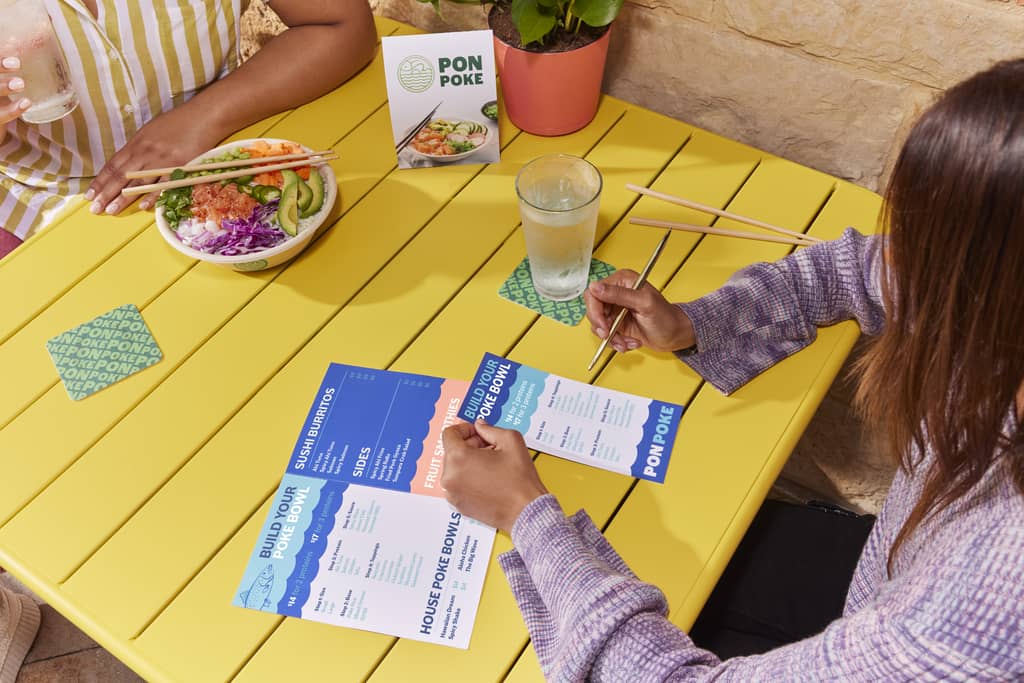
For example, a dessert shop can use AI to generate menu descriptions in seconds, but they may not communicate the brand story. A food truck can mock up a promotional flyer, but the tone might miss what regulars actually love about the place. Many food and beverage businesses still need support in the gap between an AI-generated concept and finished materials, such as a menu, poster or promotional item.
12. The biggest AI challenges are time and decision fatigue
Small food businesses have flagged too many options, too many features and not enough time to test what actually works. The survey respondents described a mix of practical hurdles and decision fatigue:
- Hard to know which AI tools are worth investing in: 38%
- Takes time to learn or edit: 38%
- Difficulty integrating tools with existing systems: 30%
- Staff resistance or lack of buy-in: 29%
- Output feels too generic or off-brand: 28%
- Feeling overwhelmed by the number of tools available: 28%
- Difficulty separating hype from real value: 25%
Even non-users tend to warm up to AI when these barriers decrease. Respondents want a clear workflow that turns rough drafts into finished materials, plus tools and support that help make decisions faster and keep branding consistent.
13. Closing the gap between AI-generated drafts and finished materials
The simplest way to get value from AI is to use it for momentum, then take control of the finish. AI is great at producing a usable starting point fast, but it’s not as great at knowing what makes your business feel unique. That part has to come from you.
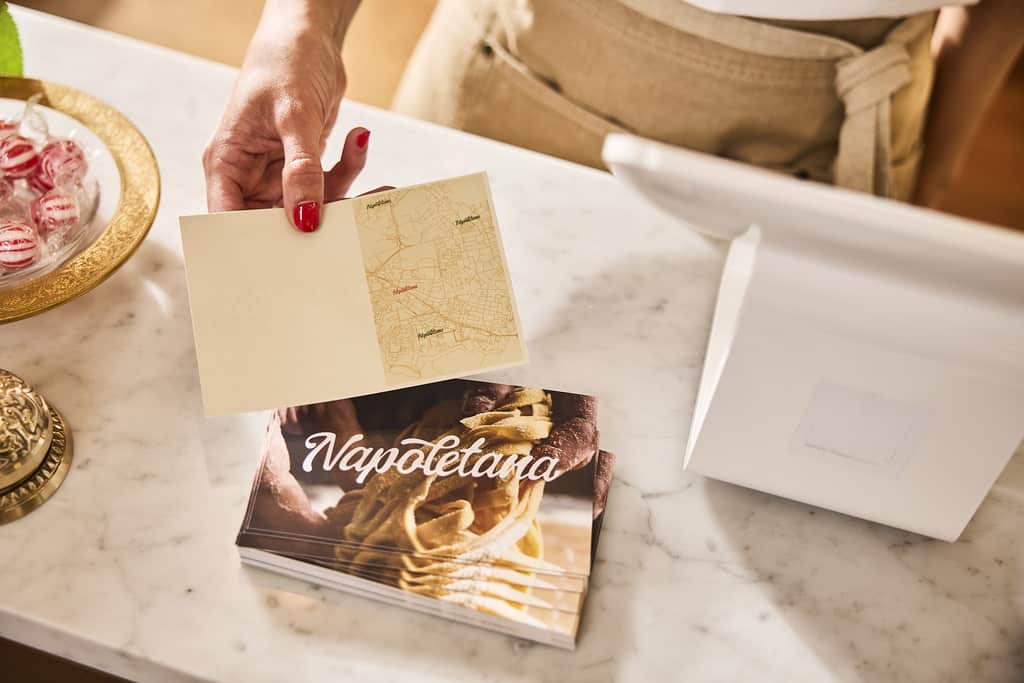
Whether you’re creating a specials post, event flyer, menu update or review reply, this simple workflow can turn AI drafts into ready to publish brand assets:
- Feed it the relevant information: Provide the details up front—what the offer is, when it runs, the price, plus any brand copy or taglines you use.
- Generate a few options, then choose: Ask for three caption versions or five headline ideas. Pick the best one and edit from there. That’s quicker than trying to fix a weak draft.
- Check whether it sounds on brand: Replace generic AI-generated copy with your brand voice and how you describe your offerings to real customers.
- Repeat what works: Keep the final result as a template so next time you’re not starting from scratch.
- Prepare it for its context: Crop and size assets accordingly for social media, your website and print.
An effective AI prompt usually starts with specifics. Here’s a prompt template you can use:
“We’re a [type of business] in [neighborhood/city]. Our signature items are [3 items]. Our customers are [who you serve]. Our brand is [3 adjectives]. We always say [2-3 phrases]. Write:
- Five captions for [offer] running [dates]
- One short version under 120 characters
- One version that fits a printed counter sign.”
If you’re not using AI yet, you’re not alone
It can feel like every other business has already mastered AI. But many food and beverage businesses are still figuring out how to use AI in marketing.
14. Why some F&B businesses aren’t yet using AI in marketing
For many food and beverage business owners, marketing feels personal. Brand voice matters, and regulars notice when something sounds generic. The most common reason businesses gave for not using AI was a preference for human-created content (32%).
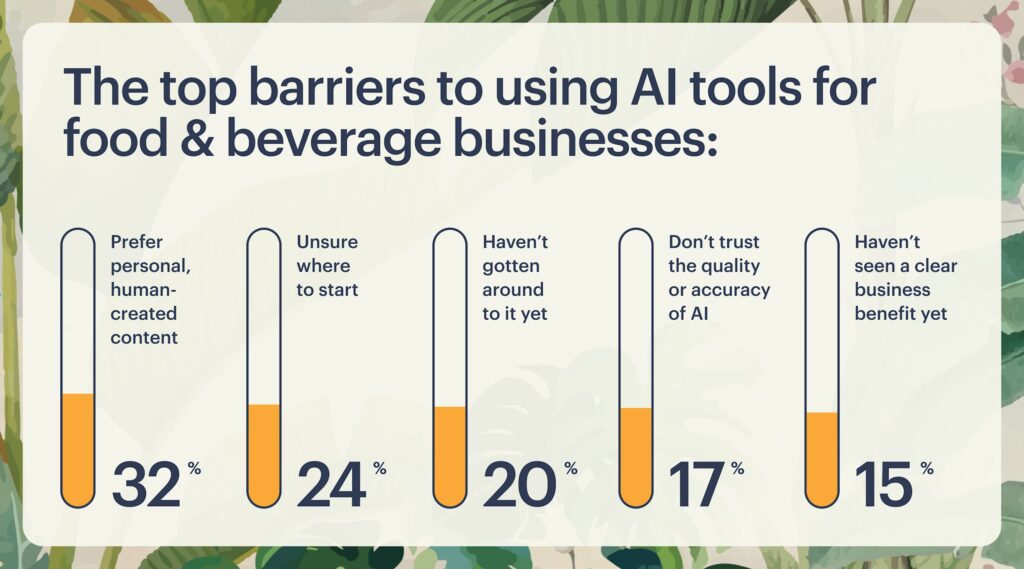
Another 24% said they aren’t sure where to start, and 20% admitted they just haven’t gotten around to it yet. Concerns about quality and accuracy also came up, with 17% saying they don’t fully trust what AI produces. Others haven’t seen a clear business benefit so far (15%) or feel the learning curve is too steep (15%).
Privacy and data security worries were also flagged (13%), along with time constraints (11%), with some respondents saying they don’t have the hours to learn or implement AI right now, while 10% worry about losing brand voice or authenticity. Restaurants run on instinct, hospitality and human connection, so taken together, the hesitation to use AI in marketing makes sense.
15. Non-users are interested in AI for visual and print materials
When respondents were asked what they would want to use AI for if the barriers and challenges were removed, they mostly said customer-facing tasks, followed by brand asset and copy creation.
Top areas of interest included:
- Responding to customer reviews: 31%
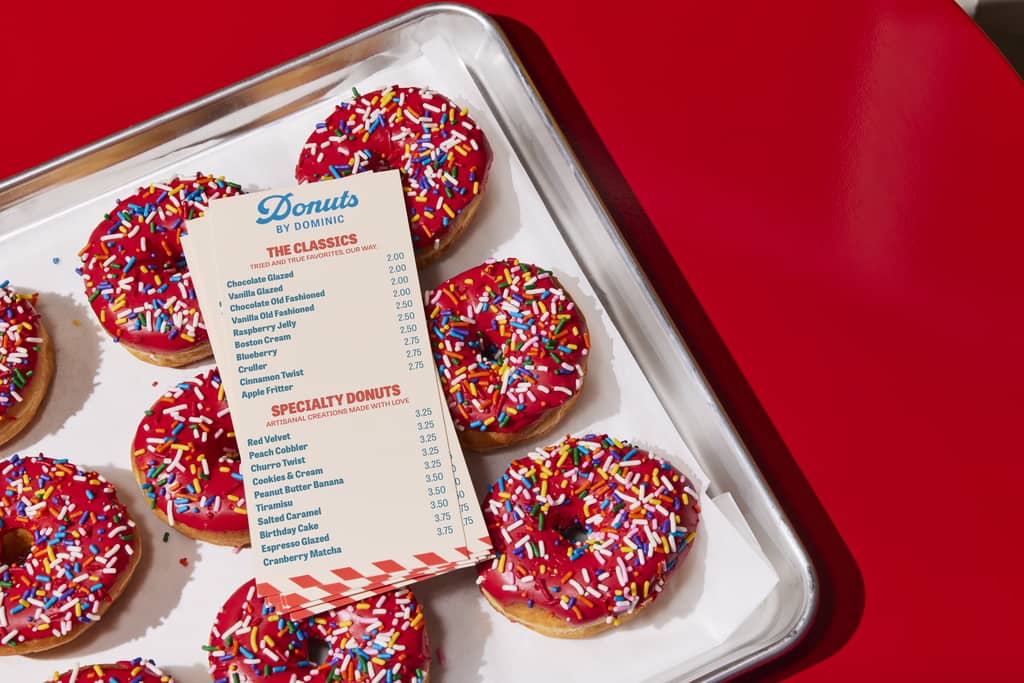
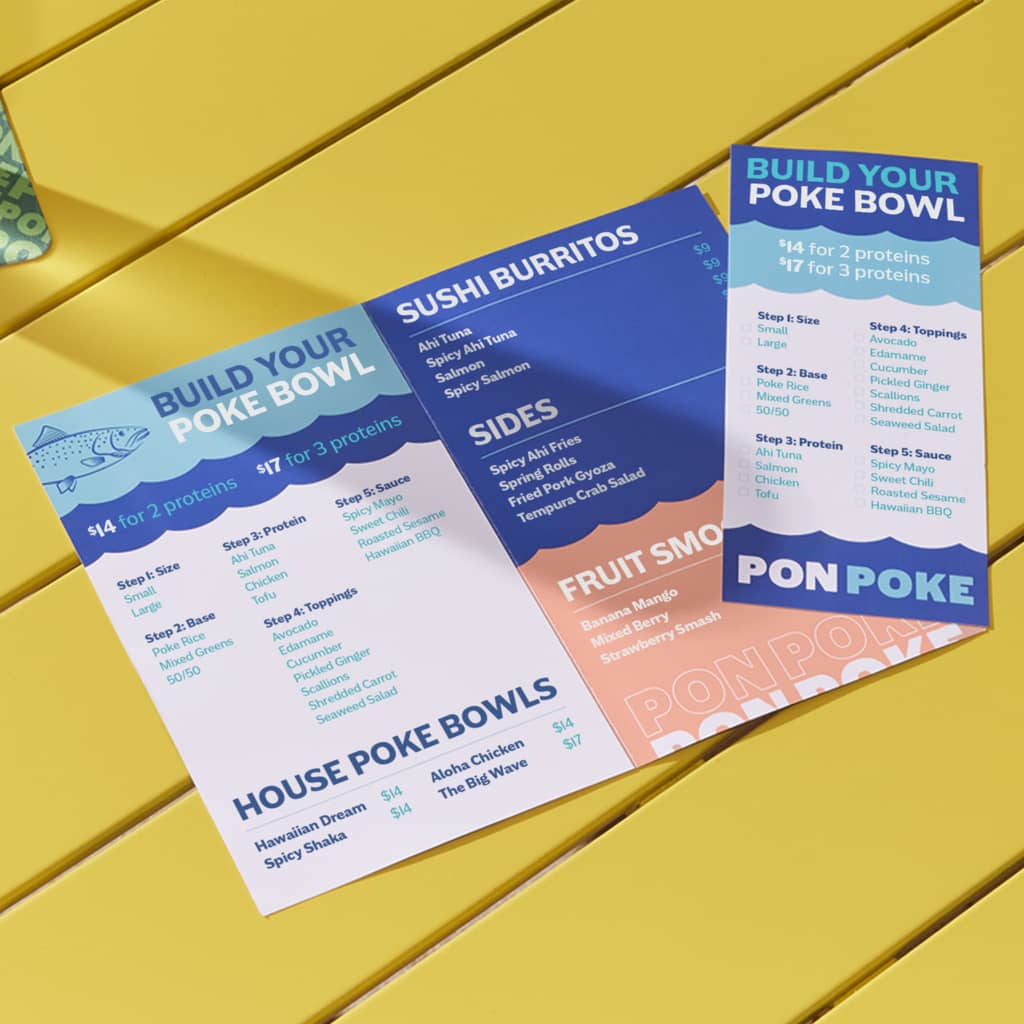
- Creating promotional graphics, menus or signage: 30%
- Generating website or menu copy: 28%
- Writing social media posts or captions: 27%
- Designing packaging (to-go bags, containers, cups): 24%
From there, interest drops into more advanced use cases like brainstorming limited-time offers (19%), optimizing promotions with data (19%) or designing branded merchandise (16%).
Start with low-risk, repeatable tasks, like drafting review responses, before using AI for branding. That way, you get comfortable using AI tools before letting it handle your brand identity.
What’s next: Personalized interactions and AI beyond marketing
16. Using AI for personalized customer interactions, online and offline
Looking ahead, respondents expressed strong interest in using AI to personalize customer interactions: in-app menu recommendations (53%), customized loyalty rewards (49%), personalized email campaigns (47%) and birthday or anniversary offers (38%).
As well as digital personalization, a café can use AI to identify its most loyal customers, sending them personalized thank-you postcards or birthday offers in the mail, while a restaurant might run a personalized loyalty program.
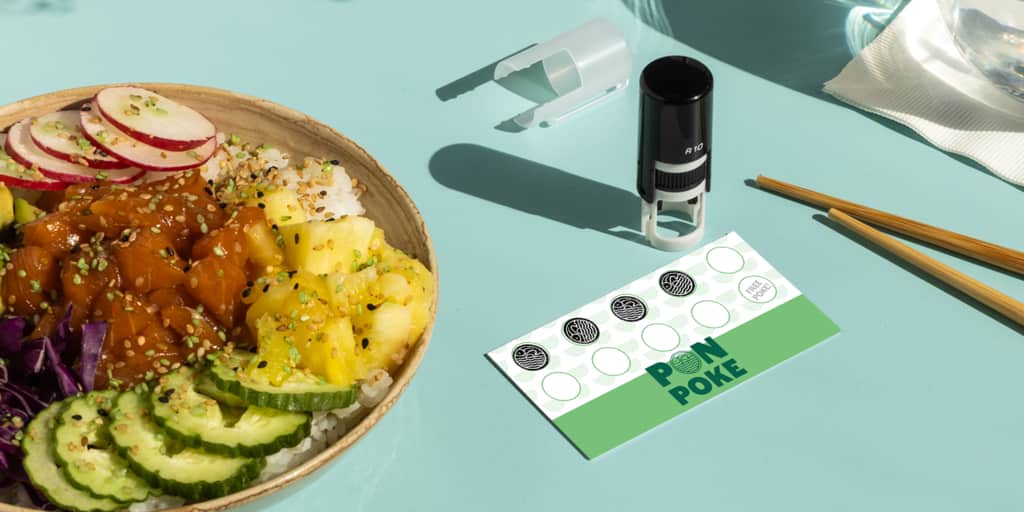
As businesses use AI to segment customers and tailor promotions, the promotional materials that support those campaigns need to keep pace. Personalization works best when the customer experience is consistent.
17. AI beyond marketing and extending into business operations
As AI in marketing becomes more common, many businesses are also starting to use AI tools for operations. Respondents reported using AI for food cost or pricing analysis (53%), inventory management or ordering (44%), menu planning or recipe development (41%), staff scheduling or labor optimization (37%) and customer service like chatbots or automated responses (36%).
Larger restaurant chains have been using AI for demand forecasting and inventory tracking as standard practice for a while, and small food and beverage businesses are now following in their footsteps.
AI can help you draft it, VistaPrint helps you create it
AI is already being used for food and beverage marketing and is fast becoming part of how small businesses market, grow and compete. In the VistaPrint survey, 47% of businesses reported using AI in marketing, with many saving 6-10 hours a week and saving $500 to $2,500 a month in marketing costs.
What AI offers small businesses is time-efficiency. It can create a first draft for a caption, promo, menu update or event flyer in minutes. After that, the work is making AI-generated content feel like your brand with a tone of voice and relevant details that keep your marketing materials from sounding generic.
The best results come from pairing AI tools with quality execution. VistaPrint can help turn AI-generated ideas into real-world brand assets: professional menus, signage, flyers, packaging, business cards, promotional products and marketing materials customers see every day, take home with them and keep them coming back!
Methodology: This survey was conducted online on December 9, 2025, with a representative sample of 284 U.S. Food & Beverage business owners and managers at companies with 100 or fewer employees.