 Zoomed to minimumUse plus and minus key to zoom and arrow keys to pan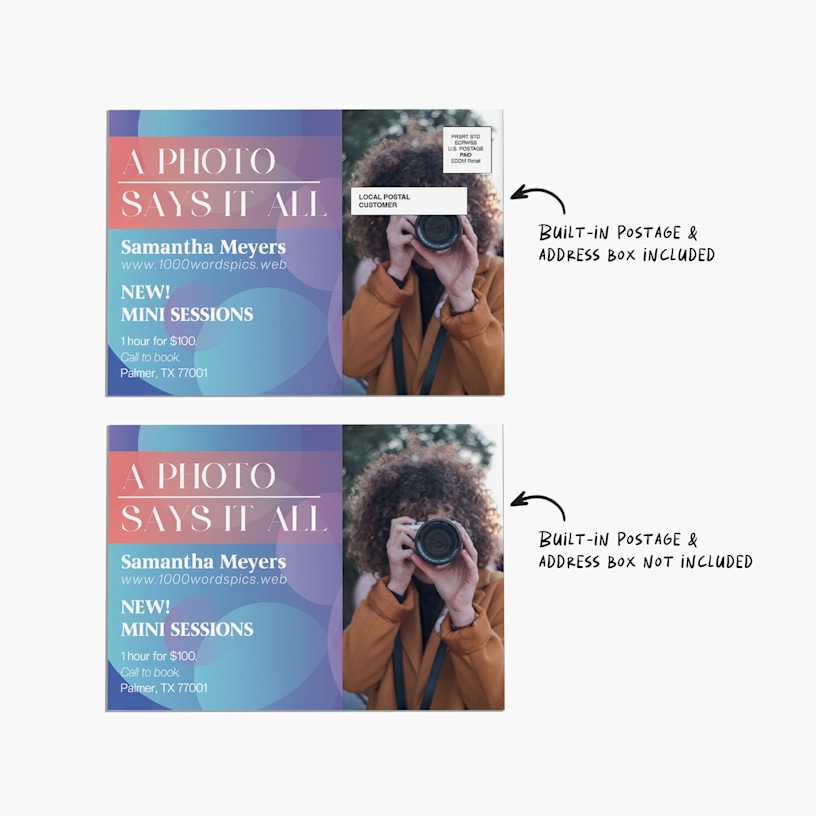



EDDM® Postcards

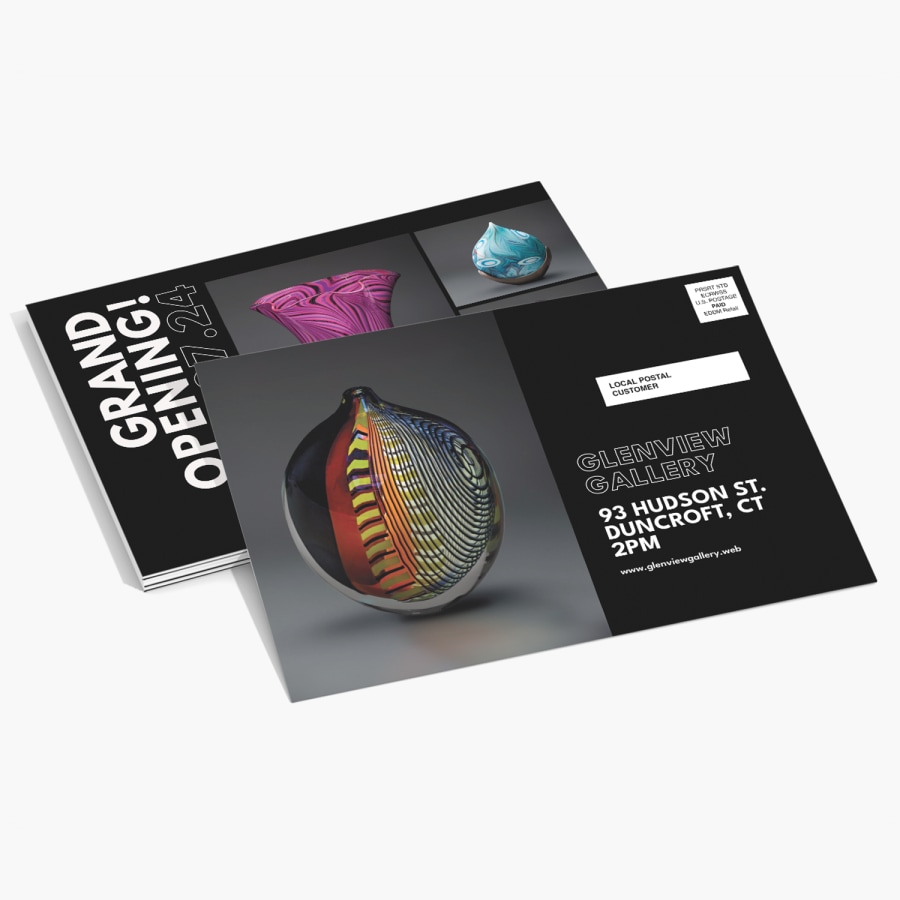
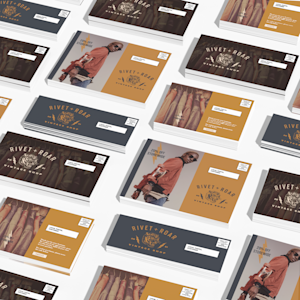
Reach an entire ZIP code with stylish and budget-friendly EDDM® postcards.
- NEW: Option to remove built-in postage & address box
- USPS-compliant design templates
- No mailing list required
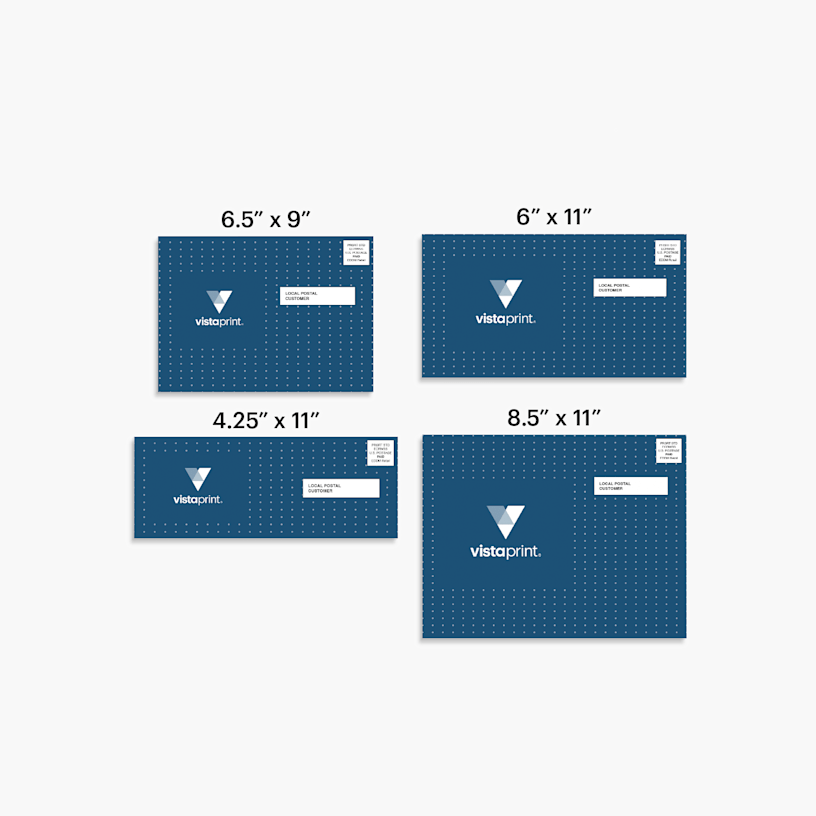
- 4 size options
- 2 paper stock options
- 2 paper thickness options
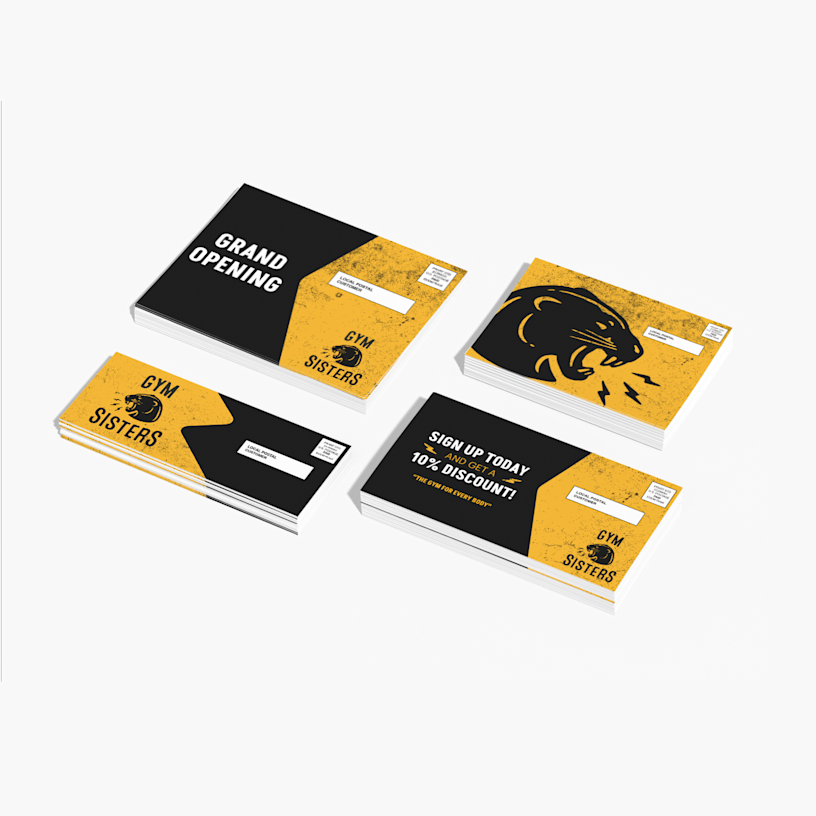
- Single- & double-sided printing options
Low-cost, high-value
Reaching customers can be a lot of work. With our EDDM® cards, you can send a standout, professional message to every home in an area – no address list needed. We’ve made the EDDM process even easier by providing postcards that meet all USPS physical requirements, including size, weight, shape and bundling. You can also add a USPS-approved postage and address box directly to your design.
1. Design your USPS-compliant postcard
Start by picking a postcard size and paper, then explore our library of postcard templates – or upload your own unique design. Each one of our templates complies with EDDM® regulations from the USPS. And if you’re uploading your own design, you can opt for us to add a pre-provided postage and address box for you. Next, customize your design with your message, photos and branding, or use our design services for help creating a professional look.
2. Receive them at your home
We’ll ship your postcards to your home address with your choice of standard, express or priority shipping. They'll arrive bundled in packs of 50 or 100 for a low-hassle trip to your local post office.
3. Drop them off at a USPS office
Once you’re at the post office, choose an area code to send your postcards to. No mailing list is required, but you can filter by age group and average income if you’re interested in a certain audience. USPS will send out your postcards. You can sit back, relax and get back to running your business.
Better by Design
This item is part of our Better by Design collection, which connects you to responsibly sourced products. Learn more.
What Makes it Better
Responsibly Sourced Materials:
Products made from responsibly sourced materials are designed to help reduce environmental impact. They're selected not only for the materials themselves, but also with consideration for the workers who farm and manufacture them, indigenous communities affected by production and the biodiversity in and around production areas.
Reviews
Reviewed by 202 customers