Creating a great product is a win in itself, but getting it in front of the right people is where real growth begins. Whether you’re a small business owner launching something new, a marketing specialist managing campaigns or an entrepreneur refining your go-to-market strategy, knowing how to market a product effectively is essential.
This guide breaks down a practical product marketing strategy for small businesses, from AI-accelerated research and positioning to digital campaigns, offline touchpoints, QR-coded packaging and post-purchase advocacy loops.
- Product marketing is the process of promoting and selling a product to the right audience, and it’s essential for building awareness, driving sales and standing out in a crowded market.
- To successfully market a product, you need clear positioning, targeted messaging, the right channel mix and continuous optimization based on performance data.
- Effective traditional product marketing strategies include direct mail, sampling, retail partnerships, in-store displays, printed materials and standout packaging.
- Digital tactics like social media, SEO, paid ads, AI research and social commerce help customers discover, compare and buy your product online.
- The best small business campaigns bridge physical and digital touchpoints using QR codes, NFC business cards, referral inserts and unboxing moments that turn customers into advocates.
Product marketing turns a clear value proposition into demand, trust and sales
Product marketing is the process of promoting and selling a product to the right audience in a way that highlights its value and benefits.
Done right, it connects the dots between what you’re offering and why anyone should care. That means knowing who your ideal customer is and what matters to them. From there, you tailor your pricing and positioning so your product earns attention, builds trust and ultimately gets picked over the competition.
Here’s what a strong product marketing strategy can do for your business:
- Cuts through the clutter: According to the 2025 Small Business Marketing Guide by VistaPrint x Wix, 62% of consumers say they struggle to choose between similar small businesses. Standing out is also among the top three challenges small businesses face today. Strategic product positioning helps clarify what makes your product different – and why it’s the better choice.
- Drives visibility and sales: If people don’t know your product exists, they won’t buy it. That’s why 58% of marketers focus on boosting brand awareness, according to LiveRamp. Product marketing ensures your offer is seen by the right people, in the right places.
- Builds customer trust and loyalty: When your messaging speaks directly to customer needs, it builds credibility. And trust leads to loyalty, repeat sales and referrals. In fact, 30% of small business owners in the 2025 Small Business Marketing Guide said word-of-mouth was their most effective growth driver.
- Makes every marketing dollar count: Small businesses don’t have the luxury of waste. A well-structured product marketing plan helps you focus on the tactics and channels that move the needle. A business growth strategy ensures that spending actually delivers results.
How to market a product: A step-by-step strategy
Marketing a product starts with understanding the customer problem, then building a launch plan around the right message, channel and follow-up.
Step 1: Market research
Before you can sell anything, you need to know where your product fits. Market research helps you spot customer pain points, competitor gaps and buying triggers before you spend time or money on promotion.
Traditional research still matters: surveys, interviews, reviews, competitor websites and customer conversations all give you useful raw material. But small businesses can now move faster with AI. Agentic AI tools can summarize competitor reviews, group common customer complaints, identify sentiment patterns and generate draft customer personas from real inputs. The key is to feed them grounded information. Use customer reviews, support emails, survey responses and competitor messaging as the source material, then ask the tool to find repeated pain points and decision triggers.
To make the research useful, organize it into three themes:
- Recurring problems
- Must-have features
- Purchase triggers
That gives you the foundation for your product marketing strategy.
Step 2: Identify your target audience
Once you understand the market, turn those insights into a clear target audience. This helps you shape messaging and avoid spending effort on people who are unlikely to buy.
Segment your audience by the details that actually affect buying decisions:
- Demographics
- Shopping behavior
- Needs
- Objections
- Preferred buying channels
If a detail does not change how you market the product, leave it out.
For example, a personalized gift brand might target time-strapped shoppers who buy from their phones, compare reviews and want products that feel thoughtful without a complicated design process. That simple persona can guide everything from product page copy to packaging inserts.
Step 3: Craft your value proposition
Now you need a clear reason for customers to choose you. Your value proposition explains what your product does, who it helps and why it is different.
A simple formula is:
“[Product] helps [audience] solve [pain point] by [key benefit or differentiator].”
For example, instead of saying “high-quality photo books,” say “durable photo books designed to preserve family memories for decades.” That is more specific, more emotional and easier to understand.
Use this message everywhere that matters: your product page, packaging, social posts, paid ads, retail displays, email campaigns and local outreach. Consistency makes the product easier to recognize and easier to trust.

Step 4: Product positioning and storytelling
Positioning defines where your product sits in the market. Are you the affordable go-to, the premium upgrade, the local favorite or the specialist choice? Storytelling turns that position into something customers can feel.
Instead of only listing features, show the moment your product fits into their life:
- The problem
- The solution
- The result
This is one of the classic principles of marketing, but it matters even more now because customers see your product across many small touchpoints before they buy.
Step 5: Create your marketing plan
With your positioning ready, turn it into a practical launch plan. Decide where the product will be sold, how it will be priced, which channels you will use and what each channel needs to do.
Your plan does not need to be complicated. It just needs a clear goal, budget, message, timeline and measurement plan. If you are weighing digital marketing vs. traditional marketing, use the customer journey as your guide. Digital is often better for discovery, retargeting and measurable conversions. Traditional marketing is often better for local trust, tactile product experiences and in-person decision-making. The best plan usually uses both.

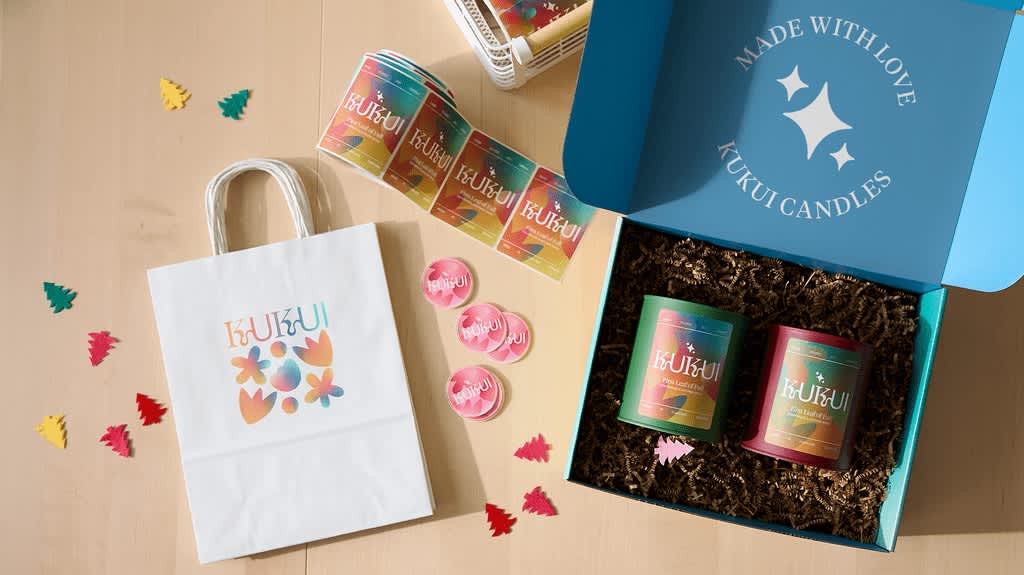
Premium product packaging design by IleanaP via 99designs by Vista

Premium product packaging design by IleanaP via 99designs by Vista
A channel selection matrix helps you choose the best marketing tactics
Use this matrix to match each channel to the outcome you want, instead of choosing tactics just because they are popular.
| Channel | Best for | Budget level | How it supports product marketing |
| Social media | Awareness, education and community | Low to medium | Shows the product in use and builds familiarity |
| SEO and website content | Long-term discovery and comparison | Low to medium | Helps buyers find answers before they purchase |
| Paid ads | Fast visibility and launch traffic | Medium to high | Drives targeted traffic to product pages |
| Direct mail | Local reach and tactile reminders | Medium | Puts your offer directly in customers’ hands |
| Packaging and inserts | Retention, referrals and unboxing | Low to medium | Turns the product experience into a marketing moment |
| Local micro-influencers | Neighborhood trust | Low to medium | Uses trusted community voices to introduce the product |
| Retail displays and sampling | Trial and in-person conversion | Medium | Lets customers see, touch or test the product |
Digital product marketing builds discoverability, trust and online sales
Whether your product is sold in-store, online or both, customers often check your digital presence before they buy. That makes digital marketing a core part of product promotion, not an optional extra.
According to the 2025 Small Business Marketing Guide by VistaPrint x Wix, business owners and consumers agree on what drives real results in the digital space. The top three tactics are social media, branded websites and online reviews.
And websites, in particular, carry weight.
- 76% of small business owners say their website is “essential” or “important” for growth
- 81% of consumers say having one matters
- 42% of consumers say they’ll look elsewhere if a business doesn’t have one
- Another 14% of consumers start to question if the business is even legitimate
Use AI and marketing trends to move faster without losing the human touch
The most useful marketing trends are not about chasing every new tool. They are about finding better ways to understand customers and remove friction from the buying journey. AI and social commerce are two good examples.
Use AI for faster research, better segmentation and smarter testing
AI can help small businesses analyze reviews, draft customer personas, brainstorm product page angles, test ad variations and group audiences by likely needs. Think of it as a research and planning assistant, not a replacement for your judgment. The best results come when you combine AI speed with real customer conversations and brand knowledge.
Use social commerce to shorten the path from discovery to checkout
Social media has evolved from a promotional tool to a full-fledged sales channel, and consumers are all in. Seventy percent of shoppers use Instagram to discover products. Nearly half of Gen Z starts their search on TikTok, ahead of Google or Amazon. And 53% of global consumers plan to shop more through social media in the future.
Use product tags, shoppable posts, short demos and customer videos to make the buying path simple. For small businesses, the goal is not to be everywhere. It is to show up consistently where your target audience already spends time.

Social media marketing
Social media is where many customers first see your product, but it is also where they look for proof. Use it to show demos, behind-the-scenes moments, customer reviews, product comparisons, launch teasers and real-life use cases.
Instagram and TikTok are strong for visual products, Facebook can support local community and retargeting, and LinkedIn works well for B2B products. A simple content calendar keeps your product visible without making every post feel like a sales pitch.
Optimize your product for search engines so customers and AI tools can find it
Search still matters, especially when customers compare options before buying. Start with the words real customers use, then include them naturally in product titles, descriptions, image alt text, FAQs and supporting blog content.
A small business SEO guide can also help you build topic clusters around common customer questions, comparisons and use cases. The goal is to make your product easy to understand for people, search engines and AI-generated summaries.
Build trust with local micro-influencers
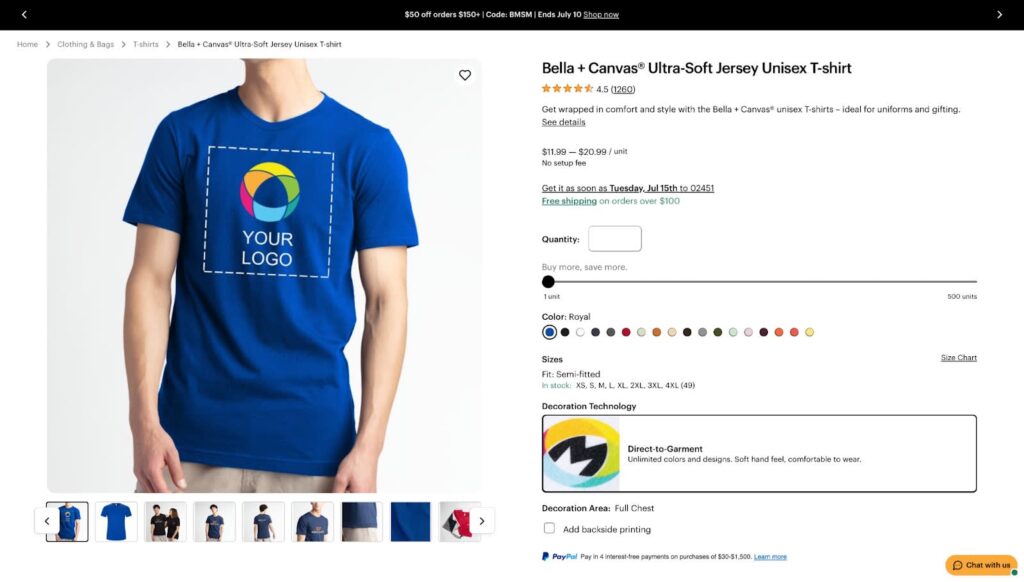
For many small businesses, the best influencer is not a celebrity creator. It might be a local shop owner, event organizer, fitness instructor, stylist, teacher, maker or community newsletter writer with a trusted neighborhood audience. This community micro-influencer strategy works because the recommendation feels close, relevant and real.
Here are a few ways to collaborate:
- Unboxings or first impressions
- Product demos or tutorials
- Limited-edition product drops
- Behind-the-scenes production content
- Giveaways or discount code promotions
- Honest reviews or product roundups
Done right, influencer collaborations put your product in the hands of someone your customers already trust, and that kind of endorsement is hard to beat.
Paid advertising
Paid ads can give your product a faster push during a launch, seasonal promotion or test campaign. Google Ads can capture high-intent searches, Meta ads can build awareness and retarget interested shoppers and LinkedIn can work for B2B products.
Keep campaigns focused by testing one message at a time, using strong product visuals, setting a clear budget and cutting anything that does not move people toward purchase.
Offline product marketing creates tangible touchpoints that build local trust
While digital tactics dominate the spotlight, traditional marketing still delivers, especially when promoting products locally. According to the 2025 Small Business Marketing Guide, 64% of consumers prefer shopping in person, and 67% say face-to-face connections are easier to build.
If your product exists in the real world, your marketing should, too. From print and packaging to what’s in your window, offline tactics still play a key role in getting products seen.
Direct mail
Direct mail can be surprisingly effective for product marketing, especially when it’s targeted and tactile. A well-designed postcard, flyer or mini catalog puts your product directly into someone’s hands, often with far less digital noise.
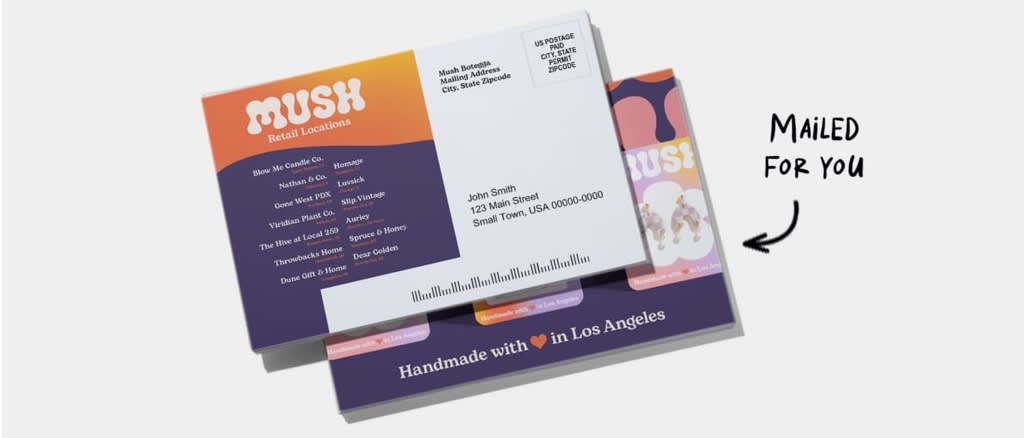
To make direct mail count, focus on clarity and strong visual appeal. Here’s what to include:
- A high-quality product photo
- Clear product name and benefit
- A short, punchy message or offer
- QR code or trackable link for easy follow-up
- A call-to-action that leads somewhere specific (order, visit, sample, etc.)
No matter what type of direct mail you go for, remember to keep it simple, brand-aligned and outcome-driven.
Retail partnerships
If you don’t have a storefront, borrow one. Retail partnerships let you showcase and sell your product in someone else’s physical space, like a local boutique, chain store or even a pop-up in a complementary business.
This kind of partnership can include product placement, shared promotions or co-branded displays. It gives customers a chance to interact with your product in person and lends immediate credibility. Support the partnership with small displays, product cards, samples and co-branded signage.
Sampling
Sampling removes the risk of trying something new. Offer samples where your ideal customer already is, then pair each one with a printed card, QR code, discount or referral offer that makes the next step easy.
Product demonstrations
Product demonstrations are useful when customers need to see, touch or test the product before they understand its value. Use trade shows, in-store events, local markets or workshops to answer questions in real time. Then reuse those moments as social videos, email content and product page proof.

Use packaging as a phygital bridge between the product and your digital community
Beyond a protective layer to keep your product safe, your product’s packaging is a key touchpoint in your marketing strategy. Smart, well-executed product package marketing can drive purchase decisions, generate organic reach and leave a lasting brand impression.
Here are a few proven ways to use packaging to market your product more effectively:
- Wow-factor unboxing: Use layered reveals, custom inserts or surprise details that encourage customers to share the experience online. A single social post can carry your product far beyond the checkout.
- Multi-use packaging: Design packaging that serves a second purpose. Think jars that double as decor, boxes that convert into organizers, or pouches that reseal and stay useful. It keeps your product in sight and in use.
- Interactive in-store displays: Use packaging that contributes to your merchandising like fold-out formats, shelf-ready designs or QR codes that unlock content, demos or limited offers.
- On-pack storytelling: Make every surface count. Use short, benefit-led copy to highlight product features, usage tips or brand values.
- Designed to stay visible: Create packaging people don’t want to throw away. Whether it’s display-worthy design or collectible editions, keeping your product in view keeps your brand top of mind.
Print materials
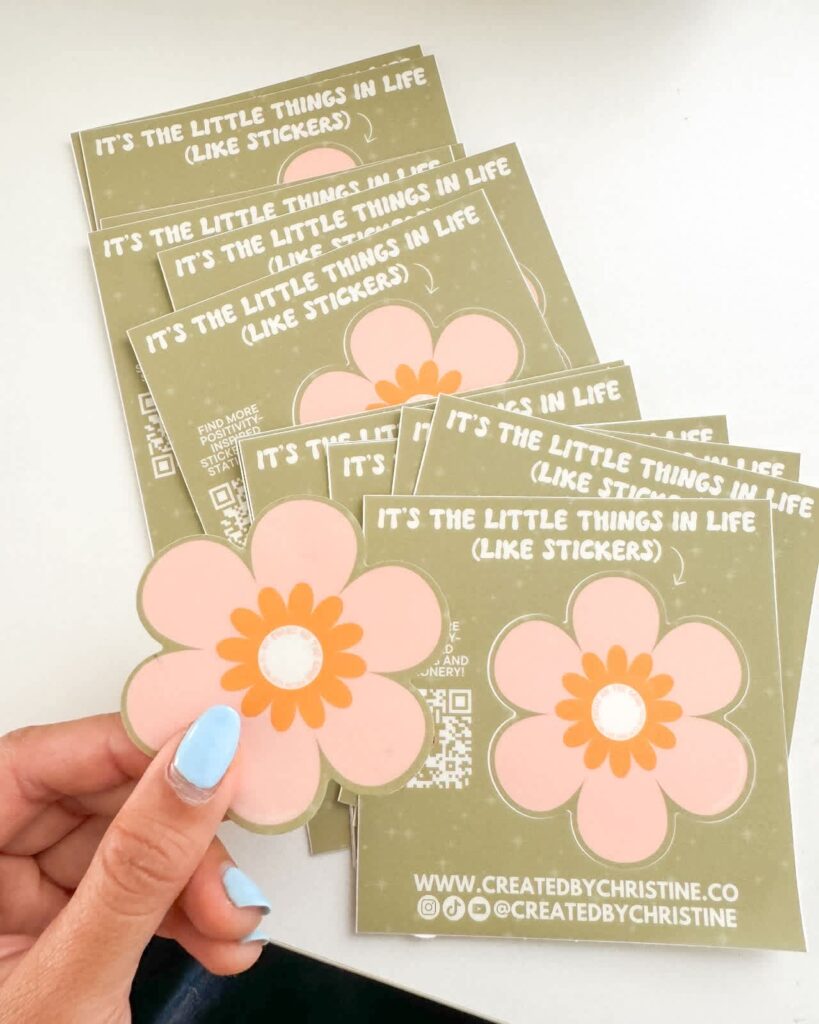
Print materials are useful when they give customers something clear to keep, scan or act on. A sharp sell sheet, product card, flyer, sticker, poster or banner can explain benefits quickly and support conversations at events, retail counters and local partnerships. Every printed piece should have one job and one next step.

Point-of-sale displays
Point-of-sale displays help shoppers notice your product at the exact moment they are deciding what to buy. Use clear visuals, benefit-led copy and a simple offer to turn foot traffic into product movement. The display should feel connected to your packaging, website and campaign message.
How to market a product successfully: Measuring success
Whether you’re using digital channels, traditional tactics or a mix of both, tracking performance is really important. To improve what you’re doing, you need to know what’s actually working.
Start with the essentials:
- Conversion rate tells you how well your product page or offer is convincing people to buy. Low rate? Revisit your messaging, visuals or pricing.
- Customer acquisition cost (CAC) shows how much you’re spending per sale. If CAC creeps too high, refine your targeting or test lower-cost channels.
- Return on investment (ROI) reveals whether your campaigns are worth the spend. Positive ROI? Double down. Negative? Reallocate your budget.
Look at performance by channel, message and product variant. Use those insights to tweak your marketing mix.
Common mistakes to avoid when measuring product marketing
Even with the right metrics, marketers often slip up. Here’s what to watch out for:
- Focusing on vanity metrics. Page views and social likes feel good, but they rarely correlate with revenue, so always prioritize metrics that tie to business goals, like conversions and CAC.
- Looking at results in isolation. High ROI on one channel doesn’t mean it’s working on its own; make sure to check how touchpoints work together across the customer journey.
- Measuring too soon (or too late). Some campaigns take time to deliver results so it’s best to track in intervals (early signals, mid-campaign and post-campaign) to get the full picture.
- Ignoring external factors. Seasonality, competitor activity or pricing shifts can skew results; be sure you’re comparing like with like before acting on the data.
- Failing to segment. A campaign might flop overall but crush it with a specific audience. Slice your data by demographics, location or behavior to uncover what’s really working.
Post-purchase advocacy turns one sale into repeat sales and community
The sale is not the end of your product marketing strategy. It is the beginning of the next customer relationship. After someone buys, use packaging inserts, follow-up emails, referral codes, loyalty offers and review requests to encourage the next action.
A simple advocacy loop looks like this: the customer buys the product, enjoys a thoughtful unboxing, scans a QR code for care tips or bonus content, receives a referral offer, shares the product with a friend and comes back for a repeat purchase. This is where physical and digital touchpoints work together beautifully.
Ready to market your product?
Marketing a product works best when every touchpoint has a job. Your research defines the audience. Your positioning explains why the product matters. Your digital channels build discoverability. Your offline materials create trust. Your packaging and follow-up turn customers into advocates.
Start with one clear product story, then carry it through your website, social posts, packaging, print materials, local partnerships and post-purchase follow-up. And when you are ready to bring that story into the real world, VistaPrint can help you create the printed tools, packaging and branded materials to promote your product with confidence.
FAQs on how to market a product
What is the difference between traditional and digital marketing?
Traditional marketing uses offline channels like direct mail, print materials, packaging, signage, retail displays and events. Digital marketing uses online channels like websites, SEO, email, social media, paid ads and social commerce.
Which is better for small businesses, digital or traditional marketing?
Neither is automatically better. Digital marketing is often easier to test and track, while traditional marketing can be stronger for local trust, in-person selling and tactile product experiences. Most small businesses benefit from a mix.
How can I combine online and offline marketing?
Connect physical materials to digital actions. Add QR codes to packaging, flyers, postcards and displays. Use NFC-enabled business cards at events. Send direct mail that leads to a landing page. Follow up after purchases with emails, referral codes and review requests.
What are examples of traditional marketing?
Examples include direct mail, brochures, flyers, postcards, catalogs, posters, banners, signage, packaging, sampling, retail displays, trade shows, local events and point-of-sale materials.
Is digital marketing cheaper than traditional marketing?
Digital marketing can be cheaper to start because you can test with small budgets and track results quickly. Traditional marketing can cost more upfront, but it can deliver strong value when it reaches the right local audience or supports a physical product experience.