More Americans are developing their side hustles to make money, and many of those side gigs are starting to look a lot more like real businesses. To understand what’s behind that shift, we surveyed 1,000 Americans who balance a traditional job with at least one active, revenue-generating side gig.
The survey shows that what begins as extra income can quickly become an income-generating business with the right tools and branding. This article maps the journey from hobby to brand: why people start, what makes them commit and how professional branding like logos, websites, social media, business cards and merch can help side giggers feel more confident, look credible and grow faster.
- Side hustles span everything from retail brands to creative, tech, wellness and food businesses.
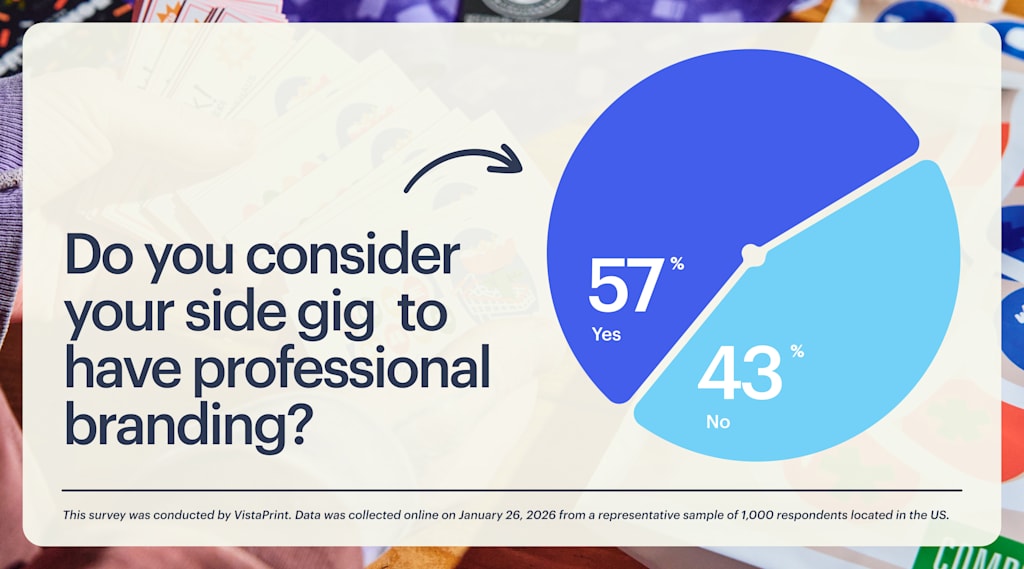
- Of survey respondents, 57% already have professional branding, most investing in it in the first year.
- Branding helps in real ways: 53% say it boosts confidence, 51% say customers take them more seriously and 48% say it helps attract clients.
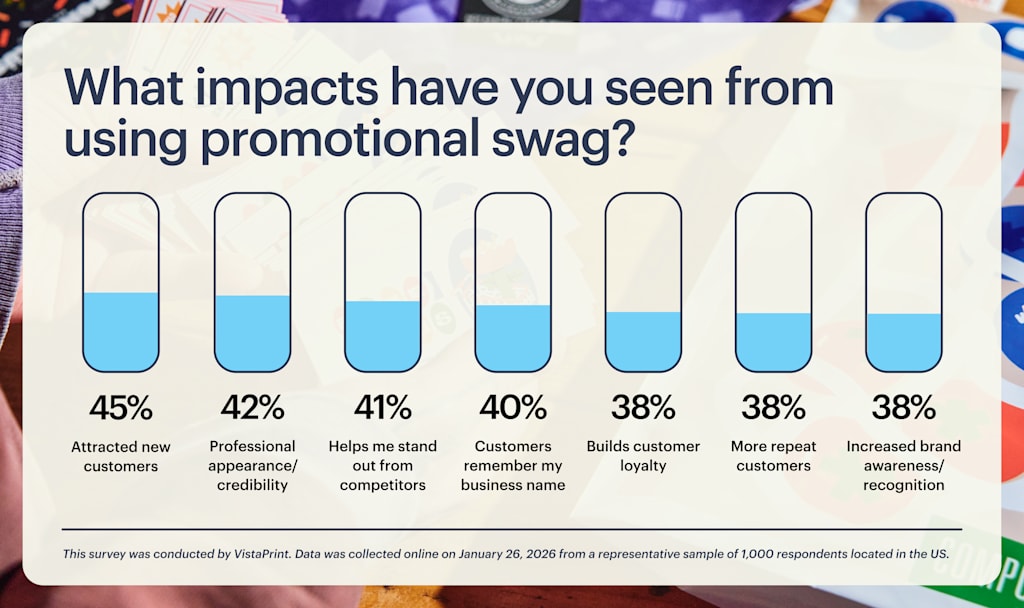
- Nearly half (45%) say merch helped to attract new customers, 42% say it improved professional appearance and credibility, and 41% say it helped them stand out from competitors.
- Of all survey respondents, most (66%) have considered turning their side gig into a full-time business.
Side hustle survey methodology
This survey was conducted online on January 26, 2026, with a sample of 1,000 respondents in the U.S. We surveyed Americans who are balancing a traditional job with at least one active, revenue-generating side gig.
If you’re interested in checking out all the available data, browse the full survey results.
What is a side hustle?
A side gig is a self-run business activity, freelance work or income earned independently, not a second W-2 job or a regular part-time job. This is about people building a business of their own, whether it’s delivery services, coaching, dog walking, reselling, freelance design or jewelry making. When the business is yours, its story, visual identity and how people remember it start to matter fast.
Why are side hustles becoming more common?
Side gigs are becoming a regular part of how people work and earn. Nearly 60% of survey respondents have been running their side gig for at least a year, while 40% have been side hustling for 1-3 years. People are also investing more time. A combined 67% spend 6-20 hours per week on their side gig. That’s a serious commitment on top of a primary job, showing that extra income has become part of many’s financial strategy.
The reasons for starting a side hustle are both practical and personal. A top reason (33%) was keeping up with inflation or rising living costs, while 30% started by pursuing a passion or hobby. Another 28% wanted to build savings, 28% wanted money for discretionary spending and 27% wanted more flexibility and control.
That mix explains why side gigs are becoming more common. They help cover real financial needs, and offer freedom and ownership. And once they start generating income, side hustles often get serious quickly. Of the people we surveyed, 66% say they’ve considered turning their side gig into a full-time business.
9 key findings from VistaPrint’s side hustle survey
The survey results reveal that side giggers are treating their businesses more seriously, investing in branding earlier and using practical marketing tools to build trust, attract customers and grow with confidence.
1. Most side hustles are a solo mission with a small budget
Most side giggers surveyed are building their side hustles alone with 71% having no employees or contractors. It’s just them managing the work, the customers and the marketing.
Revenue and spend is modest. Nearly half earn $1,000 or less per month, while 66% earn $2,500 or less. With tight budgets, tools need to be affordable and useful. The most common planned marketing spend for side giggers next year is just $501 to $1,000.
That’s why professional branding matters. Side giggers need brand materials to look established, including well-designed business cards, flyers and branded promotional items. Logos, websites and social media profiles can help small businesses look legit faster.
2. Branding early helps to build a customer base
Over half (57%) of respondents say they already have professional branding elements including a logo, business name, brand colors and branded materials.
Among those side giggers who invested in a brand identity, 75% did it within the first year, 21% within the first three months and 32% in the first 4-6 months. Because branding can help businesses feel more established and build trust with potential customers, that’s a strong case for making branding part of your marketing strategy side hustle earlier rather than later.

The top reasons respondents gave for investing in professional branding was to look more polished (49%), appeal to existing customers (46%) and to be more credible (43%). For many side giggers, branding is one of the first business decisions they make.
3. Branding boosts confidence and credibility
Branding design affects how customers respond to your business. Among those with professional branding, 53% say it gives them more confidence. That’s huge when you’re trying to pitch your work, charge your rates and show up like a real business owner.

Professional branding also affects customer perception. Most respondents (51%) say branding helps customers take them more seriously, while 48% say it helps them attract better clients. Another 41% say it helps them stand out from competitors.
Browse small business branding design examples for inspiration.
4. Combine online presence with physical credibility
The most effective side hustle marketing strategies combine a mix of digital and physical assets. Nearly half (42%) have a social media presence, while 36% have business cards, 33% have a business website and 32% have a brand logo design. For 19% of respondents, social media was the first tool, followed by business cards at 18%, a website at 13% and a logo at 10%.
Need a business website? Create a website for free today with Vista x Wix. Build a website
Social media helps people discover your business, your website gives them the details and a business card gives them something tangible. Digital gets you seen, print helps you feel legit. When you combine the two, you’ve got a hybrid marketing strategy that makes it easier for customers to find, trust and remember you.
5. Word of mouth is important, supported by branded materials
Respondents (17%) stated the top source of customers or revenue is word of mouth, followed by organic social media at 14% and paid ads on socials at 11%.
That makes sense as side businesses often grow through building trust. But word of mouth works better when potential customers have a physical brand asset to remember and share. Business cards, flyers, postcards and thank-you cards give customers a reminder of who you are and what you offer, making referrals easier because people have something tangible to pass along. If people are already talking about your brand, marketing materials help keep those conversations going.
6. Promotional swag helps attract new customers
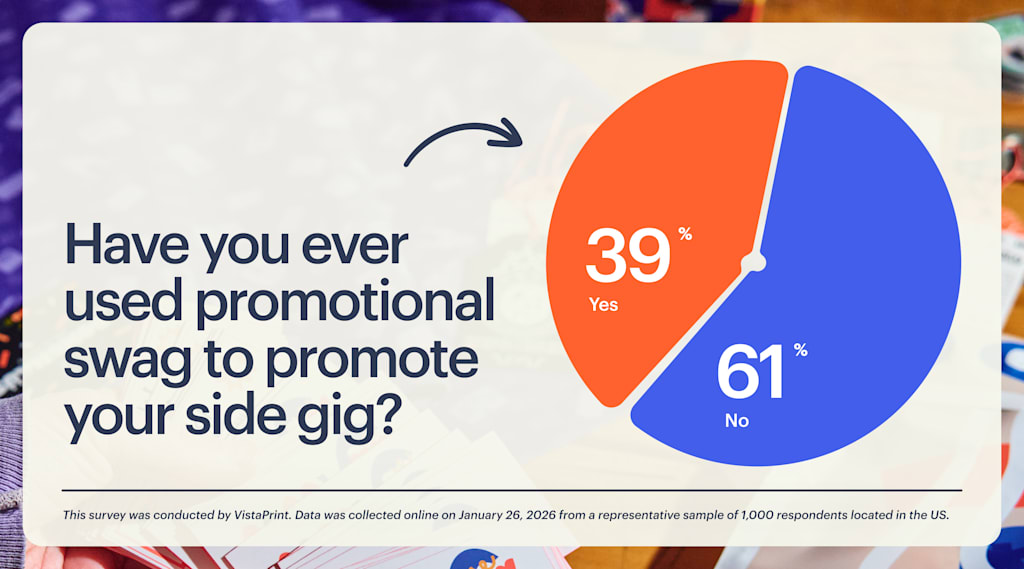
Of survey respondents, 39% have used promotional items like pens, stickers, tote bags, magnets or keychains to promote their side hustle business.
Among those who have used promotional merch, 45% say it attracted new customers, 42% say it improved professional appearance and credibility, 41% say it helped them stand out from competitors and 40% say it helped customers to remember their business name.
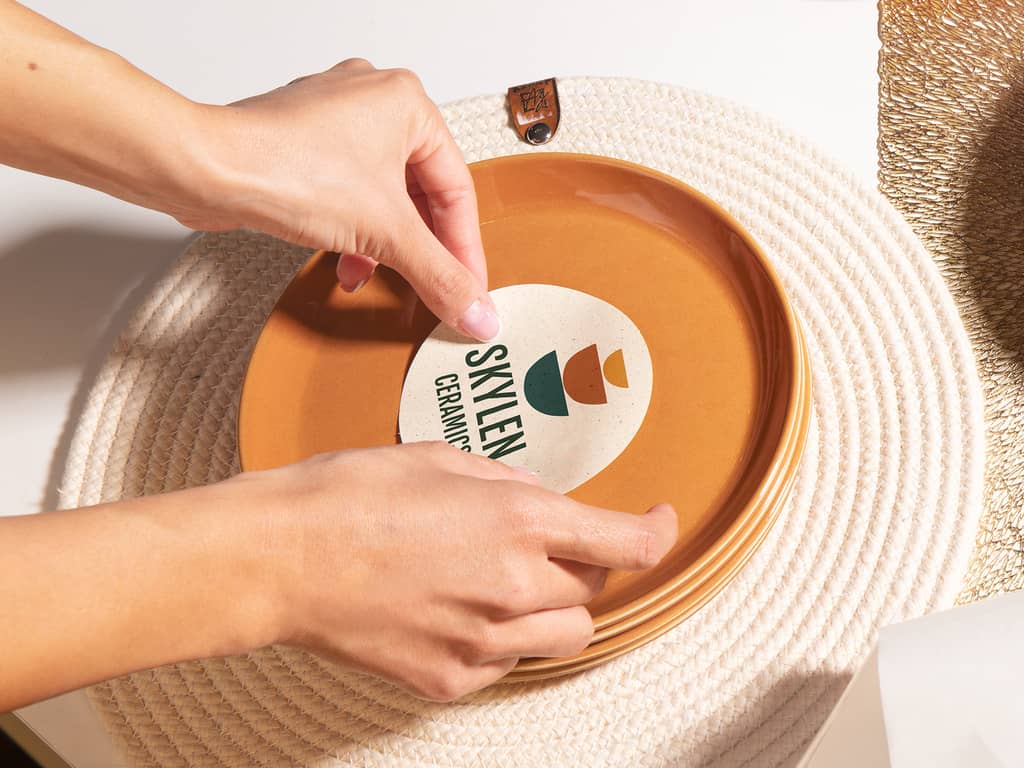
When surveyed, respondents said the branded merch items most popular with customers were pens or keychains (45%), apparel (43%) and stickers or magnets (36%).
Want to create branded merch for your side hustle business? Read our guide on how to make merch.
Affordable swag keeps your brand name visible and memorable, especially for local businesses, and can encourage repeat customers. Merch is a smart addition to a practical marketing strategy side hustle.
7. How to turn a side hustle into real income
A lot of side giggers are thinking beyond extra income, with 66% of respondents saying they’ve considered turning their side gig into a full-time business.
But before that were to happen, 45% said they would need to build a larger customer base, 44% would need income to be more consistent, 40% would need to strengthen their brand and reputation, and 39% said they’d need to reach a specific monthly revenue.
8. AI tools can help side hustles to make money
AI is already part of the side gig toolkit, with 44% of respondents saying they already use AI tools and another 16% say they plan to start. Among AI users, 46% use AI for idea generation or business planning, 42% for marketing or social content and 42% for product descriptions or website copy. Another 41% use AI to create logos, graphics or visuals.
Side giggers can use AI tools to brainstorm and draft content, then use online tools to turn those ideas into polished, branded materials that are ready to print, post or share online.
9. Side hustles offer personal fulfilment as well as income
Generating income is important, but it’s not the only reason for persevering with a side hustle. When asked about the biggest personal benefit beyond income, 42% said flexibility, 38% said pursuing their passion and 37% said a sense of independence or control. Another 33% cited creative fulfillment, while 30% claimed it gave them new skills and confidence and 28% said it helped them to connect with customers or community.
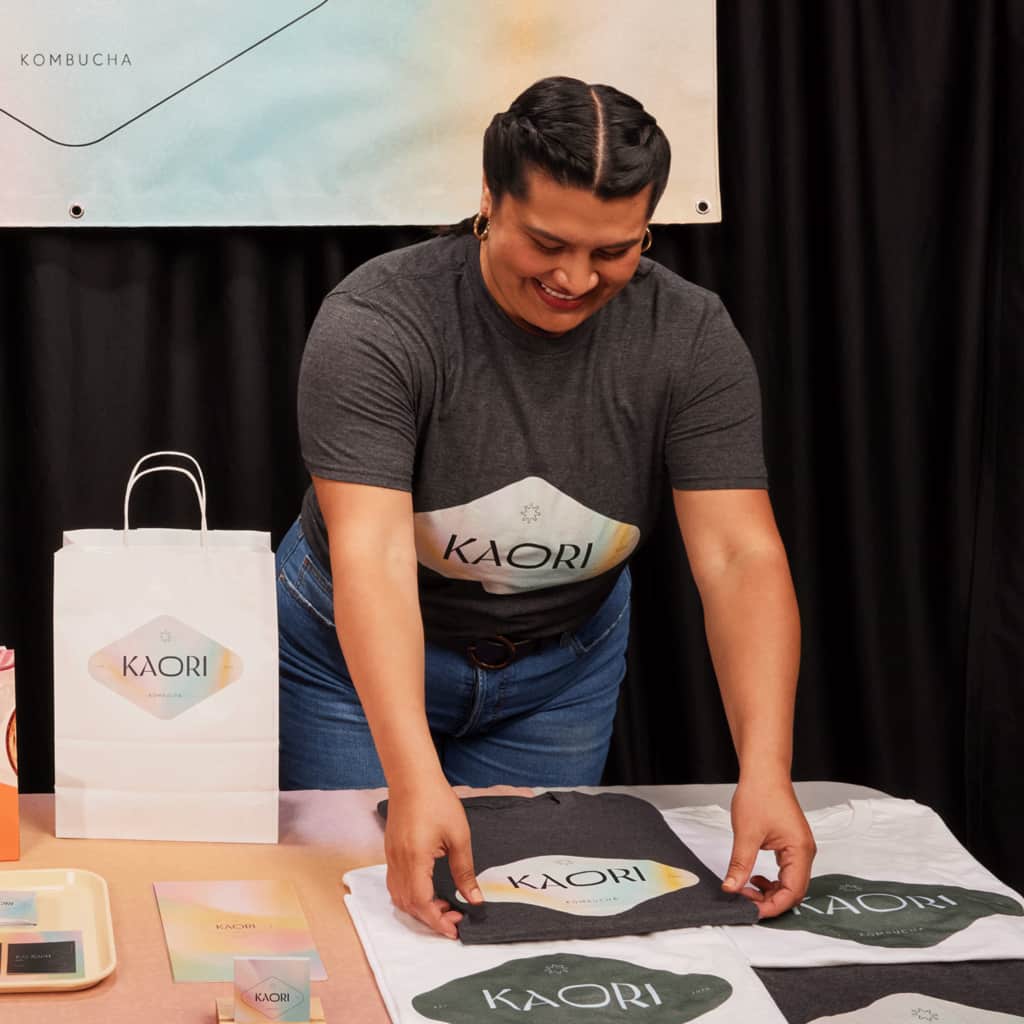
That emotional payoff helps explain why side giggers are investing in branding. When something matters, you want it to look trustworthy and legit. You want to feel proud handing someone your business card, sending them to your business site, giving away a branded T-shirt or packaging an order with your branding on.
Ready to make the most of your side hustle?
The big message here is simple: you don’t have to wait until your business has grown to start looking more professional – most side giggers don’t. More than half already have professional branding, and among those who do, 75% invested within the first year. Branding builds confidence, boosts credibility and attracts clients. It also supports the way side gigs grow: through referrals, repeat customers and strong first impressions.
Most side businesses are budget-conscious, which is why affordable branding tools matter. A logo, a simple website, business cards, packaging or a few smart promo items can make your business feel established. Branding just helps your business look as real as the work you’re putting into it.
Side hustle FAQs
How do I know when it’s time to quit my job and go all-in?
Wait for stability and predictability, not one great month. If you’ve had steady demand for several months, you can roughly forecast your income and build a cushion for slower periods. Many test the transition gradually by reducing hours or going part-time first, which lets you prove the business can support you without taking the leap before you’re ready.
Do I need to register an LLC before I start calling my side hustle a “business”?
No. You can market and operate like a real business well before you file anything. If you’re still testing demand, focus on the basics you can control: a clear offer, a business name you can stick with and consistent branding that makes you recognizable.
How do I pick a business name that won’t box me in later?
Pick a brand name that’s easy to say out loud and that customers can spell after hearing once. It should also be flexible enough to grow with your business, for example if you expand beyond one product or service later.
What’s the fastest way to figure out if my idea has real demand?
The fastest way to test if your business has real potential is with a practice launch. Offer a limited version of your product or service to a small group, set a price and see what the demand is. Likes and compliments can be encouraging, but payment is the clearest signal that you’ve got something with the potential for success.
How should I price my side hustle if I’m worried people won’t pay?
Decide your price around your time, materials, fees and a little buffer so you’re not losing money if things don’t go to plan. Once you’re consistently booked, selling out or getting repeat requests, it’s a sign you can raise your prices while retaining loyal customers.