There are many different hoodie materials, each coming with its own strengths in comfort, warmth and print-friendliness – factors that really matter when designing merch! Some fibers hold ink better, some materials are cozier in cold weather and others are a great fit for athletic wear. This hoodie material guide breaks down the most common hoodie fabrics by their strengths and ideal uses. You’ll learn how fabric weight (GSM) affects warmth and durability, which materials produce the best results for hoodie printing, how blends affect performance and how texture affects logo printing. A quick comparison table and simple decision framework will help you choose the right hoodie fabric for branded merch, workwear or retail apparel.
- The best fabric for hoodie printing comes down to use case, design and audience expectations, and depends on factors like fabric weight (GSM), warmth, breathability and printing method.
- Cotton and French terry make great hoodie fabrics because they’re comfortable and print-friendly.
- For workwear and cold-weather hoodies when warmth and durability are priorities, heavier fabrics like fleece and wool work best.
- Polyester, nylon and spandex blends handle moisture and movement well, making them ideal fabrics for performance hoodies.
- Fabric blends balance comfort and durability but may be less breathable depending on the fiber mix.
Hoodie fabric considerations
Before exploring the different hoodie fabric types and uses, it helps to consider how the hoodie will be worn and by who. For example, the best hoodie fabric for gym brand merch will differ from the right hoodie material for employee apparel, event giveaways or premium retail clothing.
When creating custom hoodies, consider your audience, the climate and the printing method. This quick hoodie material guide highlights the key factors that influence performance, comfort and design quality.
Hoodie fabric weight (GSM guide)
Hoodie fabric thickness is measured in GSM (grams per square meter) and affects the warmth, structure and overall hoodie fabric durability.
Here’s a simple hoodie fabric weight GSM guide:
- Lightweight hoodies (200-250 GSM): Breathable and easy to layer. Lightweight fabrics include French terry or tri-blends and are used for promotional giveaways, activewear or spring merch.
- Midweight hoodies (250-300 GSM): A versatile everyday option. Midweight fabrics include cotton and cotton-poly blends, and offer comfort, durability and reliable results for hoodie printing.
- Heavyweight hoodies (300-400+ GSM): Thick, warm and durable. Heavyweight fabrics including fleece or dense cotton are common in workwear, premium streetwear and cold-weather apparel.
For custom embroidered hoodies, heavier fabrics tend to hold their shape better and support stitching without puckering.
Hoodies make great business merch. Explore what other small business promotional items you can print your brand logo on.
Warmth
Different hoodie materials provide different levels of insulation. Heavy cotton, wool and fleece hoodies are popular for colder climates, while certain types of hoodies such as zip-ups or oversized pullovers may be easier to layer over other clothing.
Fabric weight also plays a role here: higher-GSM fabrics typically provide better insulation.
Wicking capability
Polyester and spandex blends are widely used for athletic or outdoor apparel because they wick sweat away from the skin and dry quickly. Wool is another hoodie fabric used in performance outdoor garments because it regulates moisture.
Stretch
Fabrics that include spandex (often called elastane) are stretchy, so that the garment moves with the wearer and maintains its shape over time, which is especially useful for activewear.
Breathability
Natural fibers such as cotton and bamboo allow air to circulate easily, making them comfortable for everyday wear, while synthetic fabrics generally manage sweat better. That’s why cotton-poly blends are often used for hoodies, as they offer both breathability and performance.
Printing method
The printing technique you use will influence your choice of hoodie fabric material:
- Screen printing and direct-to-garment (DTG) printing: Cotton and cotton blends are usually the best fabric for hoodie printing because they absorb ink well and produce crisp, vibrant designs.
- Sublimation: Works best on polyester or poly blends, where the dye bonds directly with the fibers.
- Embroidery: Compatible with most hoodie fabrics, though thicker materials like fleece or heavyweight cotton can support detailed stitching better.

Fabric texture and logo placement
The hoodie texture impacts how well a logo prints or stitches. Some hoodie fabrics provide a clean, even surface that prints ink well. Others have raised fibers or brushed finishes that can absorb or scatter ink slightly, which may soften edges or reduce fine detail.
Always consider how the fabric structure will interact with the design:
- French terry: This fabric has looped yarns on the inside but a smoother outer surface that prints ink evenly, making French terry a good choice for screen printing or DTG.
- Fleece: Fleece is brushed to create a soft, fuzzy pile. That texture can slightly blur printed designs because ink settles between fibers. Embroidery or patches deliver cleaner branding on fleece hoodies.
- Heavyweight fabrics: Dense hoodie fabrics with higher GSM provide a reliable canvas for stitching. The structure helps prevent puckering around embroidered logos and supports heavier thread coverage.
Need a branded hoodie for your small business? Learn how to design a hoodie in our guide.
Hoodie fabric types and uses
Not all hoodie fabrics perform the same, and the differences become clear once you start matching materials to real use cases. Some are built for comfort and clean print results, while others excel in durability, moisture control or sustainability.

To make this hoodie material guide easy to navigate, we’ve grouped the most common hoodie fabrics by their strengths and typical use cases, helping you to find the right hoodie fabric quickly, whether you’re creating branded merch, athletic apparel or durable workwear.
Everyday comfort hoodie fabrics
These hoodie fabrics are popular for casual wear, company merch and retail apparel. They prioritize softness, breathability and print quality, making them a reliable choice for everyday hoodies.
1. Cotton
Soft, breathable and comfortable, cotton is a classic choice of hoodie fabric.
- Comfort: Cotton feels great against the skin and tends to get even softer with repeated washes.
- Print: Screen printing or direct-to-garment (DTG) printing shows up crisp and colorful on cotton.
- Drawbacks: Cotton hoodies can shrink if not washed properly. Cotton also doesn’t wick moisture as well as synthetic fabrics, meaning it’s not a good fit for athletic wear.
But if your brand hoodie goals are everyday style and comfort, you can’t go wrong with cotton.
2. French terry
For a hoodie that’s cozy but not too heavy, French terry might be the right choice of fabric.
- Two-sided texture: One side of French terry has small loops, and the other is smooth, giving it a breathable, lightweight feel.
- Versatile: Because it’s relatively lightweight, French terry hoodies work well for everything from casual office settings to light workouts.
- Printing: Often made from cotton or cotton blends, French terry is typically print-friendly (screen printing, DTG and embroidery).
French terry hoodies strike a balance between style and comfort and are lightweight enough for certain uses.
3. Rayon
Rayon is a semi-synthetic fiber made from wood pulp, offering a unique combination of softness and drape.
- Soft and flowing: Rayon’s feel can be compared to silk as it’s smooth, lightweight and breathable.
- Printing: Most printing methods work on rayon, but screen printing and DTG tend to give the best results due to the fabric’s smooth surface.
- Care: Be extra gentle during washing as rayon is a delicate material. Rayon can shrink or wrinkle easily, so if you choose this hoodie fabric material, label your merch with detailed care instructions.
If your brand is luxe or fashion-forward, rayon or rayon blends can be an elegant choice.
Performance hoodie fabrics
Performance hoodies need fabrics that can handle sweat, movement and repeated wear. These materials are commonly used for gym apparel, outdoor gear and athletic merch collections.
4. Polyester
Polyester hoodies are surprisingly soft with added performance benefits.
- Moisture-wicking: Polyester is great for fitness apparel because it dries quickly and wicks sweat.
- Durability: Polyester resists wrinkles and generally holds up well to repeated washes.
- Print methods: Sublimation printing bonds well with polyester, producing vibrant, long-lasting hoodie designs. For screen printing, use the right inks to avoid smudging or bleeding.
If you’re starting a fitness clothing line, performance fabrics like polyester or poly-spandex blends are great hoodie fabric choices.
5. Nylon
Also used for lightweight jackets or sporty layers, a nylon hoodie can stand up against windy or rainy weather conditions but can be difficult to print on.
- Light and strong: Nylon is durable without being heavy, making it suitable for anorak-style hoodies or windbreakers.
- Water resistance: Pure nylon has a naturally slick texture that’s rainproof.
- Printing drawbacks: Nylon’s smooth finish is difficult to print on and may need specialized techniques.
Nylon hoodies are a great choice if you want a modern, athletic look with some weather resistance.
6. Spandex (elastane)
You probably won’t create a hoodie made solely of spandex, but even small amounts of this stretchy fiber can have a big impact.
- Stretch and recovery: Spandex blends give hoodies a snug fit that’s ideal for athletic wear.
- Comfort level: Spandex blends are comfortable when working out, making them great for fitnesswear.
- Printing considerations: Screen printing on stretchy fabrics requires inks with stretch additives to prevent cracking when the material expands.
Look for cotton or polyester hoodies with spandex blends if you want a flexible fit for athletic wear.
Durable hoodie fabrics for workwear and cold weather
When durability and warmth matter most, thicker hoodie fabrics tend to perform better. These materials are used for outdoor gear, workwear hoodies and cold-weather apparel.
7. Fleece
Fleece is the coziest hoodie fabric, perfect for cold days and outdoor work or events.
- Warmth: Fleece is made from polyester fibers that are brushed to create a plush texture and trap heat.
- Quick-drying: As a synthetic material, fleece dries faster than cotton, making it a popular choice for cooler climates or merch that will be worn on the go.
- Durability: Over time, fleece can develop small fuzzballs (pilling). Proper washing (inside out, gentle cycle) helps prolong the lifespan of this hoodie fabric.
Fleece is a great choice of hoodie material for plush comfort and warmth.

8. Wool
Wool hoodies are growing in popularity as a natural, high-performance material.
- Thermal regulation: Wool keeps the wearer warm while still allowing airflow, so they don’t overheat.
- Moisture control: Wool can absorb moisture (like sweat) yet remain relatively dry, helping resist odors.
- Cost and care: Wool is a more expensive material and requires gentle washing or dry cleaning.
For an upscale or outdoors merch line, wool hoodies deliver both style and function. If you want premium quality hoodies, wool can be a worthwhile investment.
9. Denim
Denim hoodies offer a streetwear-inspired twist. Picture a comfy sweatshirt and a jean jacket rolled into one.
- Unique aesthetic: Denim stands out from typical hoodies and can be lined with cotton, fleece or other fabrics for added warmth.
- Durability: Denim is built to last and can look even better with a bit of wear and tear.
- Printing limits: While embroidery works well on denim, screen printing is trickier due to its heavier texture.
Break away from standard merch with a denim hoodie that becomes a statement piece in your merch line.
Eco-friendly hoodie fabrics
Sustainability is becoming an important deciding factor for branded merch, especially for companies looking to highlight their environmentally responsible production or eco brand values.
10. Bamboo
Bamboo can be an eco-friendly alternative to conventional hoodie fibers, though responsible production is key.
- Sustainable: Bamboo grows quickly with fewer resources than cotton, giving it eco appeal (as long as processing is handled ethically).
- Soft and silky feel: Bamboo can be ultra-soft and breathable. Bamboo-based fabrics are smooth and cooler to the touch.
- Odor resistance: Bamboo’s mild antimicrobial properties can help reduce odor.
For an eco-friendly, premium look and feel, bamboo stands out as a premium hoodie material.
Recycled materials
If your brand prioritizes sustainability, use recycled polyester or other reclaimed fibers such as those made from repurposed plastic bottles or textile waste. When processed properly, these sustainable fabrics deliver performance similar to pure polyester while helping reduce environmental impact.
Popular fabric blends
Many hoodie fabrics are a blend of two or more fibers, combining the strengths of each while minimizing their weaknesses. The result is often a hoodie that balances comfort, durability and print performance better than any single material can.
11. Cotton-polyester blend
A 50/50 or 80/20 cotton-poly blend is one of the most common hoodie fabrics. These blends combine the softness and breathability of cotton with the durability and wrinkle resistance of polyester. They also tend to shrink less than pure cotton and dry faster after washing.
12. High-poly blends
For hoodie printing, the ratio of cotton to polyester matters. High-cotton blends create a smooth, absorbent surface that works especially well for screen printing and DTG. The cotton fibers hold ink effectively, helping colors appear vibrant, while fine details remain sharp.
13. Tri-blends (cotton-poly-rayon)
Tri-blends combine cotton, polyester and rayon for a lightweight fabric with a soft feel. These fabric blends are common in retail apparel because they feel comfortable from the first wear.
Key characteristics include:
- Extra softness from the rayon.
- Improved shape retention from the polyester.
- Breathability from the cotton.
- Lightweight feel suitable for casual or fashion hoodies.
Blends that with a high ratio of polyester are extra durable. High-poly hoodie fabrics are known for:
- Strong resistance to pilling.
- Better color retention after repeated washing.
- Improved shape retention over time.
These characteristics make them a common choice for athletic apparel or durable branded hoodies.
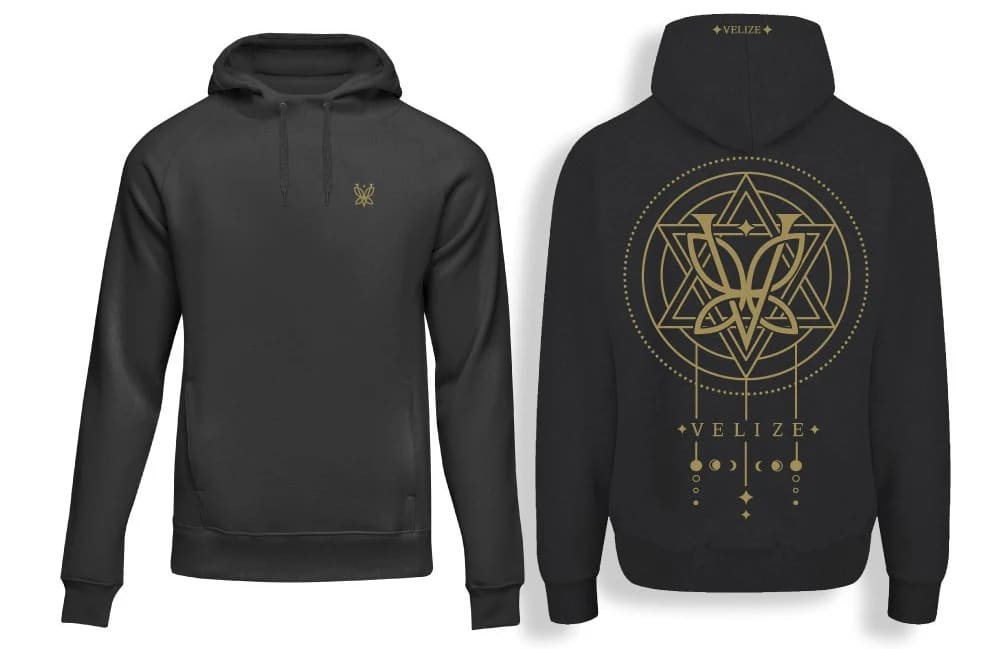
Source: Hoodie design by Irisha_design via 99designs by Vista
Printing methods also matter here:
- Sublimation printing works particularly well on polyester blends because the dye bonds directly with the fibers.
- Standard inks may require special formulations to prevent bleeding on high-poly materials
Pros and cons of fabric blends
Blended hoodie materials combine several performance benefits, but they also come with a few trade-offs depending on the fiber ratios used.
| Feature | Advantages | Potential drawbacks |
| Comfort | Cotton in the blend improves breathability and softness. | High synthetic content can reduce airflow and feel warmer in hot climates. |
| Durability | Polyester adds strength, helping hoodies resist stretching and everyday wear. | Some blends may feel slightly less natural than 100% cotton fabrics. |
| Printing performance | High-cotton blends create a strong surface for screen printing and DTG with vibrant color results. | High-poly blends may require specialized inks or sublimation printing to avoid bleeding. |
| Shape retention | Polyester helps hoodies maintain their structure after repeated washing. | Rayon-heavy blends may require gentler care to maintain their shape. |
| Fabric feel | Rayon can add a soft, smooth drape that feels premium. | Some blends may feel thinner or less structured, depending on the fiber ratio. |
| Cost | Cotton-poly blends are often more cost-effective than 100% cotton while maintaining good quality. | Tri-blends are often more expensive than standard cotton-poly hoodies. |
Are hoodie fabric blends a good choice?
Yes. Blends combine the benefits of multiple fabrics, such as the softness of cotton, the quick-dry strength of polyester and the stretch of spandex, reducing common issues like shrinkage or wrinkling.
Hoodie fabric blends often provide a practical middle ground between comfort, durability and print quality. Before choosing a blend, test how the fabric behaves with your preferred printing method.
Hoodie fabric comparison
| Hoodie fabric | Typical GSM | Insulation | Print compatibility | Durability | Care & longevity |
| 100% Cotton | 250-320 GSM | Medium warmth; breathable | Excellent for screen printing and DTG | Moderate; can wear down faster than synthetics | May shrink if washed hot; generally wrinkle-prone |
| Cotton-poly blend | 250-300 GSM | Medium warmth | Very good for screen printing; good DTG results on high-cotton blends | High; resists stretching and everyday wear | Less shrinkage than cotton; better wrinkle resistance |
| Fleece (and poly-fleece) | 280-350+ GSM | High warmth; traps heat well | Fair; embroidery usually works best | High; built for repeated wear | Can develop pilling; wash inside out to extend lifespan |
| French terry | 220-280 GSM | Light to medium warmth | Good for screen printing, DTG and embroidery | Moderate; lighter construction | Breathable and easy to maintain; minimal shrinkage with proper washing |
| Organic cotton | 240-320 GSM | Medium warmth; breathable | Excellent for screen printing and DTG | Moderate; similar durability to standard cotton | May shrink slightly; softer over time with washing |
How to choose the right hoodie fabric
When choosing the best fabric for hoodie printing, start with how your hoodie will actually be used. This quick step-by-step guide helps you find the right hoodie material.
Step 1: Define the hoodie’s purpose
Decide where the hoodie will be worn. Event giveaways like career fairs usually favor lighter, affordable fabrics like cotton blends. Premium retail hoodies often use heavyweight cotton, fleece or tri-blends.
Step 2: Choose the right fabric weight
Lightweight fabrics (200-250 GSM) work well for promotional merch and layering, while midweight hoodies suit everyday wear. Heavyweight fabrics provide warmth and durability for workwear or colder climates.
Step 3: Match the fabric to your printing method
Cotton and high-cotton blends are reliable for screen printing and DTG printing, while polyester and high-poly blends perform best with sublimation printing. Thicker fabrics handle embroidery well.
Step 4: Consider durability and care
If the hoodie will be used frequently – employee apparel or workwear – look for durable blends or polyester-heavy fabrics that resist pilling and hold their shape.
Step 5: Balance comfort with brand goals
The best hoodie material for branded merch supports your design, is comfortable and holds up over time. When those factors align, your hoodie is something people wear again and again, promoting your brand.
Explore these hoodie design ideas and create branded merch that stands out from the crowd.
Ready to pick the right hoodie fabric for your branded merch?
The best hoodie fabric depends on the needs of your audience, how the hoodie will be used and how the design will be applied. Cotton and cotton blends are reliable for everyday comfort and vibrant color printing, while polyester, spandex blends and performance fabrics work well for fitness apparel. Heavier materials like fleece and wool provide warmth and durability, especially for workwear or cold-weather hoodies. For those aiming at a premium, natural feel, bamboo or recycled cotton can set your brand apart.
Fabric weight, texture and fiber blends all influence the final result. Smooth fabrics tend to produce sharper prints, thicker materials support embroidery and blended fabrics often balance comfort with durability. By considering these factors and using the comparison table and step-by-step guide you can confidently choose a hoodie material that fits your brand, audience and design. Well-made branded apparel is also more likely to be worn regularly, helping to turn your customers into brand advocates.
Hoodie fabric FAQs
What is the best fabric material for a hoodie?
If you’re looking for everyday comfort and easy printing, cotton or cotton-poly blends are popular choices. For athletic wear or moisture-wicking needs, polyester or spandex blends may be ideal. Ultimately, factors like budget, target audience and brand aesthetic will help you determine which type of hoodie material fits best.
What fabric is best for vibrant custom printing results?
High-cotton fabrics generally produce the most vibrant prints. Cotton fibers absorb ink evenly, which helps colors appear richer and edges stay sharp – especially with screen printing or DTG. For dye sublimation, polyester works better because the dye bonds directly with the synthetic fibers.
Does 100% cotton hoodie fabric shrink more than blends?
Yes, cotton fibers absorb water and tighten when exposed to heat, which can lead to shrinkage after the first few washes. Cotton-poly blends are better because polyester helps the fabric keep its shape. To minimize shrinkage, wash cotton hoodies in cold water and avoid high-heat drying.
How do I prevent my fleece hoodie from pilling after washing?
Turn the hoodie inside out before washing and use a gentle cycle with cold water. Avoid fabric softener, which can weaken fibers over time. Air drying or using low heat also helps. These small steps reduce friction in the wash, which is what usually causes piling.
Which hoodie fabric is more eco-friendly?
Bamboo grows quickly and requires fewer resources, while organic cotton avoids harmful pesticides. Recycled polyester repurposes plastic bottles or other waste, reducing environmental impact. If sustainability is part of your brand identity, these hoodie fabrics can help showcase your commitment to eco-friendly practices.
Is a higher GSM always better for durability?
Not always. Higher GSM fabrics are thicker, but durability also depends on fiber type and knit quality. A mid-weight cotton-poly blend can be more durable than a heavier fabric if the yarns are stronger and the construction is tighter. Choose GSM based on hoodie use – heavyweight for workwear or cold weather, midweight for everyday hoodies.


