Event costs can climb quickly between the first venue quote and the moment you open the doors. The room might fit your budget, but does the quote cover the technician who sets up the microphones? And will you pay for everyone who RSVPs or only the meals you guarantee?
To estimate event costs, start with your spending limit and expected turnout. List the expenses you’ll pay regardless of attendance, price the items you’ll need for each guest and ask vendors to itemize extra fees before you sign.
Whether you’re planning a product launch, a workshop or a networking event, this guide walks you through the math, from catering and staff shifts to directional signs and the final venue bill.
Sort costs before you sign. Separate fixed expenses like room rental from per-guest costs like meals and badges. Ask vendors to itemize fees such as power, cleanup and overtime.
Start with a 60/30/10 split. Plan for 60% on venue and catering, 30% on programming, production and marketing, and 10% for surprises. Adjust the first two buckets if you need a bigger reserve.
Run the numbers at more than one headcount. Cost per attendee can drop as turnout grows, then jump when you need another room, server or security guard.
Match print to how often you’ll use it. Keep one-day handouts simple and spend more on signage you can bring back for the next event.
Track payment dates and check the final bill. Compare deposits, agreed rates and approved extras against the invoice before you close out the budget.
Fixed, variable and hidden event costs
A useful event cost breakdown shows what you’ll pay to open the doors, what each additional guest costs and which fees you still need to confirm. Start by sorting every line of your vendor quotes into these three groups.
| Cost type | What belongs here | What to check |
|---|---|---|
| Fixed | Room rental, liability insurance, base AV package, speaker fees and travel, and main stage or entrance signage | Which rates stay the same within your expected attendance range? Ask about off-peak dates or a flat multiday rate. |
| Variable | Meals, drinks, badges, programs, flyers, welcome kits and extra chair or linen rentals | Which items are billed per person or per piece? Check catering minimums, order quantities and headcount deadlines. |
| Hidden | Power drops, Wi-Fi upgrades, rigging, cleaning, permits and overtime | Which charges sit outside the headline quote? Ask for a rate sheet and find out what triggers each fee. |
A ballroom might cost the same for 150 or 200 guests, while lunches and badges rise with every registration. Hidden fees can behave either way. Once you uncover a flat cleaning charge or a per-booth power fee, give it its own budget line and count it once.
If you’re buying a date-free banner for several events, budget for the full bill when it’s due. When you compare event costs later, divide the purchase price across the events where you expect to use it.
The 60/30/10 budget split and cost per attendee
The 60/30/10 rule is a starting point for event budgeting. Put 60% toward venue and catering, 30% toward programming, AV, marketing and print, and 10% into contingency. Assign staffing to the service it supports.
| Budget bucket | Starting split | With a 15% reserve | With a 20% reserve |
|---|---|---|---|
| Venue and catering | 60% | 55% | 55% |
| Programming, production and marketing | 30% | 30% | 25% |
| Contingency | 10% | 15% | 20% |
| Total | 100% | 100% | 100% |
On a $20,000 budget, the starting split gives you $12,000 for venue and catering, $6,000 for production and marketing, and $2,000 in reserve. Check those targets against itemized quotes that include taxes, service charges and any fees you’ve uncovered. Adjust the split around what your event actually needs.
Estimated total event costs = fixed costs + (variable cost per guest × expected attendance) + contingency.
Estimated cost per attendee before contingency = (fixed costs ÷ expected attendance) + variable cost per guest.
The examples below use illustrative budgets. They assume your expected attendance matches the number you’ll pay for. If your catering guarantee or print order uses a different count, calculate that line using its actual billable quantity, then divide the direct budget by expected attendance.
| Event | Fixed costs | Variable cost per guest | Cost per attendee | Direct budget before contingency |
|---|---|---|---|---|
| 50-person executive workshop | $3,500 | $75 | $70 + $75 = $145 | $7,250 |
| 200-person regional business seminar | $10,000 | $65 | $50 + $65 = $115 | $23,000 |
| 1,000-person product expo | $55,000 | $50 | $55 + $50 = $105 | $105,000 |
The workshop might cover a meeting room, projector and insurance, plus a boxed lunch and workbook per guest. The seminar adds ballroom staging, a keynote speaker and a buffet. At the expo, you’re paying for convention space, rigging and security, plus items like catering vouchers, show directories and tote bags.
More guests can spread fixed costs further, but ask when the next charge kicks in. Guest 201 might trigger a second beverage station or another security guard. Run low, expected and high turnout scenarios to catch those jumps. If past events show that about 15% of RSVPs don’t attend, use that as a forecasting starting point. Confirm minimums and final guarantees before committing to meal and print quantities. If you’ve priced the event first and want contingency to be 10% of the overall budget, divide the direct budget by 0.90. The $23,000 seminar would need about $25,556 in total.

Hidden event fees to check before you sign
Hidden event fees are charges that sit outside the headline price for a venue or service. Ask vendors for a written breakdown showing the rate, what triggers each charge and whether you can cap it.
Hidden Event Cost & Vendor Fee Cheatsheet
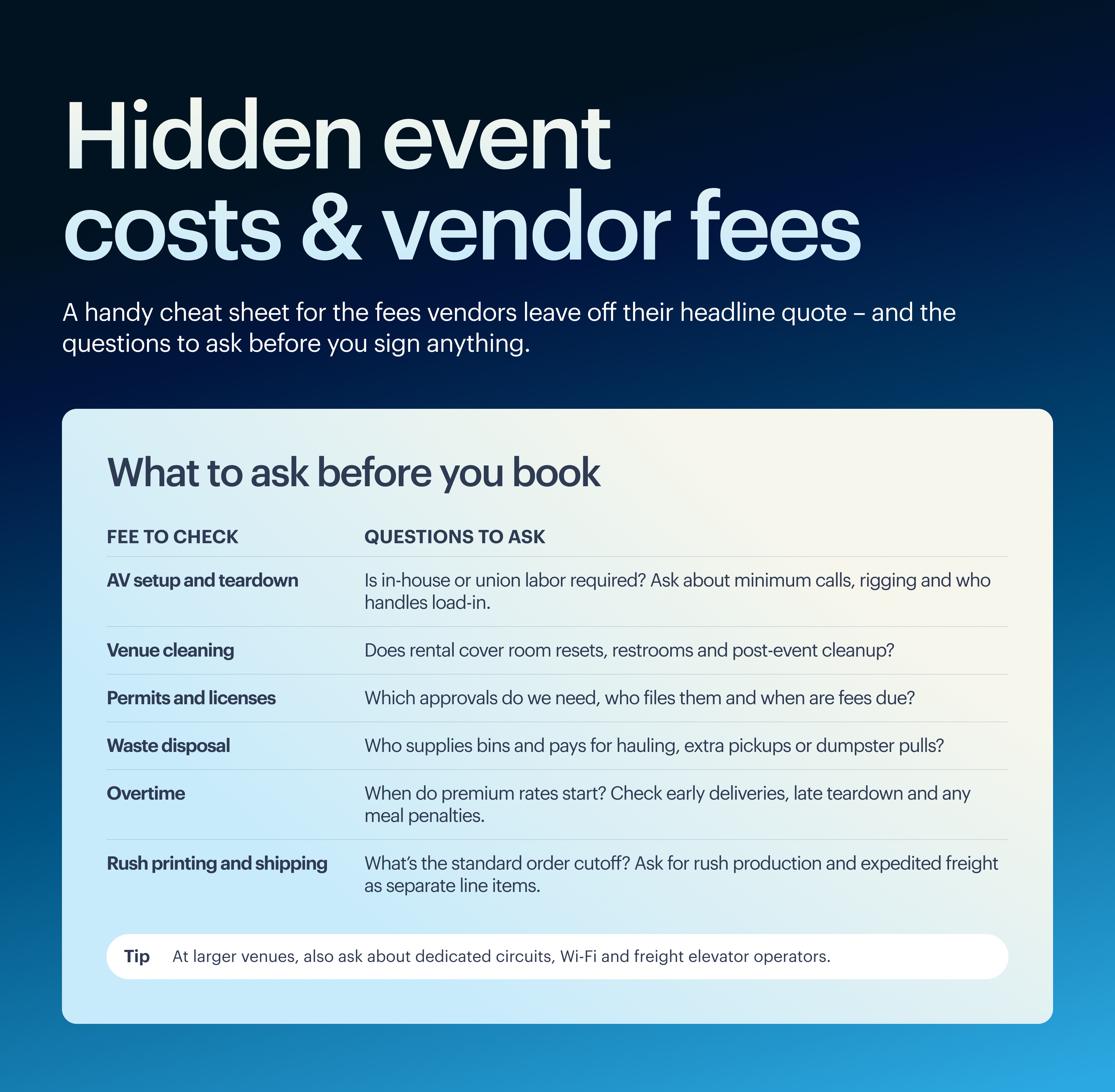
At larger venues, also ask about dedicated circuits, Wi-Fi, freight elevator operators, loading dock coordination and storage for shipments that arrive early. For print, aim to approve files two to three weeks before the event and work backward from the delivery date your printer quotes.
To estimate event staffing costs, list each role, crew size, paid hours and rate. Four check-in staff working six paid hours at $40 an hour cost $960 before agency fees or overtime. Include setup and teardown, and confirm minimum shifts and any required security staffing at your headcount.
For licensing and permit costs, check with the venue and local permitting office early. Depending on your location, setup and activities, you may need a public assembly permit, fire marshal review of your floor plan, a noise variance or a temporary alcohol license. Ask for application and inspection fees and confirm what the venue’s existing approvals cover.
Choose an event print with a good, better, best approach
The good, better, best approach ties print spending to how long each item needs to last. A one-day handout and a banner you’ll pack for six shows do different jobs, so budget for them separately.
“For event materials, we offer good, better, best tiers. ‘Good’ should be considered for single-use events, like a fun run or one-day conference, whereas ‘better’ and ‘best’ provide the long-term durability needed for recurring corporate apparel or multi-year signage.”— David Dole, Product Manager at VistaPrint
| Tier | What to buy | Where it saves |
|---|---|---|
| Good | Paper flyers and lightweight foam board signs for indoor pop-ups and workshops | Use 4 × 6 in. for a sponsor insert and 8.5 × 11 in. for a full agenda. Compare standard glossy stock with a quote for 100 lb gloss cover if you want a sturdier handout. |
| Better | 13 oz indoor vinyl for a reusable registration backdrop or 15 oz outdoor vinyl banners for entrances | Add optional grommets and reinforced edges for longer outdoor hangs. Leave dates off signs you plan to reuse. |
| Best | Retractable banners with stands and carry cases, plus fitted table covers | Give recurring roadshows and expos a consistent look and a setup your team can repeat without custom builds. |
Compare both the order total and the price per piece when you get bulk quotes for programs, handouts or sponsor inserts. For reusable signage, compare cost per use. An $180 display used six times costs $30 per event before storage or shipping.
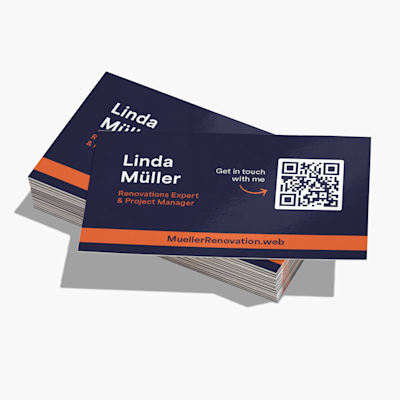
At check-in, a 14-pt matte QR code business card can replace a multi-page schedule or serve as a simple check-in card when a wearable name badge is optional. Link it to a mobile page with the latest agenda, speaker evaluations or sponsor links. Test the code before printing and use a tagged link if you want to measure visits from the cards.

Plan vendor payments and check the final bill
A payment timeline shows how much cash you’ll need at each stage of the event. Record deposits, installments, headcount guarantees and final due dates before you sign, then keep your contingency separate from scheduled payments. Here’s one way the schedule might look.
- At booking, often three to six months out. A vendor might ask for a 25% to 50% deposit to hold the date. Confirm whether it’s credited toward the total.
- About 30 to 60 days out. If there’s a second installment, such as 25% to 35%, record its due date alongside preliminary headcount, menu and equipment deadlines.
- About one to two weeks out. Confirm when the final headcount, floor plan and any remaining pre-event payment are due. Use the dates in your contract.
- After the event. Review itemized charges for extras and pay by the agreed deadline. Net 30, for example, means payment is due 30 days from the invoice date under those terms.
Keep 10% to 20% of the overall budget available for surprises such as a replacement adapter or a weather-driven tent addition. Use the higher end when the site or weather makes last-minute changes more likely. Put known costs in the main budget so the reserve is still there when you need it.
Before paying, compare the itemized invoice with your original estimate, contract and latest approved Banquet Event Order (BEO), the venue’s record of agreed event details. Check the meal guarantee, consumption-based bar tabs, technician hours, rental returns and deposit credits. Ask for backup on any unfamiliar charge and record why actual spending differed. For recurring events, keep print specs and past VistaPrint orders handy so you can quote the same materials again.

Put your event budget to work
Start with your headcount and spending cap, then turn rough estimates into written quotes. Take the cheat sheet into your next venue call, and give each confirmed fee a home in your budget before you commit. Once you know what your space needs, order signs and handouts with enough time for standard delivery.
Event costs FAQs
How do I set a ticket price that covers event costs?
Subtract confirmed sponsorship cash from the amount you need to recover, then divide by the number of paid tickets you realistically expect to sell. If you need $8,000 from 100 paid tickets, aim to keep $80 per ticket after processing fees.
How should I budget for in-kind sponsorship?
Reduce the expense by what the sponsor actually covers. If a partner supplies coffee but leaves delivery and service to you, keep those two costs in the budget and confirm the quantities in writing.
How should co-hosts split event expenses?
Agree on which costs are shared and who can approve extras. A 50/50 split can work when both partners get similar value. If one partner takes a larger share of the booths or guest places, you can split those costs by use.
How much could I lose if I cancel or postpone?
Ask each vendor for its cancellation schedule and the terms for moving your booking. Total what you’d owe or lose at each cutoff date so you know when your financial exposure increases.
How should I budget for a hybrid event?
Give the online portion its own lines for the streaming platform, captions, remote speaker support and a technical rehearsal. Ask your AV provider which services it already covers and whether an online audience changes the crew or equipment you need.