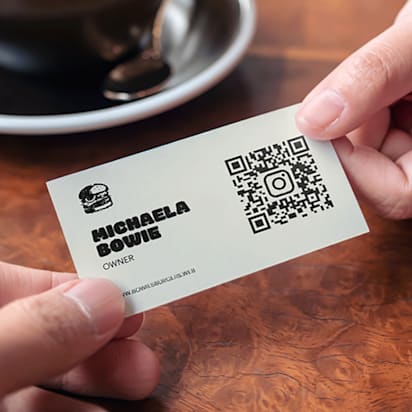
A seasonal marketing calendar gives your next promotion a proper runway. Instead of realizing Valentine’s Day is next week while your window still says “Happy New Year,” you know what to promote, when to order and how much you can spend.
A holiday date alone won’t tell you when to approve proofs, book a mailing or brief your team. Your calendar should connect those steps to your sales goals.
This 12-month plan brings together quarterly ideas, a six-week countdown and simple cost calculations. VistaPrint’s customizable templates and print materials can help you carry one seasonal look across your campaigns.
- Start six to eight weeks ahead. Leave room for design, proofing, production, shipping and any separate mailing window.
- Pick relevant seasonal moments. Give each quarter a few clear sales opportunities rather than filling every week with a promotion.
- Connect print and digital. Coordinate postcards, storefront signs, email and social posts around one recognizable offer.
- Budget beyond printing. Include postage, delivery, preparation and the profit left after discounts or gifts.
- Plan the next visit. Use thoughtful follow-up and bounce-back offers to bring seasonal shoppers back during quieter months.
What is a seasonal marketing calendar (and why small businesses need one)
A small business seasonal marketing calendar is an operational framework that maps promotional campaigns, holiday sales, product launches and print collateral ordering schedules across all four quarters to maximize revenue and customer engagement.

In everyday terms, it’s your small business marketing timeline: what happens, who owns it and when each task is due. Include the audience, offer, budget, launch date, print order date, delivery deadline and success measure for every campaign.
A salon might prioritize graduation appointments, while a bakery plans Mother’s Day preorders and a retailer prepares summer clearance.
Planning early can also reduce rush shipping, avoidable reprints and packaging shortages. Larger print runs may lower the price per piece, but only buy quantities you can use. A bargain box of expired coupons is still a box of expired coupons.
The 6-week lead-time rule: Scheduling print and digital campaign production
Begin seasonal campaign planning at least six to eight weeks before launch, using six weeks as your default working buffer. Allow longer for major holiday peaks, complex designs, multiple suppliers or extensive mailing preparation.
Check the delivery estimate for your exact product, quantity and destination. Account for production, shipping to you and postal delivery to customers separately, unless your supplier explicitly combines them. Compare standard and expedited delivery options where available.
| Time before launch | What to finish |
|---|---|
| 6–5 weeks | Choose your audience, offer and budget. Check inventory, reserve partner stock and draft copy. |
| 4 weeks | Finalize artwork, check proofs and order print materials against your required arrival date. |
| 3 weeks | Aim to receive and inspect materials. Prepare mailing bundles or confirm the mailing provider’s dispatch date. |
| 2–1 weeks | Allow for mail delivery, distribute handouts and install displays. Test checkout and brief staff. |
| Launch week | Activate the offer across your store and website, then coordinate email, social posts and reminders. |
Work backward: Latest order date = required customer arrival date − mailing allowance − preparation time − supplier production and shipping time − contingency buffer.
USPS lists a three- to 10-business-day, non-guaranteed delivery standard for Marketing Mail, which includes Every Door Direct Mail (EDDM). Confirm the applicable window for your mailing rather than treating a postal drop-off date as a customer delivery date.

If your supplier’s estimate misses these milestones, start earlier. Mailed promotions need adequate time for both preparation and postal delivery.
Check a downloaded proof at actual size for spelling, dates, trim areas and readable offer terms. If color is critical, allow time for a physical sample or small test order.
The Q1–Q4 seasonal marketing matrix: Dates, themes and collateral
Build your seasonal marketing calendar around the occasions your customers actually shop for. Then work backward from the campaign’s launch, which may be weeks before the holiday itself.
This overview suggests starting windows, not guaranteed ordering cutoffs. Confirm moving holidays, local school dates and community events annually, then apply your six-week countdown.
| Month | Holidays and useful themes | Typical planning start | Print priorities |
|---|---|---|---|
| January | New Year, winter clearance | Previous November–December | Reset postcards, appointment cards |
| February | Valentine’s Day, appreciation offers | Previous December–January | Gift reminders, loyalty inserts |
| March | Spring previews, seasonal services | January–February | Booking cards, window graphics |
| April | Spring launches, community events | February–March | Outdoor banners, event handouts |
| May | Mother’s Day, graduations | March–April | Gift guides, preorder cards |
| June | Father’s Day, graduation, summer arrivals | April–May | Counter displays, gift tags |
| July | Summer events, midyear clearance | May–June | Sale signs, bag inserts |
| August | Back-to-school, routine resets | June–July | Flyers, loyalty cards |
| September | Labor Day, fall previews | July–August | Window displays, service reminders |
| October | Halloween, early holiday previews | August–September | Event signage, packaging labels |
| November | Black Friday, Small Business Saturday, gifting | September–October | VIP postcards, catalogs, gift inserts |
| December | Holiday gifting, Cyber Monday when applicable | October–November | Gift tags, calendars, January offers |
Q1: January to March
Fresh starts, winter resets and Valentine’s Day suit service appointments, starter bundles and thoughtful gifts.
Prepare January materials before December gets busy. For Valentine’s Day, plan in December or early January and work back from your preorder or booking deadline, not February 14. Postcards can announce winter clearance, while appointment cards help local services fill quieter slots.
Keep February and March moving with customer appreciation offers. A thank-you insert inviting shoppers back for a March perk gives them a reason to return without another blanket sale.
Q2: April to June
Spring launches, Mother’s Day, Father’s Day and graduation create opportunities for gifts, celebration bookings and seasonal services.
Start spring signage planning in February. Prepare Mother’s Day materials in March and Father’s Day or graduation promotions in April, adjusting for your actual launch dates.
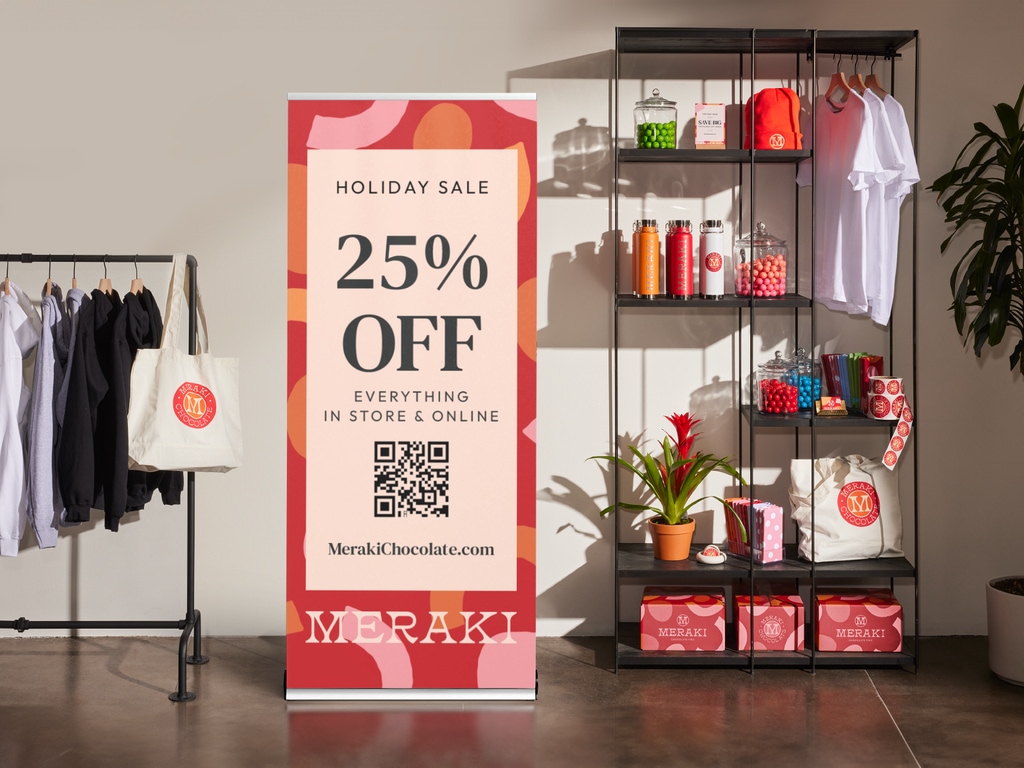
Use durable outdoor vinyl banners, yard signs or A-frame posters. Make signs readable from a distance, secure them for the conditions and match indoor displays to the offer outside. Include clear directions and opening hours.
Q3: July to September
Summer events, clearance and back-to-school shopping can help you shift inventory and welcome returning routines. Check local school calendars, since buying may start well before September.
Plan July campaigns in May or June and back-to-school promotions in June or July. Keep print quantities realistic during vacation periods. Small bag inserts, community handouts and loyalty cards can support a focused campaign without a large mailing.
For quieter weeks, try a summer bundle or customer appreciation afternoon. Clear stock selectively to avoid discounting products that already sell well.

Q4: October to December
Halloween, Black Friday, Small Business Saturday, Cyber Monday and holiday gifting need separate milestones. Black Friday and Cyber Monday are often grouped as BFCM.
Develop the Q4 plan in August or early September. Aim to order October materials in September, November materials in early October and December materials against confirmed gifting and shipping deadlines. Bring these dates forward for larger or more complicated orders.
Use VIP postcards, holiday catalogs and festive packaging where they fit your budget. Roll labels, stickers and branded packaging tape can refresh everyday packaging without replacing every box.
Give custom calendars to selected customers in November or December. Useful photos and readable grids help them earn wall space. Include a January invitation to continue the relationship.
Print specifications and unit economics: What to order and what to budget
Budget for getting each piece into customers’ hands. Compare quotes for matching quantities, sizes, finishes and services.
| Material | Practical specification | Cost consideration |
|---|---|---|
| Direct mail postcards | Consider 14 pt glossy cardstock. A 4″ × 6″ card suits a short offer, while 6″ × 9″ provides more room. Check the selected mailing service’s available sizes. | Add addressing, postage and preparation. Size can change the postal price category. |
| Promotional event flyers | Consider 100 lb gloss text paper for flexible handouts. Use 8.5″ × 11″ for detailed event information or 4″ × 6″ for inserts. | Count distribution time and likely use, not just the quantity discount. |
| EDDM mailers | Choose a USPS-compliant flat-size format and validate it with the EDDM size checker before printing. | Budget route quantities, printing, postage, bundling and drop-off. |
| Wall calendar giveaways | Look for spiral binding and suitable photo stock. VistaPrint’s Classic with Middle Binding is 8.5″ × 11″ closed and 17″ × 11″ open, with matte or premium glossy stock options. | Include packaging and delivery. Reserve higher-cost gifts for selected recipients. |
Paper labels aren’t interchangeable: 100 lb text, 100 lb cover and 14 pt describe different specifications. Confirm the selected product rather than substituting one for another. VistaPrint’s flyers offer several stocks and thicknesses, so match the option to the job.
Standard 4″ × 6″ and 6″ × 9″ cards aren’t EDDM flats. Choose an approved format. EDDM Retail requires at least 200 and allows up to 5,000 pieces per day per ZIP Code. Its postage is $0.26 per eligible piece up to 3.3 oz, checked November 5, 2026. Recheck rates before budgeting.
Illustrative costs, not VistaPrint quotes: For 1,000 eligible EDDM pieces, assume $180 printing, $20 shipping, $260 postage, $60 design and $40 preparation. Total: $560, or $0.56 per mailed piece. If each additional order contributes $20 after product costs, discounts and other variable costs, you need 28 additional orders to break even, a 2.8% purchase rate.
Apply the same calculation elsewhere. A hypothetical $140 delivered print order for 1,000 flyers costs $0.14 each before distribution. A $325 order for 50 calendars costs $6.50 each before individual packaging or mailing.
For an illustrative annual budget, allocate 15% to Q1, 20% to Q2, 20% to Q3, 35% to Q4 and keep 10% in reserve. Shift those shares toward your business’s strongest seasons. Protect profit rather than chasing sales alone.
Multi-channel campaign synchronization: Aligning print collateral with digital marketing
Print and digital work together when the offer, appearance and timing agree. Carry the same headline, colors, product imagery, redemption rules and end date across postcards, window banners, emails and website graphics.

Start with social teasers, then coordinate postcard arrival and storefront installation around the campaign’s opening. Where practical, aim for mail to arrive 48 to 72 hours before an email reminder. Treat this as a scheduling preference, not a guaranteed delivery interval. Allow broader reminder windows when postal timing varies.
Add a QR code and a short, readable web address to printed pieces. Link to a mobile-friendly page with the offer and a clear next step. VistaPrint’s editor includes a QR code generator. If you need an editable destination or scan reporting, check whether your chosen QR service supports dynamic codes and whether fees apply.
Test a printed sample on different phones and under the lighting customers will encounter. Check the checkout experience, too.
Keep redemption simple with one offer across channels. If measurement matters, use equivalent channel-specific codes or tagged links to distinguish postcard, flyer and email responses. Review purchases and contributions after campaign costs, rather than judging success by scans alone.
Low-budget growth partnerships: Seasonal co-branding and gift-with-purchase strategies
Look for noncompeting businesses whose audiences overlap with yours, such as a coffee roaster and a bakery.
Try a shared holiday bundle, sample swap or gift-with-purchase offer. Co-branded postcards and packaging inserts introduce each business to the other’s customers, supported by email shout-outs and social posts.
“Growth partnerships should get your brand in front of another brand or person’s audience and can be pulled off with little or no budget. Look to brands in non-competing categories whose customers overlap with your own and think of creative ways to get your brand in front of their community and vice versa. Try social media giveaways, swapping shout-outs in email marketing, swapping samples for a gift-with-purchase partnership, or offering co-branded bundles around holidays and themes.”– Jasmine Garnsworthy, Founder and CEO of Female Founder World
Before printing, agree on quantities, cost sharing, artwork approval, fulfillment responsibilities and what happens when gifts run out. Include sample costs when calculating margin.

Keep seasonal shoppers coming back
Give the next visit a place in your calendar. Add a bounce-back insert to holiday orders with a clear redemption period in a quieter month. Choose an incentive that fits the purchase, such as a January refill offer or a follow-up service appointment.
After the season, thank customers and send relevant reminders to those who have opted in. Review repeat purchases after 30, 60 or 90 days, then use what you learn to plan the next quarter.
Common seasonal marketing mistakes to avoid
- Printing before checking stock: Confirm product availability and service capacity before advertising an offer.
- Confusing dispatch with delivery: Include every shipping and mailing stage in your countdown.
- Buying too much dated print: Balance unit savings against leftovers you can’t reuse.
- Forgetting fulfillment costs: Count postage, gift packing and staff preparation alongside print and promotion costs.
- Leaving the team guessing: Give staff the offer terms, redemption instructions and display changeover dates.
Put your seasonal marketing calendar to work
Start with one campaign you can deliver comfortably, then build the next quarter around what works. A useful calendar gives every offer a budget, an owner and enough time to reach customers.
Before launch, run through these five checks:
- Confirm dates: Check your launch, ordering deadlines and relevant local events.
- Check the runway: Confirm proofing, production, delivery and mailing allowances.
- Approve the details: Proof artwork, offer terms, links and QR codes.
- Coordinate channels: Align signs, mail, website updates, emails and social posts.
- Prepare the team: Confirm inventory, fulfillment capacity and staff instructions.
Download your free 12-month small business seasonal marketing calendar overview to map campaign dates, ordering milestones and print priorities. Add your own deadlines and budget to keep the plan useful all year.
Seasonal marketing calendar FAQs
How can a new business choose campaigns without past sales data?
Start with customer conversations, neighborhood events and one or two relevant seasonal opportunities. Run a small campaign, record the results and build your own baseline before committing to larger print orders.
Can I adapt this calendar for wholesale or B2B customers?
Yes. Map promotions to buyers’ purchasing cycles, trade shows and budget decisions. A wholesale holiday collection may need samples and sales materials months before consumer gifting campaigns begin.
Should seasonal print materials be bilingual?
Let your audience guide the choice. Separate language versions can preserve readability when one design becomes crowded. Have a fluent reviewer check the offer, dates and instructions in each version.
How should I store leftover seasonal materials?
Keep reusable pieces flat, dry and away from direct sunlight. Label boxes by season and item so you can find them next year. Remove anything with an expired offer or outdated business information.
What if a community event is canceled after my mailers go out?
Update the linked landing page, website and storefront promptly. Explain the change through your usual communication channels and contact registered attendees directly where possible. Make replacement dates or alternative ways to shop easy to find.