Custom hang tag design gives brands a simple way to elevate product packaging, establish brand value, add personality and provide useful product information at the point of purchase. A well-designed hang tag can reinforce your brand identity and highlight product details, helping your product stand out in a competitive retail space.
Designing custom hang tags means balancing branding with practical considerations like prices and barcodes. This guide covers tag shapes, sizes, paper stocks and premium finishes, as well as layout and attachment tips so you can prepare artwork for printing with confidence.
- Hang tags combine branding with useful product information at the point of sale.
- Paper stock, shape, size and finish affect how your hang tag looks on the product.
- Safe margins and correct drill hole placement keeps logos, text and barcodes clear of the cut and attachment area.
- Folded hang tags mean more printable space for brand storytelling, care symbols, origin information and QR codes.
- Reviewing digital proofs and testing samples before ordering can help you spot issues with color, contrast and layout.
What to include on a retail hang tag
Retail hang tags work best when branding and practical product information have enough space. It’s best practice to use the front for branding and the back for supporting details.
Front-side branding
Use the front of custom tags to communicate your brand. Keep it focused on one or two key brand elements like your logo rather than product details. You might also include a tagline, URL, social media handle, founding year or short brand message. Carry the same visual style across retail packaging to maintain a consistent visual identity.
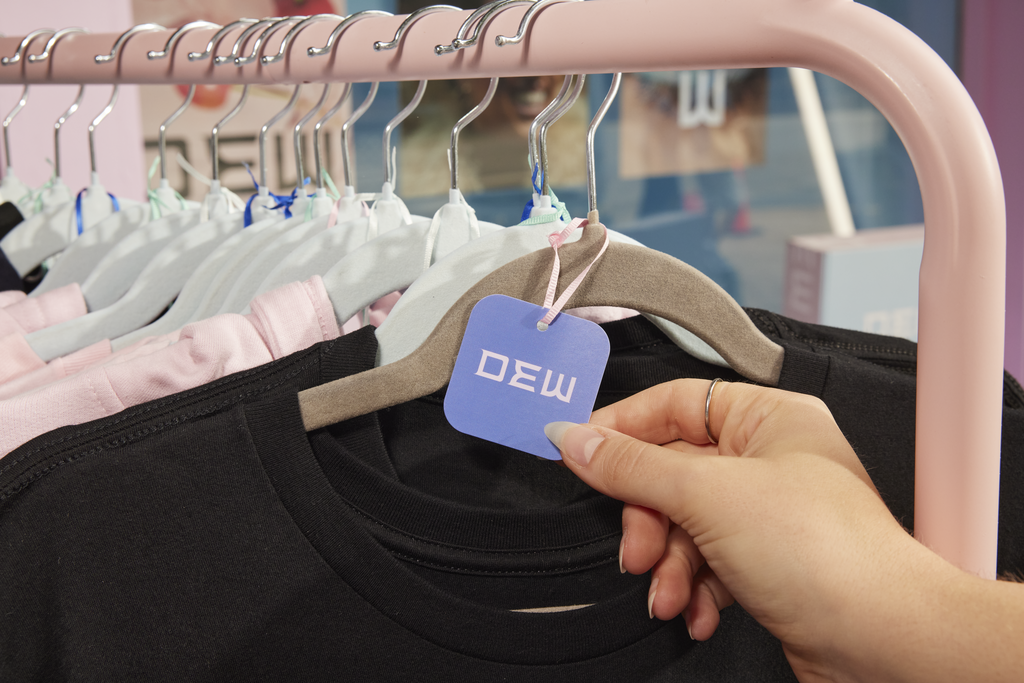
Position your logo front and center so it’s visible at a glance. Leave generous white space around your logo for a clean visual aesthetic that draws the eye to your branding.
Back-side information
Use the back of your tag for practical information about the product. Group related details together into clear content blocks so the information is easy to scan. Include materials, care guidance, price and a barcode. A QR code can link to your website, product information or social media pages. Keep plenty of white space about scannable codes.
Read our ultimate guide to product packaging design and explore these packaging tips.
Keep important text, logos and scannable elements comfortably inside the 0.125″ trim area and away from the drilled hole. VistaPrint’s hang tags use a fixed 0.15″ hole – so either account for that when positioning artwork or use hang tag templates with fixed drill hole placement.
Hang tag shapes and sizes: How to choose the right format
The shape and size will affect the aesthetic, brand perception and how much information you can fit on the tag. When choosing between hang tag sizes and shapes, consider the product, the details you need to print, buyer psychology and the overall look you want the tag to have.
| Hang tag shape | Dimensions | Best use cases |
|---|---|---|
| Square/rounded square | 2″ x 2” | Logos and QR codes |
| Rectangle/rounded rectangle/banner | 2″ x 3″, 2″ x 3.5″, 2” x 5”, 2” x 6”, 2” x 7”, 2” x 8” | Apparel, candles, retail products and brand storytelling |
| Circle | 2.5” x 2.5” | Logos and simple designs |
| Diamond | 2″ x 3.5″ | Distinctive shape to make the tag stand out |
Rectangle or banner tags sized 2″ x 3″ and 2″ x 3.5″ provide enough room for a logo, product name and useful product information. Square or circle tags sized 2″ x 2″ and 2.5″ x 2.5″ work well for logos, simple designs and limited details.

Circles and rounded shapes evoke warmth and feel softer and more playful, while square and rectangle tags have a more structured look. Use custom die-cut hang tags for distinct brand recognition. Unique shapes create instant differentiation, encouraging shoppers to look at your product. The colors, typography and paper stock you use will also shape the overall impression.
Folded hang tags offer more space
Folded hang tags provide more printable space for care instructions, size charts or a brand story. VistaPrint offers four folded-tag sizes, with a pre-cut hole in the top-left hand corner.
Choosing the right paper stocks and finishes
Paper stock affects how your hang tag looks and feels, while your chosen finish influences color, texture and printing:
- Premium matte: A versatile, non-glossy stock with a smooth, non-reflective surface for text legibility that works well for graphics, clean layouts, text-heavy designs and QR and barcodes. It’s a good choice for apparel and home goods.
- Premium glossy: A high-gloss option that helps colors and photo-heavy designs stand out. It works particularly well for bold branding, food and beverage and beauty brands.
- Kraft: A warm, rustic stock that suits handmade, artisanal and sustainable products. It can work especially well for candles, soaps, coffee and handcrafted goods.
- Linen: A premium stock with a tactile finish that works well for boutique apparel, jewelry brands and high-end products.
- Natural textured: An uncoated stock with a natural look that’s a good fit for plants, eco-friendly home goods, organic skincare and products made with natural ingredients.
- Hemp-Blend: A natural textured stock that works well for wellness brands, herbal products and sustainable apparel.
- Pearl: A subtly iridescent stock that suits cosmetics, jewelry, gifts and bridal products, evening and swimwear. Perfect for when you want a more decorative premium finish.
- Soft touch: A smooth paper stock with a tactile suede-like feel. It suits luxury apparel, premium candles and other high-end products.
- Foil finish: Foil hang tags are available in circle, rectangle and banner shapes and offer a premium finish.
When printing dark ink on kraft paper, test samples first as natural fibers absorb ink differently than white cardstock.
Think about how the tag will be handled as well as how it looks. A sturdier stock makes more sense for retail products that will be picked up or tried on frequently. Ordering samples lets you compare paper feel, weight, texture and print quality before committing to a larger order.

Hang tag design layout
Good hang tag design is largely about deciding what deserves space. Prioritize the information customers need most, then make sure logos, text, barcodes and QR codes have enough room to stay clear and readable. Use this checklist to avoid common hang tag layout mistakes:
- Verify drill hole safety zones: Keep logos, brand names, text and other important design elements comfortably away (0.125″) from the drill hole.
- Keep text readable: Use a minimum 8pt font size that’s easy to read at the final printed size. Print important information like pricing at 12pt or larger.
- Avoid clutter: The strongest layouts don’t try to fill every available space. Leave enough room between branding and information so each element is easy to take in at a glance.
- Check contrast: Ensure strong contrast, making sure text and graphics stand out clearly from the background, especially when working with darker colors or textured paper stocks. Dark fonts work best on light-colored paper.
- Group details: Keep related information together so customers can scan the tag easily.
- Give barcodes and QR codes space: Leave generous whitespace around scannable codes, then test them using multiple devices at the final printed size.
How to attach hang tags: String and fastener placement
Thread cotton or jute hang tag strings or ribbon through the drill hole to hang the tag securely:
- Cotton string: A simple, versatile option that complements matte and linen stocks.
- Twine: A rustic eco-friendly option that works well with kraft paper hang tags.
- Ribbon: When you want a more premium look that pairs well with pearl cardstock.
- Elastic cord: Stretchy loop fasteners that allow for fast hand application.
Attach hang tags to interior labels, bottle necks, handles, buttonholes or hangers. How you attach a hang tag will ultimately depend on the type of product.

Design and print custom hang tags with VistaPrint
To design a hang tag, customize a template, upload your artwork or hire a designer.
- Choose your hang tag: Select a shape, dimensions, paper stock and finish.
- Prepare your design file: Start with a hang tag template or upload your design artwork.
- Review digital print proofs: Inspect digital proofs carefully to confirm drill hole clearances, text margins and barcode legibility before submitting your order.
- Order sample runs: Test paper weights, finishes and ink colors in hand before placing large volume print orders.
Explore VistaPrint’s custom packaging for a consistent look across boxes, bags and labels.
Your hang tag size, shape, paper stock and layout should make your branding clear while giving shoppers the information they need. Check that the artwork looks good at the final printed size, keep elements clear of the drilled hole and give your design enough breathing room.
Hang tag design FAQs
What’s the difference between a hang tag and a product label?
Hang tags are thicker with a punched hole that attach using string, ribbon or another fastener. Product labels usually have an adhesive backing and stick directly to the product or packaging.
Can hang tags be used for products other than clothing?
Yes. Hang tags also work well on bags, boxes, bottles, jars, mugs, home decor, beauty products and food packaging.
What should I check before ordering hang tags?
Check that images are high resolution, text is easy to read and important details sit clear of the drilled hole. Review the finished design at its intended print size before placing your order.
What is the standard size for a hang tag?
The standard dimensions for a retail clothing hang tag are 2″ x 3″ (rectangle), 2″ x 2″ (square) and 2.5” x 2.5” (circle). Standard folded hang tag sizes are 2″ x 3.5″ and 2.5” x 2.5”.
How do different hang tag materials impact brand perception?
Textured kraft paper communicates sustainability and handcrafted quality, while linen and pearl signals luxury and elegance. Use matte cardstock for a simple, modern look and feel.