For small businesses, this choice shows up everywhere: durability (water, UV, abrasion), adhesion (will it stay on that bottle, box or window?) and branding impact (finish, texture, how “expensive” it feels in hand). It also affects your costs, because peeling edges and faded print usually end in reprints.
In this guide, you’ll get a clear breakdown of the most common types of sticker materials, what each one is best for and a simple framework for choosing the right option for your exact use case.
What sticker materials mean (and what they affect)
Sticker materials are the physical build of a sticker – the printable top layer, the adhesive underneath it and the surface treatment that protects it and changes how it looks and feels. Sticker materials decide how your sticker prints, how it sticks, how long it holds up and whether it looks sharp or sloppy once it’s out in the real world.
Components of sticker materials
Sticker materials are built in layers that work together. The right mix gives you predictable results in print, application and durability.
Most sticker materials come down to three elements:
- Face stock – the printable top layer: This affects the sticker’s feel and structure, how cleanly fine details print and how the sticker handles bending, cutting and peeling. In practice, you’ll usually be choosing between paper, vinyl and film.
- Adhesive – the bonding layer underneath: This determines how aggressively the sticker grabs, how well it holds over time on different surfaces and what removal looks like. Typical choices include permanent, removable and specialty adhesives for tougher conditions.
- Finish – the surface treatment over the print: This controls matte vs. gloss appearance, the tactile feel and how much protection the print has against scuffs and handling. That protection can come from a coating or a laminated layer.
What the right sticker material determines
Once you understand that every sticker is a combination of face stock, adhesive and finish, it’s easier to connect the material stack to real-world results. Those three choices show up in four places: lifespan, environmental resistance, surface performance and how your artwork translates off-screen.
First is how long it stays presentable. Some setups are meant to look good for a campaign, a drop or a short packaging run. Others keep their shape and print quality long-term. The interplay between the top layer and surface treatment sets that expectation.
Next is what it can handle without falling apart. Humidity, sunlight, rubbing, skin oils and cleaning products are all stress tests for stickers. Protective layers slow fading and reduce scuffing, while certain base materials tolerate wet or high-contact environments better.
Third is how it behaves on your surface. Smooth glass and glossy plastic usually let almost any sticker do its job. Textured cardboard, powder-coated metal and curved containers are less forgiving. Adhesive choice determines whether the sticker makes full contact right away, whether corners lift over time and whether removal leaves residue or comes off clean.
Last is how the design reads in the wild. Finish changes glare and contrast. Material thickness can make the cut edge more or less noticeable. Fine lines and tiny type can look sharper or softer depending on the material stack and the lighting where the sticker lives.
6 types of sticker materials: Key characteristics, pros and cons, use cases
You’ve seen how the material stack affects lifespan, resistance, adhesion and appearance. Now let’s translate that into the most common types of sticker materials you’ll be choosing from: paper, vinyl, clear, foil and holographic, polyester and eco-friendly stickers.
1. Paper stickers
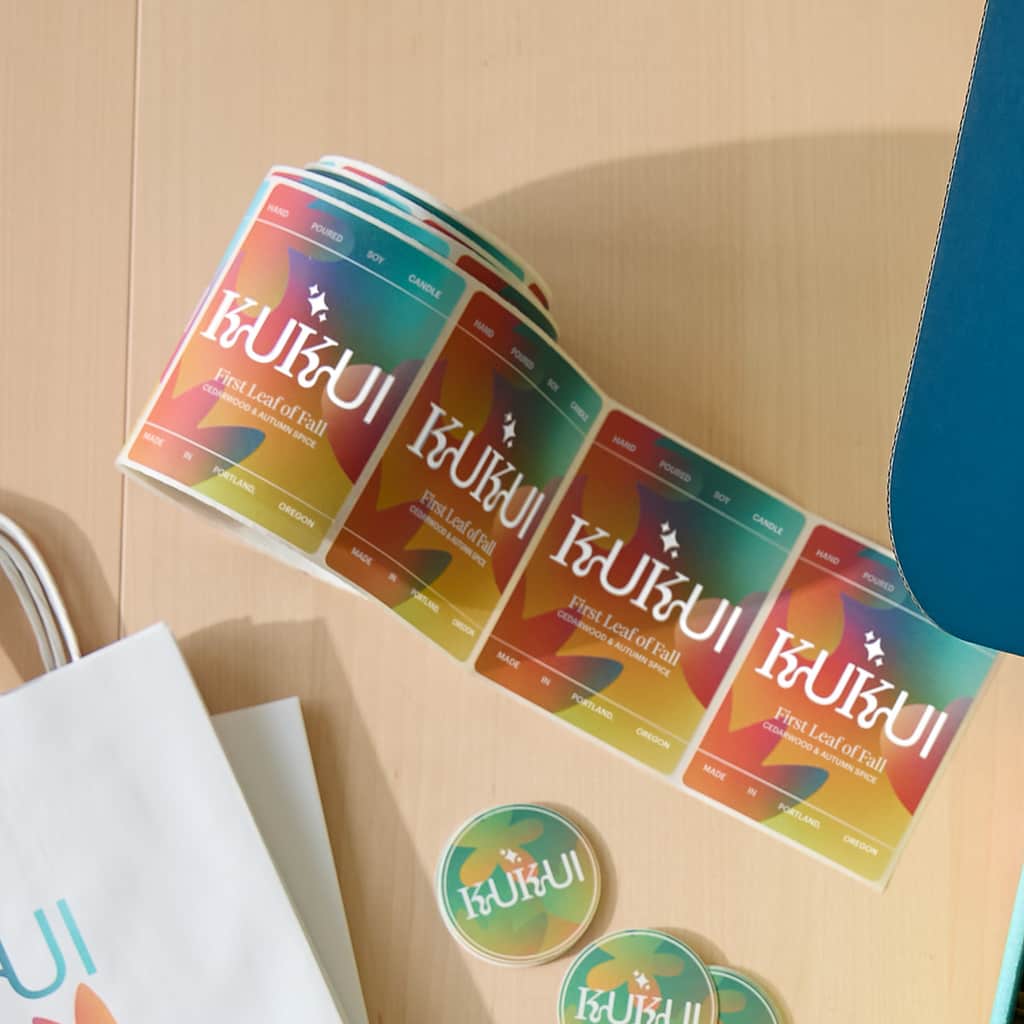
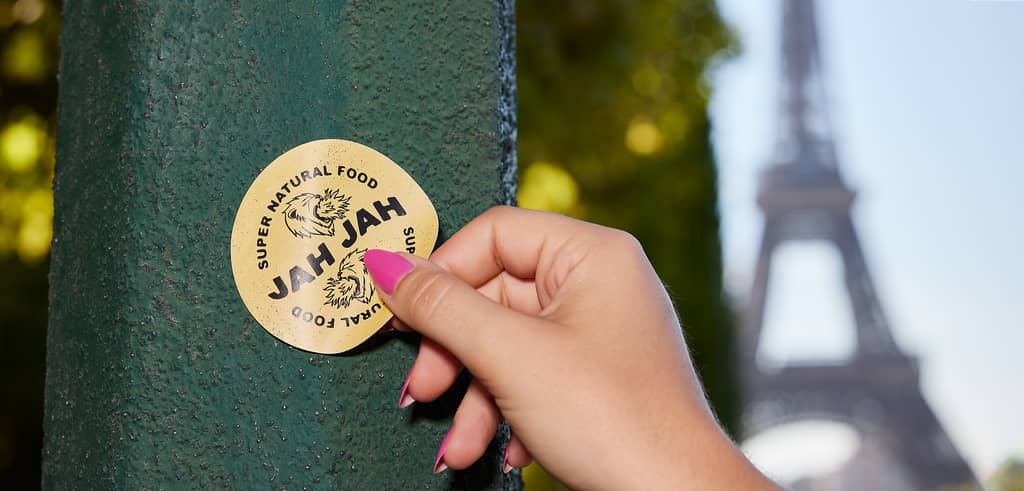
Paper stickers use a paper face stock, either coated or uncoated, paired with a pressure-sensitive adhesive. They’re straightforward, cost-effective and designed primarily for indoor or short-term use.
| Pros of paper stickers | Cons of paper stickers |
| Low production cost | Not waterproof |
| Excellent print clarity for text and line art | Tears and scuffs easily |
| Writable on many uncoated stocks | Degrades in humid or high-contact settings |
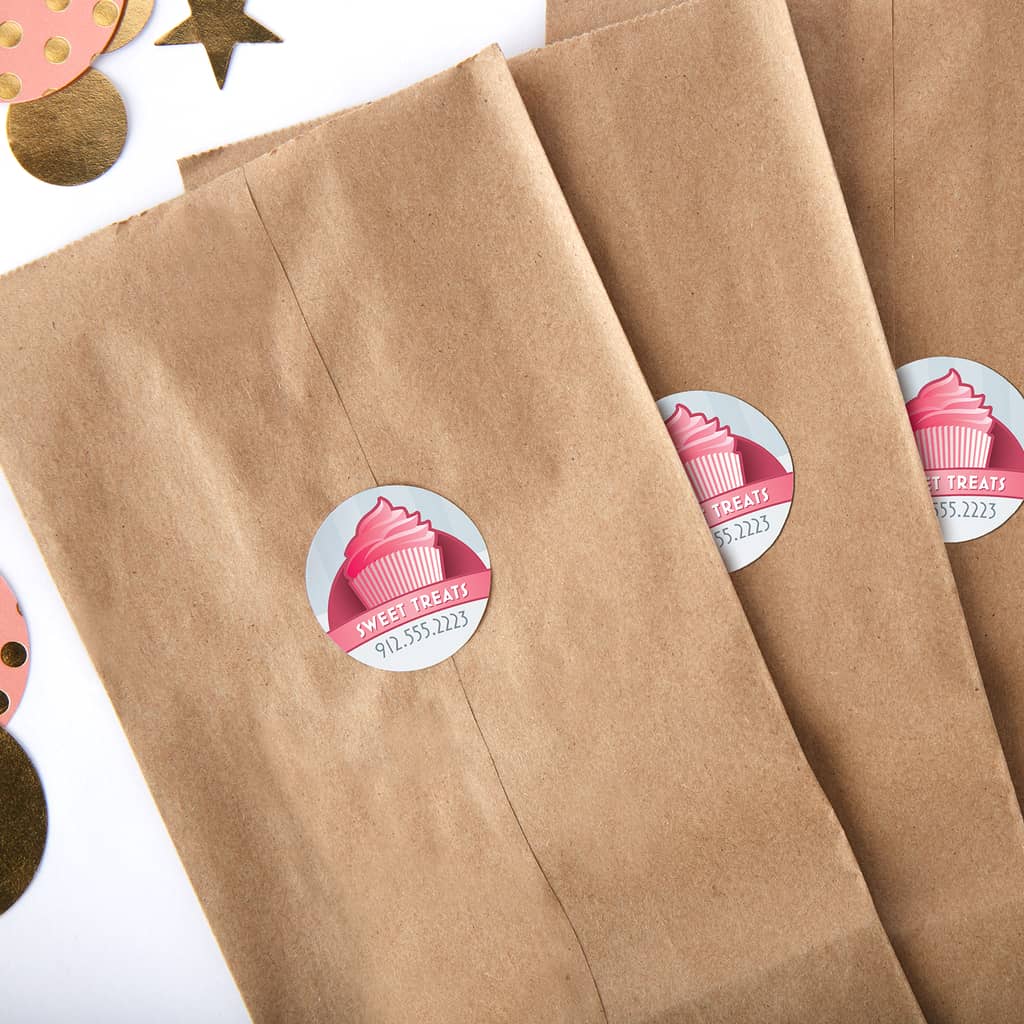
Paper works best for seals, bakery boxes, retail bags, event packaging and limited-time promotions. It’s a practical choice when the sticker’s job ends once the product is opened.
However, it’s poorly suited for refrigeration, outdoor display or anything exposed to moisture. Even light condensation can cause rippling or ink wear.
If you’re labeling food packaging, test how the paper reacts to grease. Some uncoated stocks darken quickly when they absorb oil.
2. Vinyl stickers
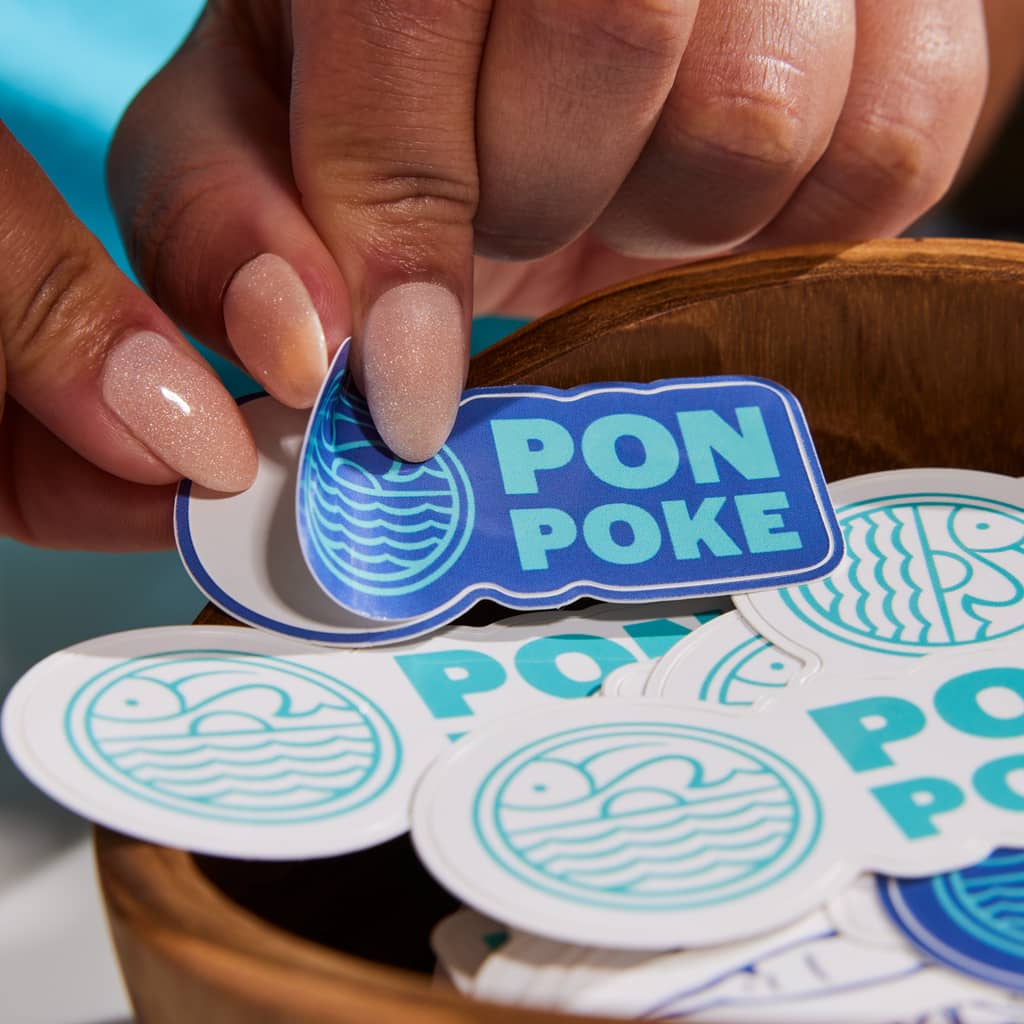
Vinyl stickers are made from flexible PVC film. They’re engineered for durability, with resistance to water and UV exposure, which makes them a staple for long-term branding.
| Pros of vinyl stickers | Cons of vinyl stickers |
| Waterproof and weather-resistant | Higher cost than paper |
| Durable under frequent handling | Plastic-based, not biodegradable |
| Flexible for curved surfaces | Unnecessary for short-lived indoor use |
Vinyl is ideal for laptop stickers, water bottles, outdoor signage and extended promotional campaigns. It holds up under repeated handling and environmental exposure. Learn more about using stickers for promotions in our guide.
Surface compatibility matters in the case of vinyl stickers. Vinyl adheres best to smooth materials like glass and coated plastic. On rough or powder-coated surfaces, adhesive selection becomes critical to prevent edge lift or residue.
3. Clear stickers
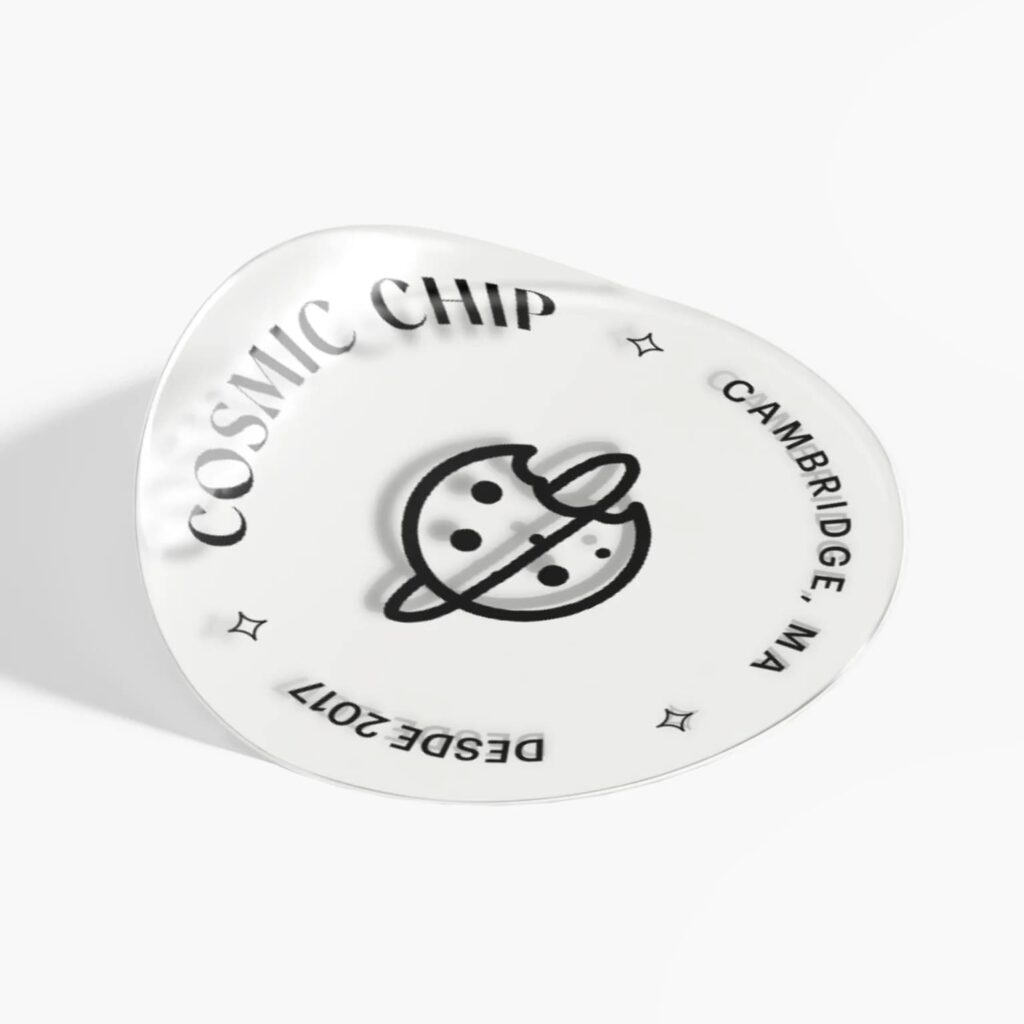
Clear stickers use transparent film as the face stock. The design appears to float on the surface underneath, which creates a seamless, minimal look.
| Pros of clear stickers | Cons of clear stickers |
| Modern, “no-label” appearance | Requires smooth, even surfaces |
| Integrates with glass and glossy plastic | Colors can appear muted without white ink |
| Strong visual impact on minimal packaging | Cut edges are more noticeable |
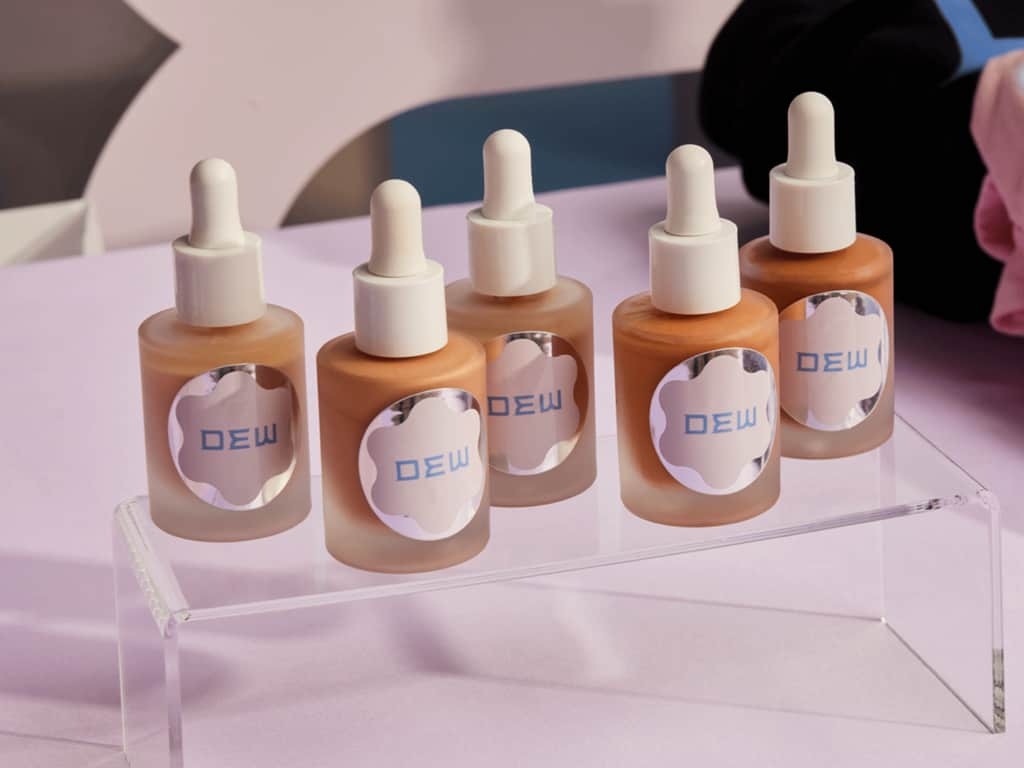
Clear stickers are particularly well-suited for cosmetic bottles, jars, windows and premium packaging where you want the container visible as part of the design. They don’t, however, perform well on textured paper or rough materials. Transparency highlights imperfections in the surface.
Designing for clear material requires contrast planning. Without white ink behind logos or light colors, the background shows through and shifts the final appearance. Borders need enough spacing so the die-cut edge doesn’t compete with the artwork.
Always request a physical proof for clear labels. On-screen previews rarely reflect how background color affects the final print.
4. Foil and holographic stickers
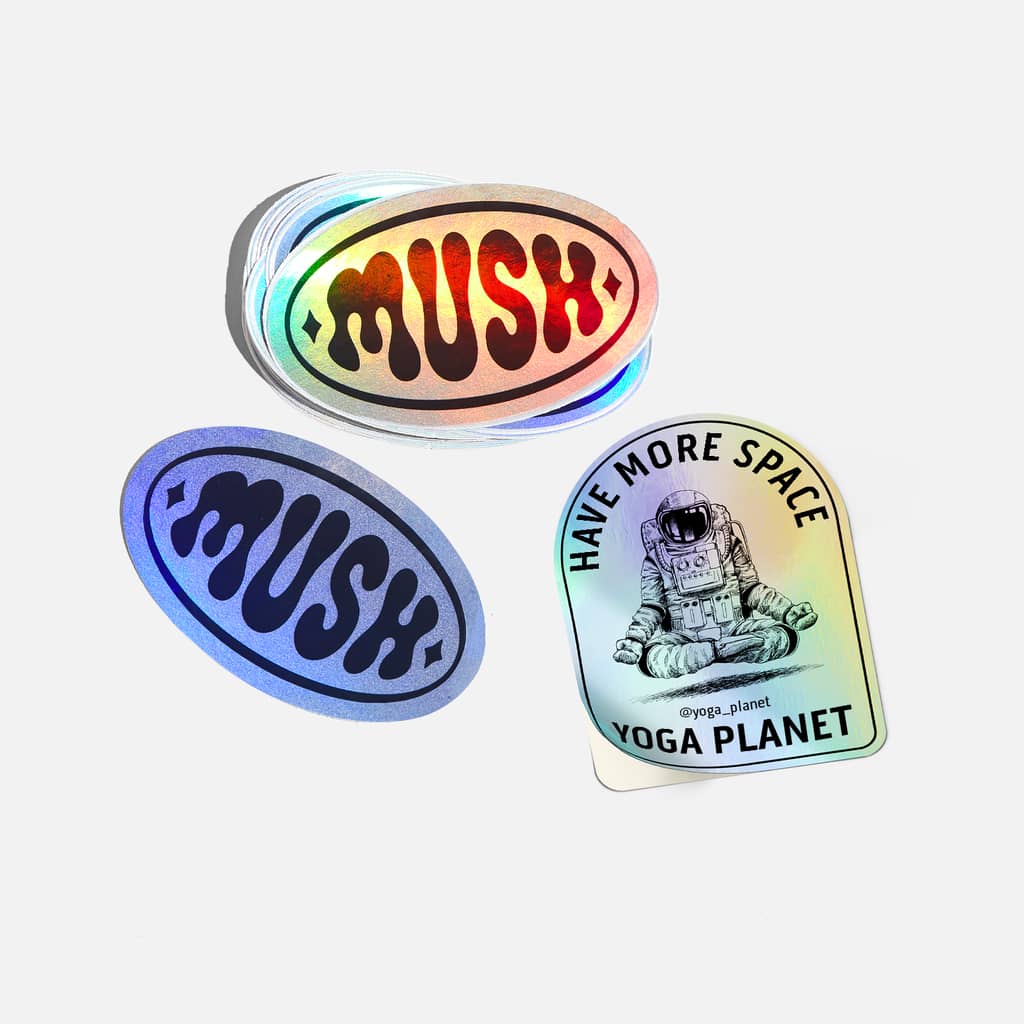
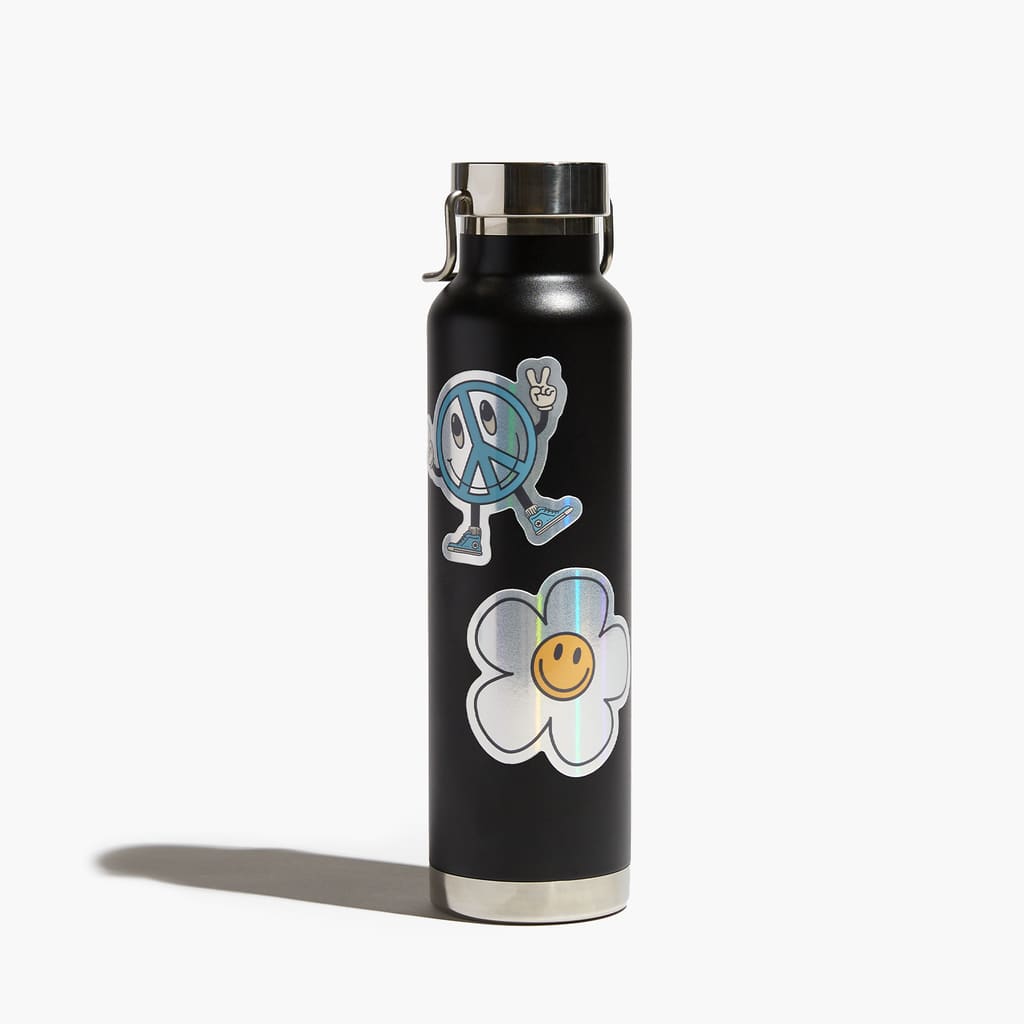
Foil and holographic stickers use specialty film with metallic or prismatic finishes. These materials interact with light, producing reflective or color-shifting effects that draw attention immediately.
| Pros of holographic stickers | Cons of holographic stickers |
| High visibility and shelf impact | Prone to visible scuffs |
| Signals premium positioning | Reduced readability for small or low-contrast text |
| Memorable for events and limited editions | Higher production cost |
These sticker materials work well for seals, limited releases, promotional inserts and event materials where the sticker is part of the experience. At the same time, they’re a poor fit for compliance labels, ingredient lists or text-heavy designs. Reflective surfaces require larger typography and stronger contrast to remain legible.
When it comes to holographic sticker material, accent usage often works better than full coverage. A metallic logo on a neutral background retains clarity while still elevating the piece.
5. Polyester and BOPP film stickers
Polyester and BOPP are durable plastic films commonly used for product labels in demanding environments. They resist moisture, oil and abrasion, making them reliable for packaging that faces daily wear.
| Pros of polyester stickers | Cons of polyester stickers |
| Strong resistance to water and oils | Less sustainable than paper-based stocks |
| Maintains print integrity in refrigeration | Higher cost than basic paper |
| Withstands friction during shipping | Overbuilt for simple indoor applications |
Polyester is a strong sticker material for bath products, beverages, refrigerated goods and shipping-handled packaging. If your product sits in a cooler or bathroom, film labels provide stability.
They’re unnecessary for dry, low-contact indoor labeling where lifespan is short and exposure is minimal.
For bottles that will be squeezed, confirm the film’s flexibility. Some polyester stocks are stiffer than BOPP and may not conform as easily.
6. Eco-friendly stickers
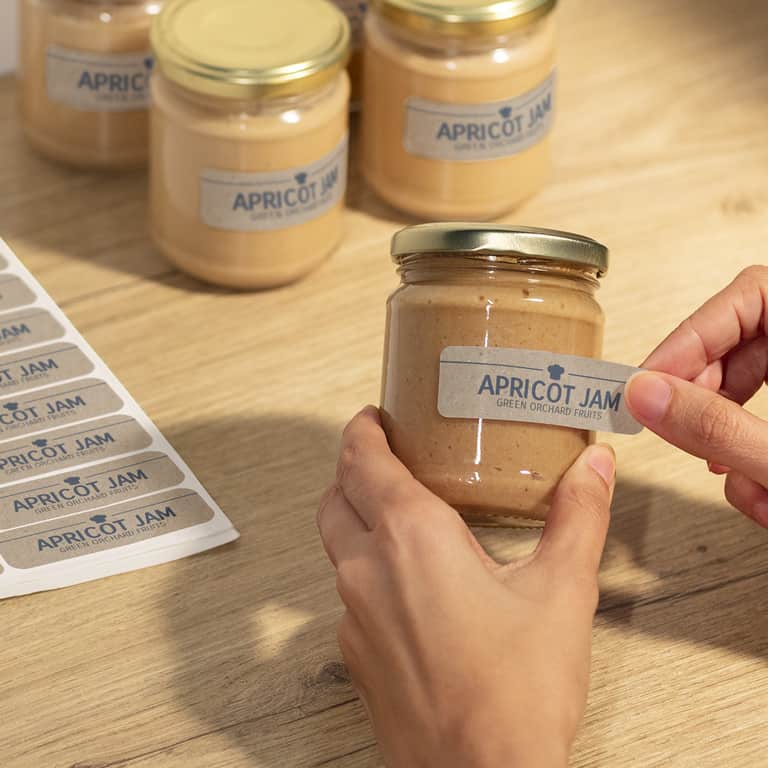
Sustainability is shaping packaging decisions, and it keeps showing up in packaging trends. So it’s only natural that eco-friendly sticker materials have moved from niche to mainstream. These options typically include FSC-certified paper, recycled-content substrates and compostable stocks. They’re chosen to reduce environmental impact and support a brand’s sustainability positioning.
| Pros of eco-friendly stickers | Cons of eco-friendly stickers |
| Supports sustainability messaging | Typically less water-resistant |
| Appeals to environmentally conscious buyers | Shorter usable lifespan in harsh conditions |
| Can reduce virgin material use | Fewer high-durability options |
Eco-friendly sticker materials are well-suited for indoor branding, sustainable event packaging and short-term campaigns tied to environmental positioning. You need to remember, though, that they’re not designed for prolonged outdoor exposure or wet environments unless paired with compatible protective finishes. The latter can complicate compostability claims.
If sustainability is central to your brand, disclose the certification or material source clearly. Transparency builds credibility and prevents greenwashing accusations.
Sticker adhesives and finishes
Face stock gets most of the attention because it’s the part you can see. Adhesives and finishes, however, are often the dealbreakers affecting your stickers’ performance behind the scenes. They determine whether your sticker materials behave like a reliable label or a flaky little liar that lifts, smears or scratches the second it meets real life.
Adhesive types and when to use them
Adhesive choice comes down to two questions: How long does it need to stay put, and what surface is it going on? Most sticker materials can be paired with different adhesives, so you’re rarely locked into one option.
- Permanent: Best for product labels and long-term use, where you don’t want peeling or shifting over time
- Removable: Built for promotions and windows where clean removal matters more than maximum grip
- Cold-temp: Designed for refrigerated packaging, so the adhesive bonds even when surfaces are cold or slightly damp
- High-tack: Made for difficult surfaces like textured cardboard, powder-coated materials and some plastics that usually reject standard adhesives
If your sticker will ever be applied in a cold room or onto chilled product, choose the adhesive for the application environment, not the storage environment.
Finish and coating effects on durability
Finish affects both aesthetics and survival. Gloss and matte change how light hits the surface, how colors read and how wear shows up.
Gloss tends to make designs look punchier, but scratches and scuffs can be easier to spot. Matte reads more understated and often hides minor surface marks better, though it can slightly soften perceived color intensity.
Lamination is a practical choice when a sticker needs extra protection. It adds a clear film over the print that improves resistance to UV fading, abrasion and moisture. For that reason, it’s commonly used on vinyl sticker materials intended for outdoor placement or frequent handling.
Specialty finishes sit in a different lane, often used for premium branding. Foils, soft-touch coatings and other effects can elevate presentation, but they should be chosen with handling expectations in mind.
- Choose gloss or matte based on lighting, brand vibe and scuff visibility
- Add lamination for UV, water and abrasion protection
- Use specialty finishes when attention and perceived value matter most
How to choose the right sticker material for your use case
Choosing sticker materials is a lot easier when you stop focusing on the names and start focusing on what the sticker has to do. Use the steps below to help make your decision, then pick the material that fits your needs.
1. Define the job in one sentence
Write down what the sticker must do and where it will live. “Promo handout for a trade show” leads you to different types of sticker materials than “label for refrigerated bottles” or “premium seal for a limited run.”
Use these buckets to stay honest:
- Promo: Low cost, easy to hand out, short lifespan
- Packaging: Clean application, consistent print, survives shipping
- Outdoor: UV and water resistance, long-term durability
- Premium branding: Finish-driven, designed to be noticed
2. Match the surface
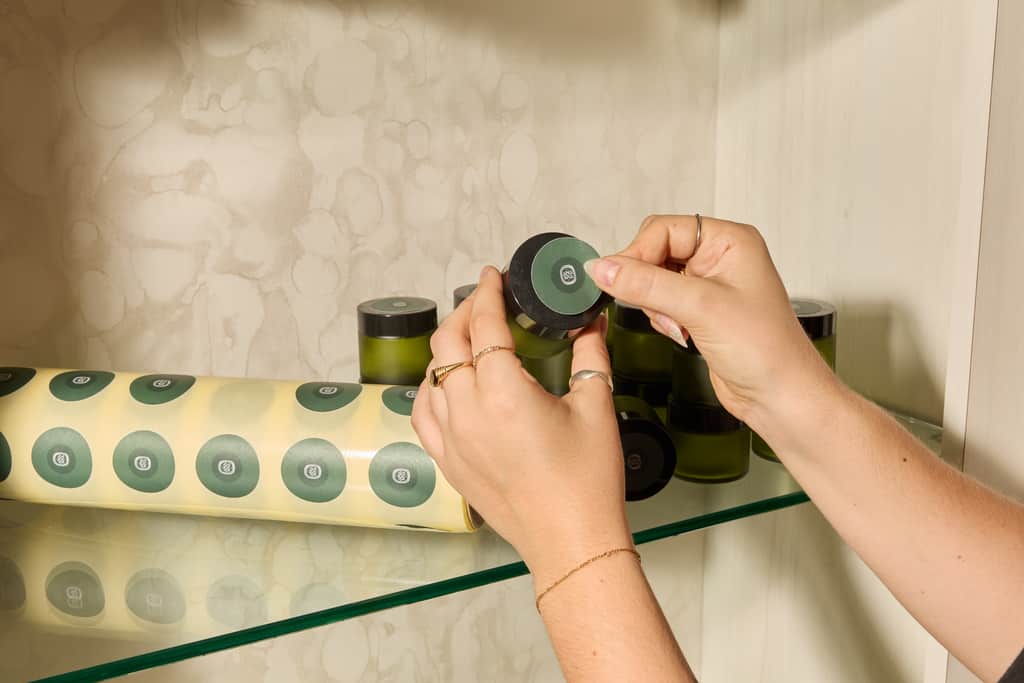
Surface is where good sticker materials fail when the choice is made on autopilot. Smooth glass and glossy plastic are forgiving. Textured cardboard, powder-coated metal and curved containers are not. Identify what you’re applying to, then choose materials and adhesives that can make full contact without edge lift.
3. Consider exposure
Map out the specific conditions the sticker will deal with day to day. Condensation behaves differently from direct water. Retail lighting can dull colors over time, and shipping adds constant rubbing that wears down the print. If you expect refrigeration, sunlight, frequent handling or contact with cleaning products, factor that in from the start and choose materials and protection levels that can handle it.
4. Choose adhesive based on removal expectations
Decide upfront whether the sticker should stay forever, come off cleanly or survive cold application.
- Permanent: Product labels, long-term placement
- Removable: Windows, short promotions, temporary signage
- Cold-temp or high-tack: Refrigeration, textured or low-energy surfaces
5. Select finish for brand goals
Choose the finish after you’ve narrowed down the function. Instead of going for a style preference, think of it as a decision checklist:
- Start with the primary goal: Readability, shelf pop or premium emphasis
- Check the viewing conditions: Bright retail lighting, indoor office light, outdoor daylight, camera flash
- Factor in handling: If it’s touched often, pick a finish that won’t make normal wear look obvious
- Decide what should stand out: If you’re using a premium finish, apply it to key elements so the design hierarchy stays clear
6. Test before scaling
Don’t skip this step, especially for packaging. Order a small batch, apply it to the real surface, and run a quick stress test: chill it, wipe it, handle it, pack it. Then check edges, color and removal. If it fails now, it would have failed at scale.
Choose the right sticker material in under 60 seconds
| Your use case | Surface | Exposure | Best-fit sticker materials | Adhesive | Finish |
| Event promos, giveaways | Smooth surfaces | Low | Paper, vinyl | Removable or permanent | Matte or gloss |
| Packaging seals, boxes | Cardboard, paper packaging | Light handling | Paper, eco paper | Permanent or high-tack | Matte or gloss |
| Bottles and cosmetics | Glass, smooth plastic | Water, oils | Clear, BOPP, polyester | Permanent | Gloss or matte |
| Refrigerated products | Plastic, glass | Condensation, cold | BOPP, polyester | Cold-temp permanent | Gloss or matte |
| Outdoor branding | Metal, plastic, glass | UV, weather | Vinyl | Permanent | Laminated matte or gloss |
| Premium limited editions | Varies | Moderate | Foil, holographic, clear | Permanent | Specialty finish, optional laminate |
Once you know what sticker material to use, check out this guide to learn how to make stickers from start to finish.
The 5 most common sticker material mistakes (and how to avoid them)
Even when you understand different sticker materials, small oversights can undermine the result. Most issues trace back to a mismatch between material, environment and intent. Here’s a quick breakdown of common mistakes, why they cause problems and how to fix them:
| Mistake | Why it’s a problem | How to fix it |
| Choosing paper for refrigerated packaging | Paper absorbs moisture. In cold environments, condensation weakens the fibers, leading to curling edges and dulled or smeared print. | Use BOPP or polyester film with cold-temp adhesive for chilled products. If using paper, test it in refrigeration for several days before scaling. |
| Using permanent adhesive for short-term promotions | Permanent adhesive can leave residue or damage surfaces, especially on glass, painted walls or coated displays. | Specify a removable adhesive for temporary use. Test removal after the sticker has been in place for a realistic time period. |
| Applying clear stickers to textured surfaces | Transparent materials reveal surface texture and air gaps, making the application look uneven or poorly aligned. | Apply clear stickers only to smooth glass or glossy plastic. For textured packaging, choose opaque materials. |
| Skipping lamination for outdoor use | UV exposure fades ink and abrasion wears down the surface. Without protection, durability drops quickly. | Add lamination for outdoor placement or high-contact use to improve resistance to fading and scuffing. |
| Picking finishes that reduce readability or brand clarity | Reflective or overly dark finishes can lower contrast, making small text and fine details harder to read. | Review physical proofs under real lighting conditions. Adjust finish, contrast or typography before full production. |
Ready to make the right choice between the different types of sticker materials?
Sticker materials decide whether your stickers look sharp and stay put or start peeling, fading and looking tired before they’ve done their job. The face stock sets the baseline, adhesives determine how the sticker behaves on your surface and finishes control durability and on-shelf presentation. When you match material to purpose, surface and exposure, you get predictable results and fewer wasted print runs. Treat sticker material choice like part of your marketing strategy, not an afterthought, and your stickers will work harder for your brand.
Sticker material types FAQs
What sticker materials are best for outdoor use in 2026?
For outdoor use, choose vinyl sticker materials with UV-resistant inks and a laminate, plus permanent adhesive if you want long-term hold. Lamination is the practical add-on that helps prevent fading, moisture damage and surface wear from dust and handling.
What’s the difference between BOPP and vinyl sticker materials?
BOPP (polypropylene film) is the packaging label workhorse. It’s built to handle moisture, oils and frequent handling, often at a better cost for product labels. Vinyl (PVC film) is typically the better pick for outdoor durability and longer-term promotional decals, especially on smooth surfaces and when paired with protective finishing.
What sticker material is best for packaging?
For most consumer packaging, BOPP or polyester film sticker materials are the safest default because they stay intact around condensation, oils, shipping friction and frequent touch. Use clear film when you want a “no-label” look on smooth containers, and choose paper when the package stays dry and the sticker is mainly decorative or short-lived.
What are the sticker materials trends for 2026?
In 2026, sticker materials trends are being pulled by sustainability and recyclability requirements, plus a push for premium-looking finishes that still perform on packaging lines. Expect more demand for: FSC-certified and recycled-content papers, compostable or bio-based substrates, mono-material packaging-friendly choices and recycling-enabling adhesives like wash-off technologies, alongside premium effects used more selectively.