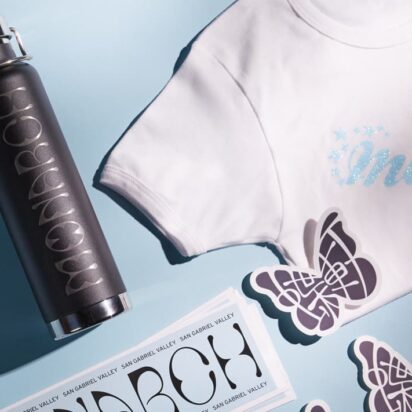
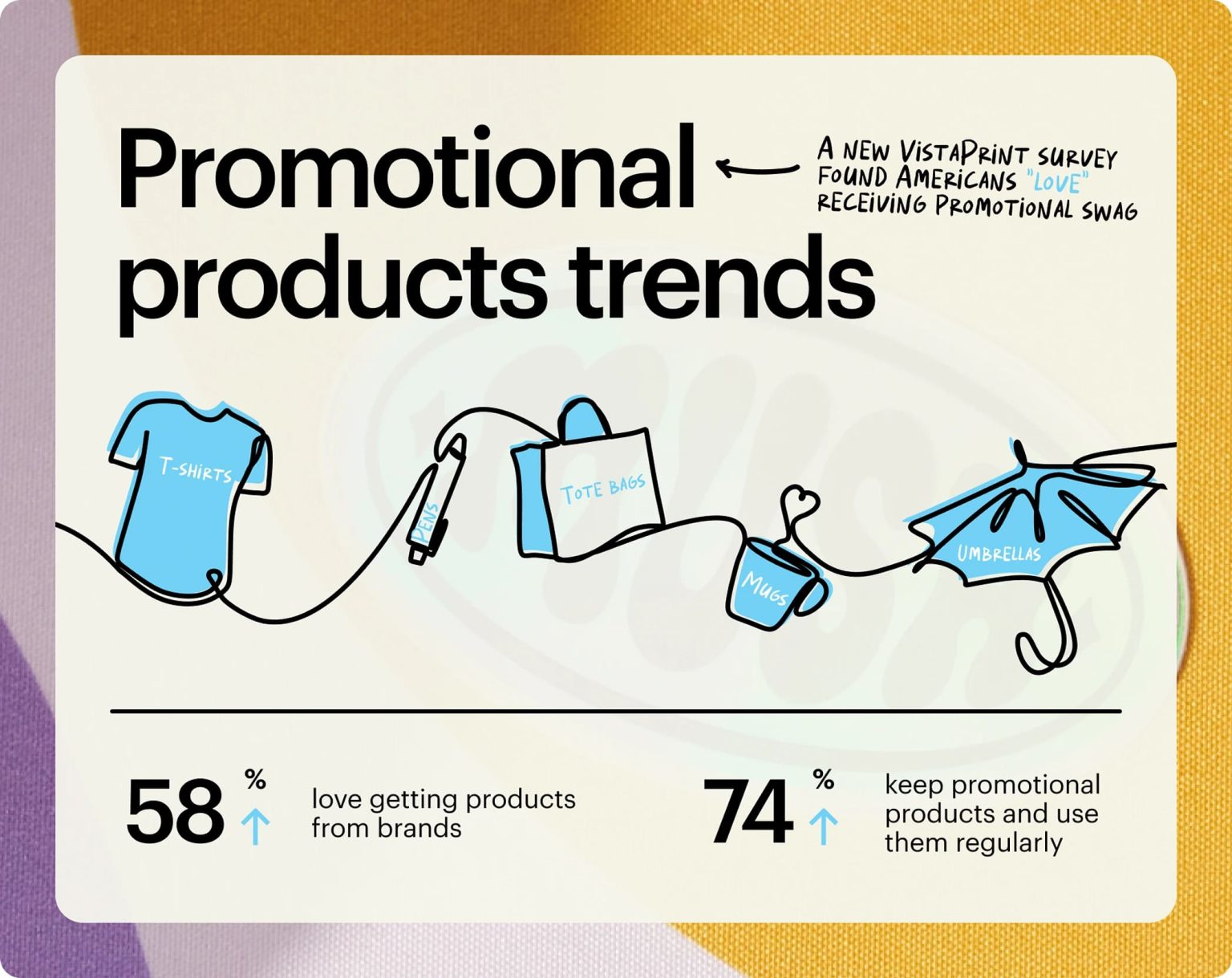
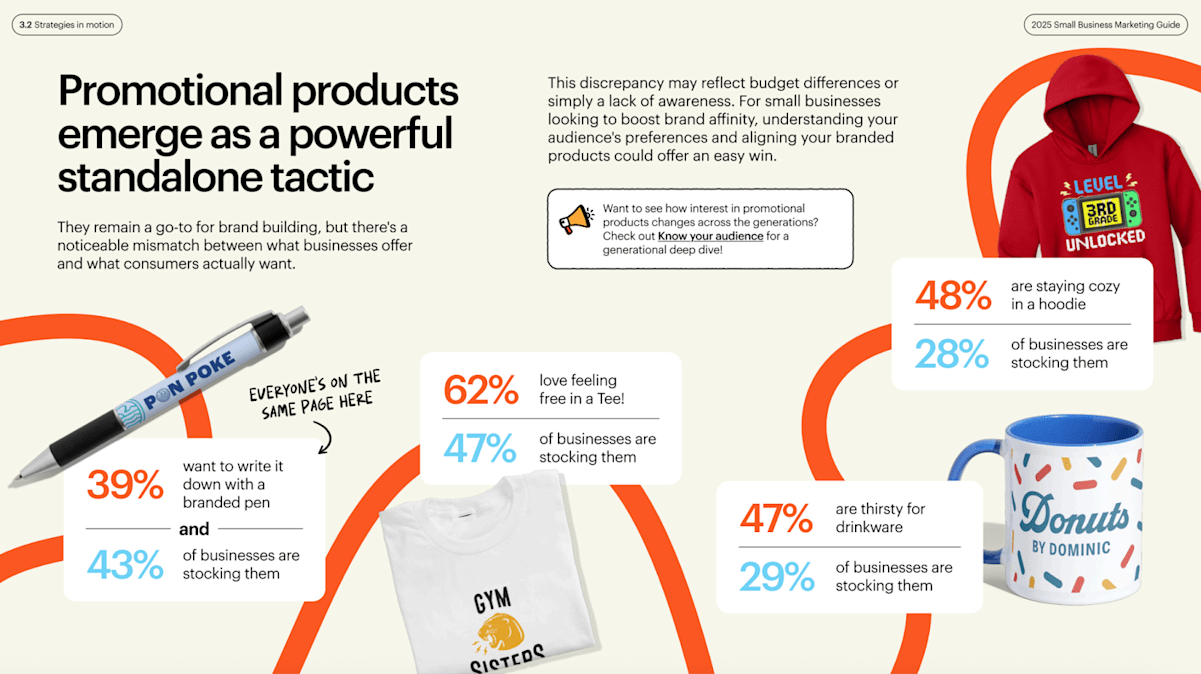
Branded merchandise is a game-changer for small business promotion. The Small Business Marketing Guide by VistaPrint in partnership with Wix, found that promotional materials are one of the best marketing tactics to encourage shoppers of small businesses. In 2025, 33% of small businesses were investing in promo items and more businesses are catching onto the power of branded merchandise.
In 2026, branded merch is less about random freebies and more about thoughtful, on-brand items that people actually keep and use. We’ll cover a clear definition, some practical strategy for choosing the best merch and branded merchandise examples that you can actually use – whether you’re buying small business promotional items for an event, onboarding or an online shop.
- Branded merchandise is any item customized with your logo, name or message to build recognition, loyalty and revenue.
- Branded merch works because it taps into real human psychology: We remember what we touch. We like brands with valuable gifts. And, we signal our identities with what we carry and wear.
- The best merch matches the moment: Awareness items are fast and shareable. Loyalty items feel premium and personal. Advocacy items make it easy to talk about you.
- There are five top merch categories: Apparel, tech accessories, eco items, office supplies and lifestyle goods.
- Use a simple decision framework: Avoid buying junk swag that gets tossed by honing in on Goal → Audience → Budget → Channel.
What is branded merchandise?
Branded merchandise (also known as branded merch, promotional products or swag) is any item customized to showcase a business’ brand identity. Your merch is a physical extension of your business, stamped with branding elements like your company logo, brand colors or slogan.
Whether it’s a custom pen, branded hoodie or tote bag, branded merchandise takes everyday items and turns them into tools to develop brand recognition. In short, merch is a tangible way to keep your brand in the hands (desk, fridge or car…) of your target audience and on their minds.
However you package it, merchandise is a powerful marketing tool that creates memorable, branded experiences.
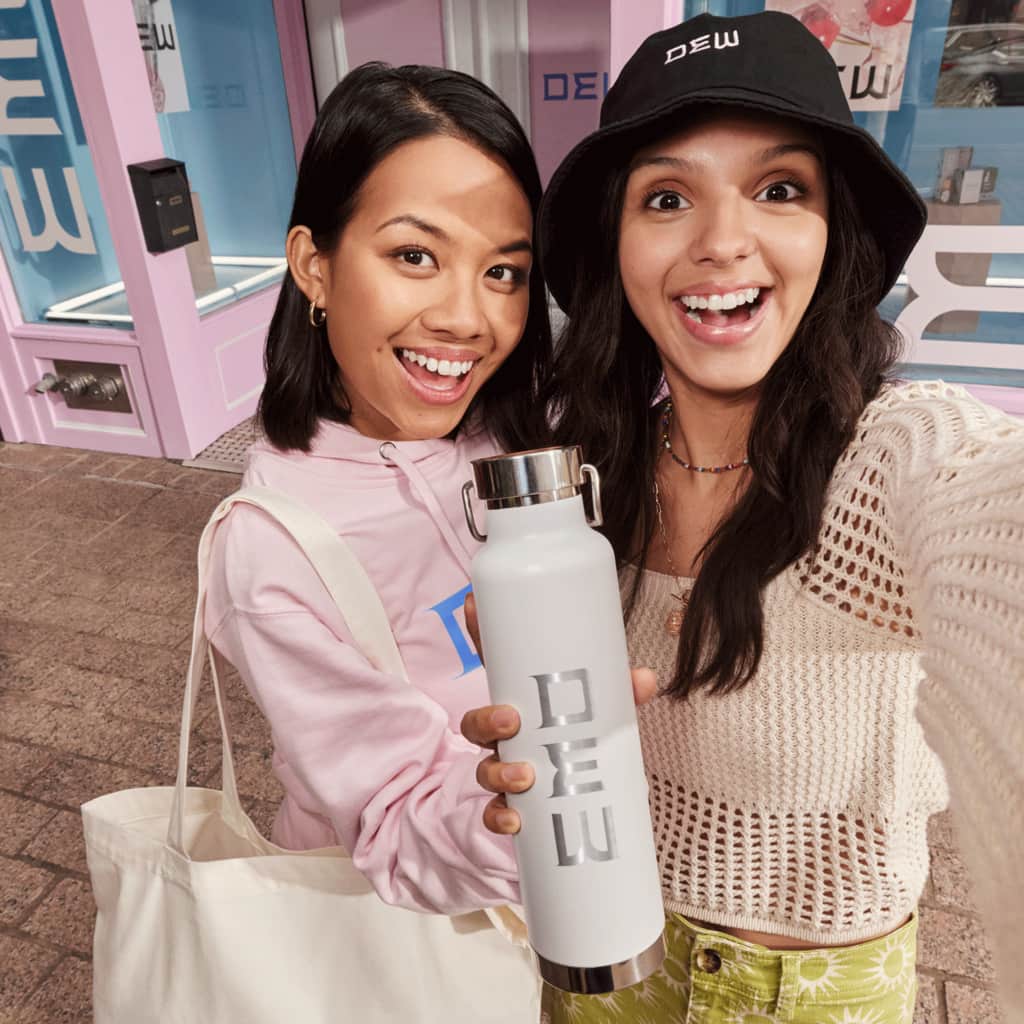
Why branded merch works
Understanding branded merchandise effectiveness helps you choose the best branded merch for your small business without overstretching your budget. Merch done well is great for promoting your brand because it encourages:
Emotional connection and reciprocity: When you give someone something genuinely useful, customers feel a tiny sense of goodwill, and they’re more open to you. That’s reciprocity in action, and it’s one reason promos can outperform an ad.
Brand recall through repeated cues: Your logo on a pen or water bottle isn’t a one-time impression – it’s a repeated cue. Every use is a mini memory. That repeated exposure is how brand recognition is built without paying for every single impression.
Identity signaling and belonging: People wear and carry items that fit how they see themselves or how they want to be seen. A clean hoodie, a great tote or a sleek charger become part of someone’s everyday kit, which is a powerful place for your brand to live.
Loyalty and advocacy: Great merch doesn’t just get used, it gets noticed. When someone uses your item in public, they get questions and your customer helps get the word out for you. A promo giveaway that shows you understand your clients is how you turn customers into brand advocates without making it weird.
Getting the most from merch: Match your promos to customer lifecycle
Branded merch works best when you treat it like a relationship tool. Choose the right item for the right moment, moving people from first impression to repeat customer to enthusiastic sharer.
Awareness
Awareness merch is designed for reach. Items that are easy to hand out, easy to carry and likely to be used quickly, so your branding spreads fast. Practical wins here include pens, totes, stickers and drinkware because they fit well into daily routines.
Loyalty
Loyalty merch is about customer gratitude. This is where quality matters more than quantity – upgrade the feel with better materials and print. Consider personalization for VIP customers or members. Custom branded merchandise is especially powerful for loyalty because the item was made for each individual, not the masses.
Advocacy
Advocacy merch makes sharing effortless. Limited drops, small-batch collabs, referral thank-you gifts or employee kits all work here, especially when the item looks good on camera. Pair it with a simple prompt like “tag us,” “share your setup” or “bring a friend,” and you’ve got merch doing real work.
Top categories of branded merchandise
While you can turn almost any item into branded merchandise simply by adding your company’s logo, slogan or design, some categories of promo products tend to grab more attention than others. Let’s take a look at the most popular branded items customers love to receive.
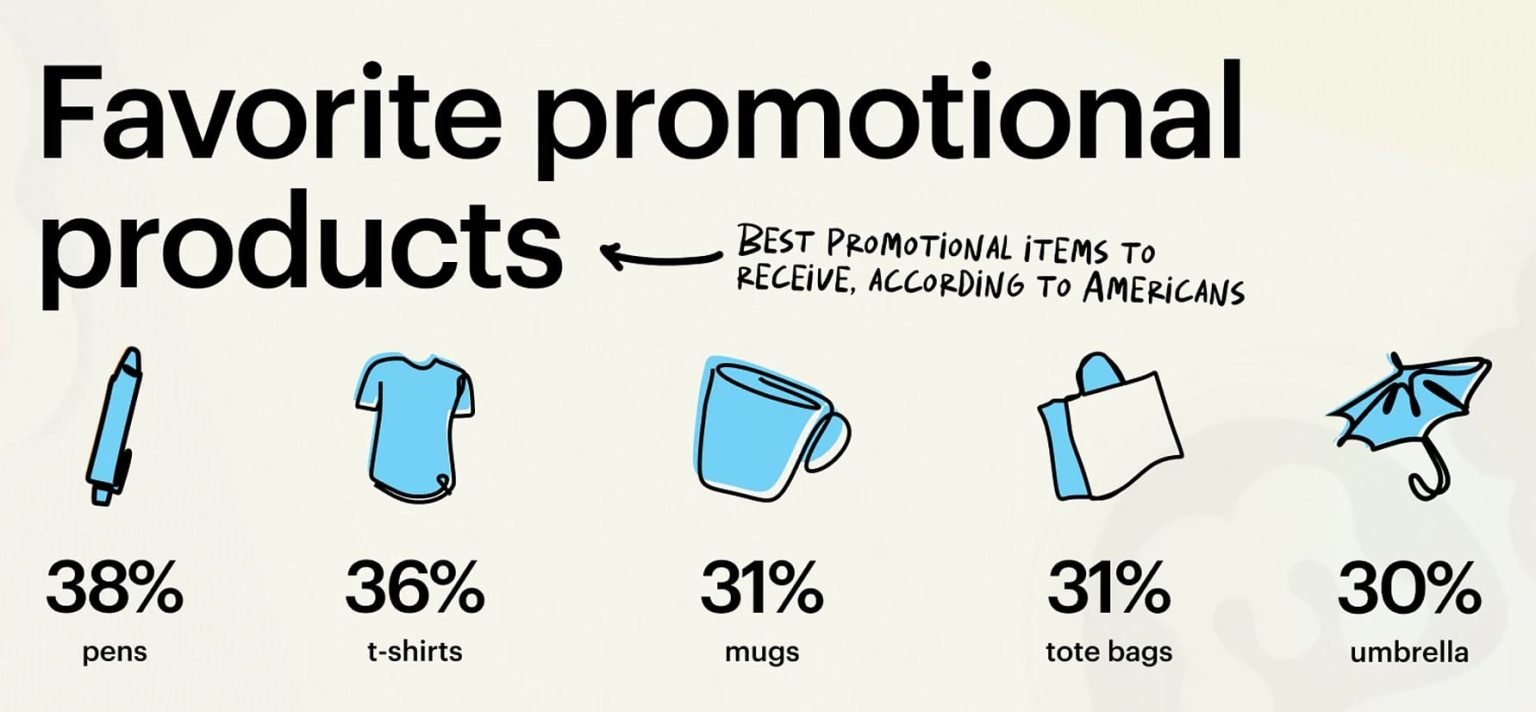
Let’s dive in with more specifics on top merch preferences for apparel, lifestyle goods, office supplies and stationery, tech accessories and eco-friendly items.
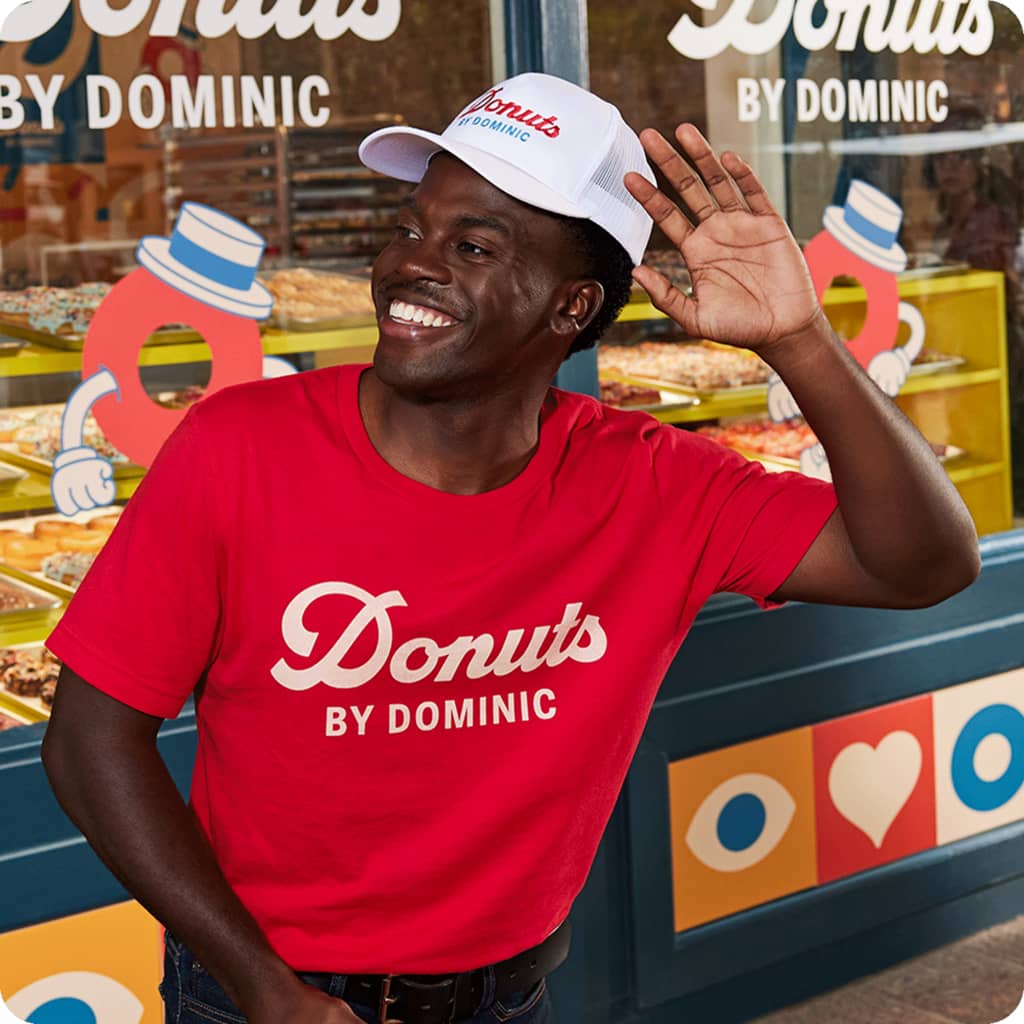
Apparel
Custom clothing offers a wide range of customization options and ensures your brand is seen everywhere.
Examples: T-shirts, hoodies, caps, jackets and polo shirts
Uses: Tradeshow giveaways, employee uniforms and merchandise sold via a physical or online store
Best for: The ultimate wearable merch that builds brand recognition and creates a cohesive team look
Don’t over-logo. A clean front and a subtle sleeve or back mark often gets worn more.
Lifestyle goods
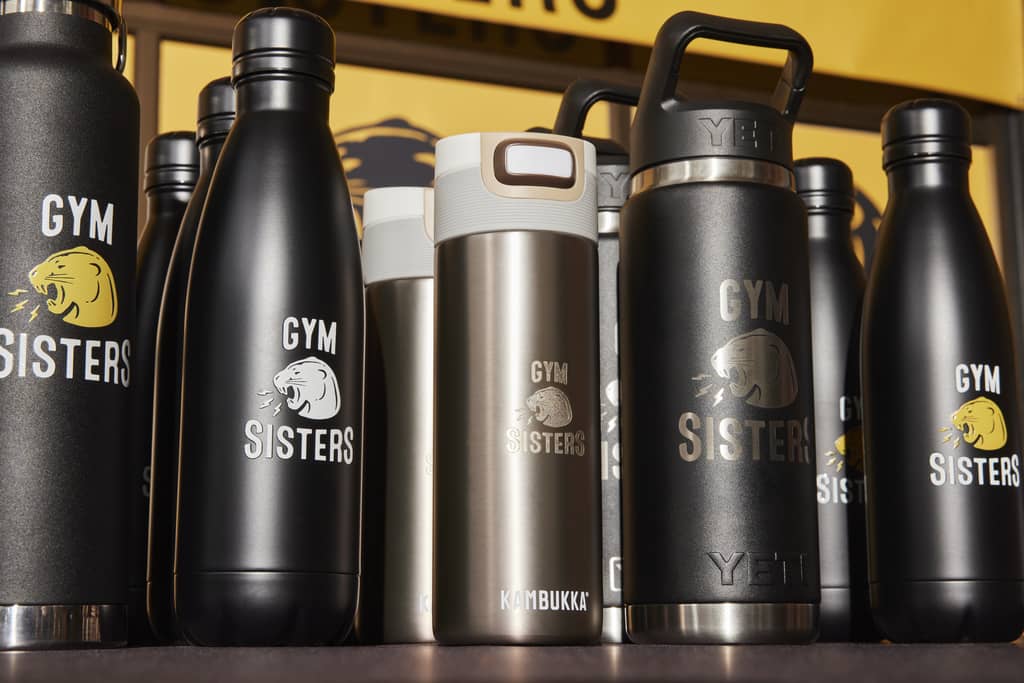
Lifestyle goods are items that enhance daily life or habits, like travel drinkware. Whenever these items are used, they provide brand exposure.
Examples: Custom drinkware, custom tote bags and broader custom bags
Uses: Customer gifts, loyalty programs, gyms/fitness studios, cafés, retail add-ons, welcome kits
Best for: Everyday items with high utility, high visibility and value – people actually use them!
Office supplies and stationery
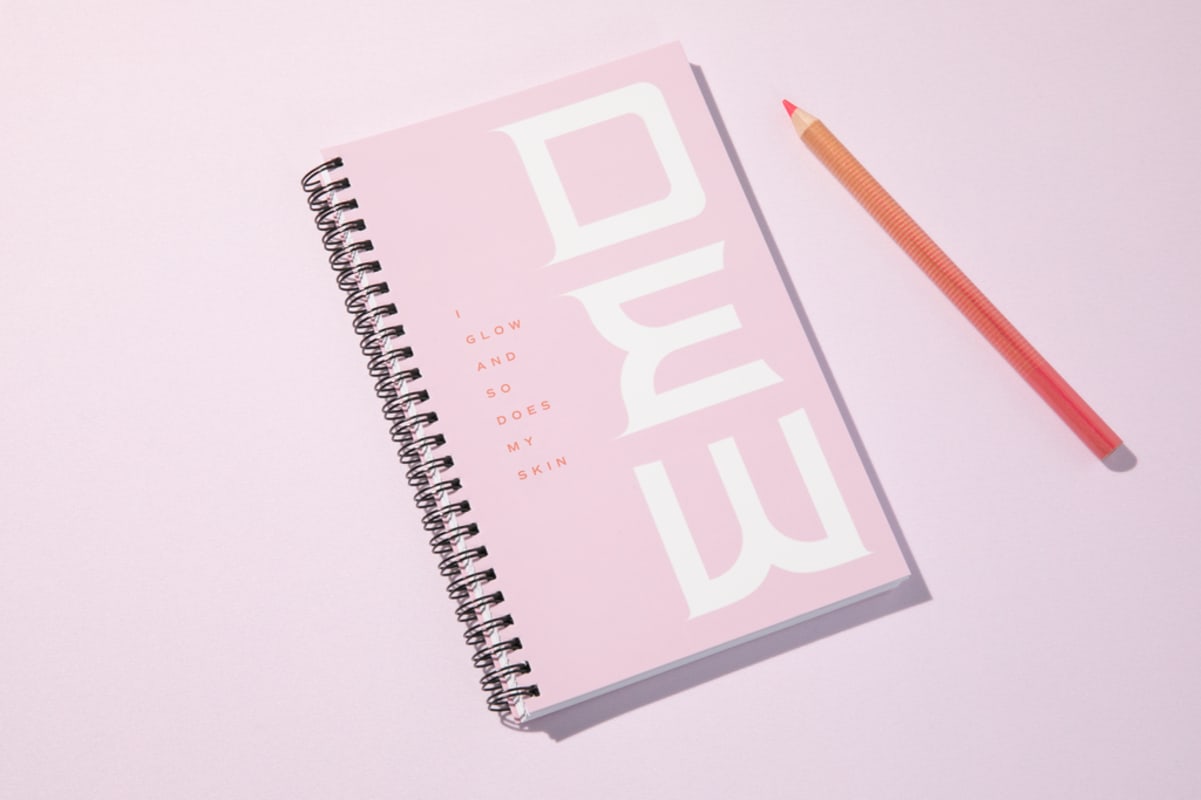
Custom stationery and related goods can be used in offices, at home or events, ensuring your business name is visible in work-related contexts.
Examples: Promotional pens, notebooks, sticky notes, notepads and journals
Uses: Trade shows, local networking, clinics or salons, real estate, professional services and employee/client onboarding
Best for: Frequently used, functional reminders of your brand in business spaces
Keep the design clean and readable as tiny logos will disappear on small items.
Tech accessories
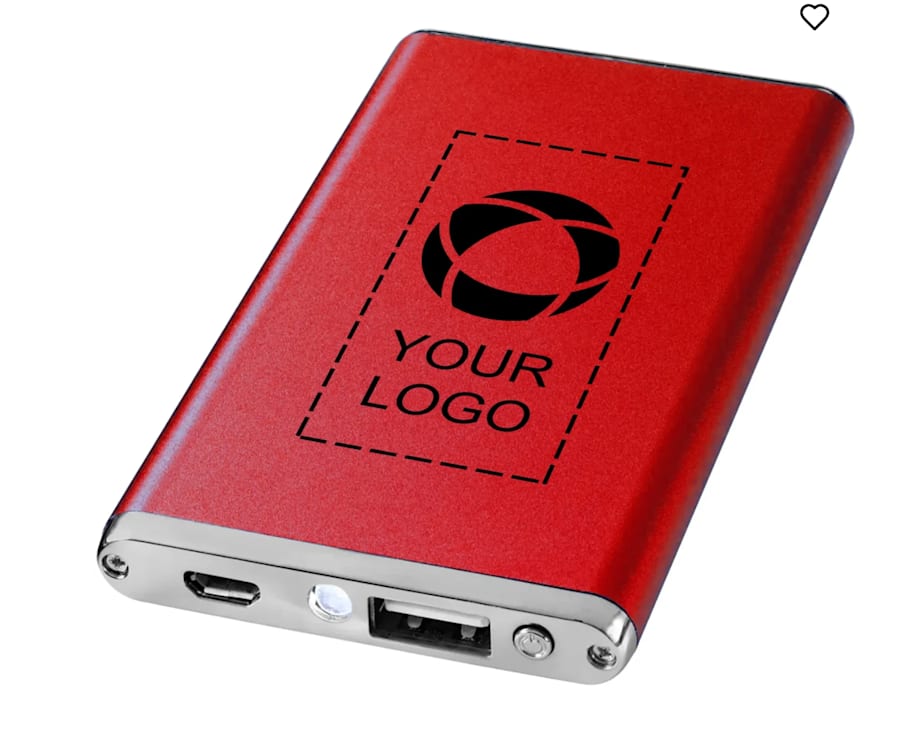
With people relying heavily on their devices, branded tech ensures your logo is seen regularly in a forward-thinking context and keeps your brand connected to your audience. Add your social media handles to tech accessories for an extra touchpoint.
Examples: USB drives, cell phone accessories, wireless chargers and power banks
Uses: Giveaway items for customers and employees at trade shows, product launches and career fairs
Best for: Appealing to tech-savvy customers and keeping your brand top of mind in a digital world
Tech items often feel more premium, which can lift brand perception.
Eco-friendly and sustainable items
Eco-friendly products are popular for helping reduce waste and pollution. People feel good using them.
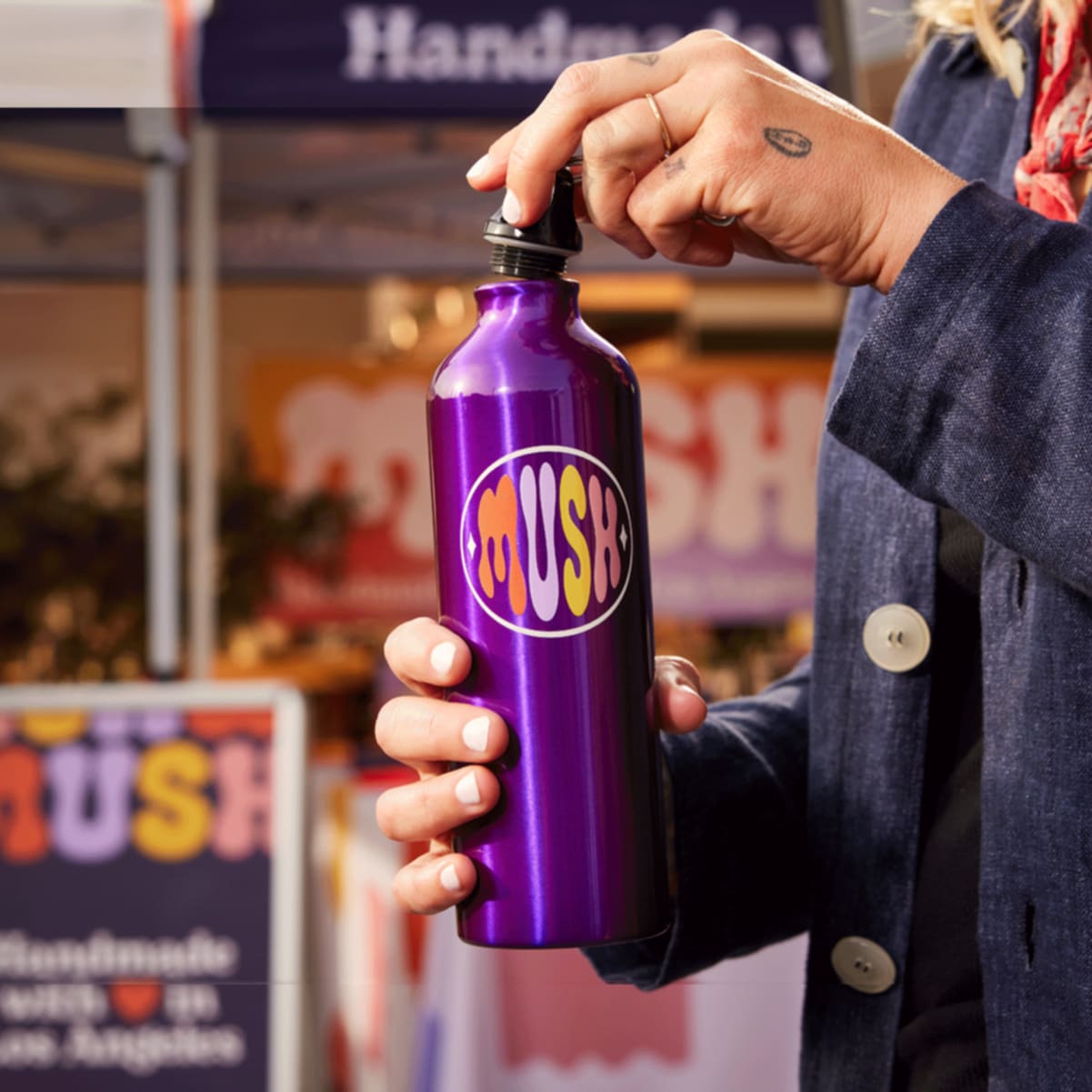
Examples: Recycled paper notepads, reusable bottles and even eco-leaning choices like bamboo pen styles.
Uses: Brands with sustainability values, community events, wellness campaigns or anytime you want to convey responsibility and earth-friendliness
Best for: Practical, low-waste merch that people actually feel good about reusing
If you claim to be eco-friendly, make it real – materials and durability matter more than buzzwords.
For a deeper dive, check out our guide on the six main types of merch.
How to pick the best branded merchandise for your business
Use this quick framework to match your business goal, audience, budget and distribution channel so your branded merchandise actually gets used and remembered.
Step 1: Start with the business goal
If your goal is…use:
Awareness: Choose high-utility, easy-to-distribute items like pens, totes, stickers, simple drinkware.
Loyalty: Opt for a few, high-quality items like premium drinkware, nicer apparel or tech.
Revenue: Pick “I’d actually buy that” items – clean design, consistent sizing, limited drops and simple shipping.
Step 2: Know your audience and context
Ask yourself “where will this item live?” Desk, gym bag, car, kitchen, travel or office – the closer you get to their real routine, the higher the keep-rate. Also consider if this is for customers, employees or partners, and what would feel genuinely useful to them.
Explore more trending and popular promotional products based on our survey to make sure your merchandise appeals to your target market.
Step 3: Set budget tiers
Even with a general sense of budget you can start exploring. Here are the best options based on different tiers:
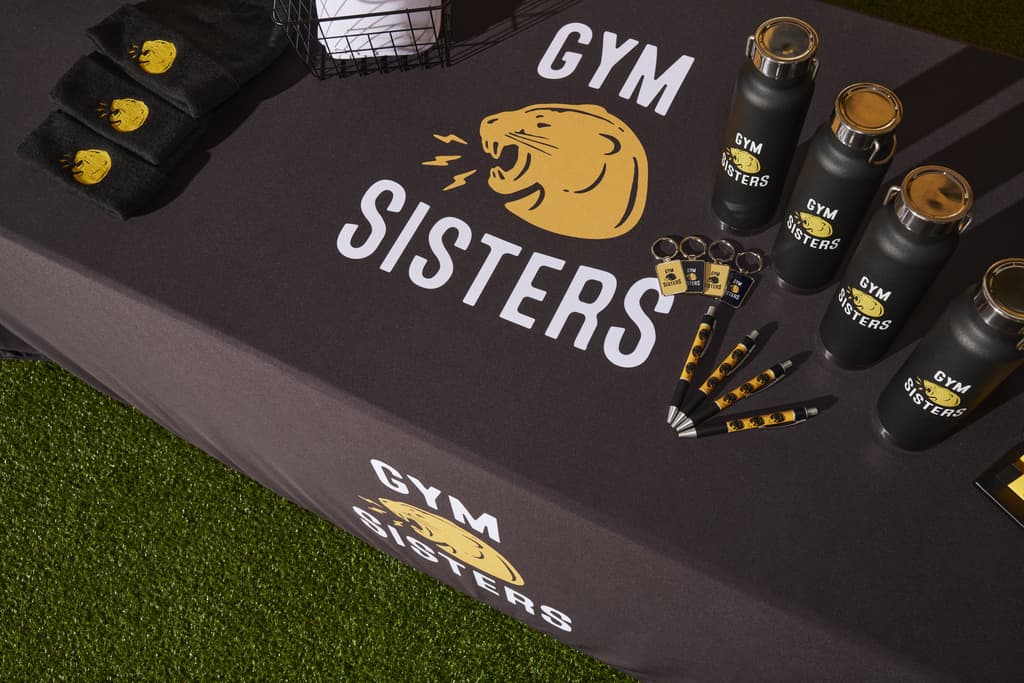
Low budget: Pens, basic totes, simple drinkware. Opt for clean design and decent print quality.
Mid budget: Better apparel, upgraded drinkware, small tech. This is a great tier for retention gifts.
Higher budget: Premium tech, branded kits, personalized items. Best used sparingly for VIPs, partners or milestone moments.
Step 4: Match the distribution channel
You can promote your business with branded merch at:
- Events / trade shows
- In-store
- Online via your website
- Direct mail
Channel matters because it changes what “good merch” means. Trade shows need portability. Direct mail needs lightweight and durable packaging. In-store can support add-on sales whereas online merch needs great photos, size clarity and a simple fulfillment plan. If you’re figuring out what small business promotional items to get your logo printed on or how to make merch and make it work operationally, start with distribution since this is where good ideas either scale…or stall.
2026 trends and best practices
This year, the merch that wins is the merch that’s thoughtful – sustainable by default, genuinely useful and designed to fit how people actually work, shop and share today.
Sustainable by default
This year, eco isn’t a niche preference, it’s becoming the baseline expectation for a lot of audiences. Favor reusable items that last, and avoid cheap materials that break quickly.
Tech-enabled swag is mainstream
Wireless chargers and power banks aren’t fancy anymore, they’re practical. Tech feels modern and useful, which helps your brand feel modern and useful too.
Personalization and small-batch customization
People keep what feels personal. Names, local references, limited runs and campaign-specific designs can outperform generic evergreen merch, especially for loyalty and advocacy.
Micro-promos for hybrid/remote work
Hybrid work changed how merch gets used. Smaller desk kits (pen, notebook and mug) and remote-friendly items (tech and drinkware) work well because they live in home setups, not just offices.
Pair merch with campaigns
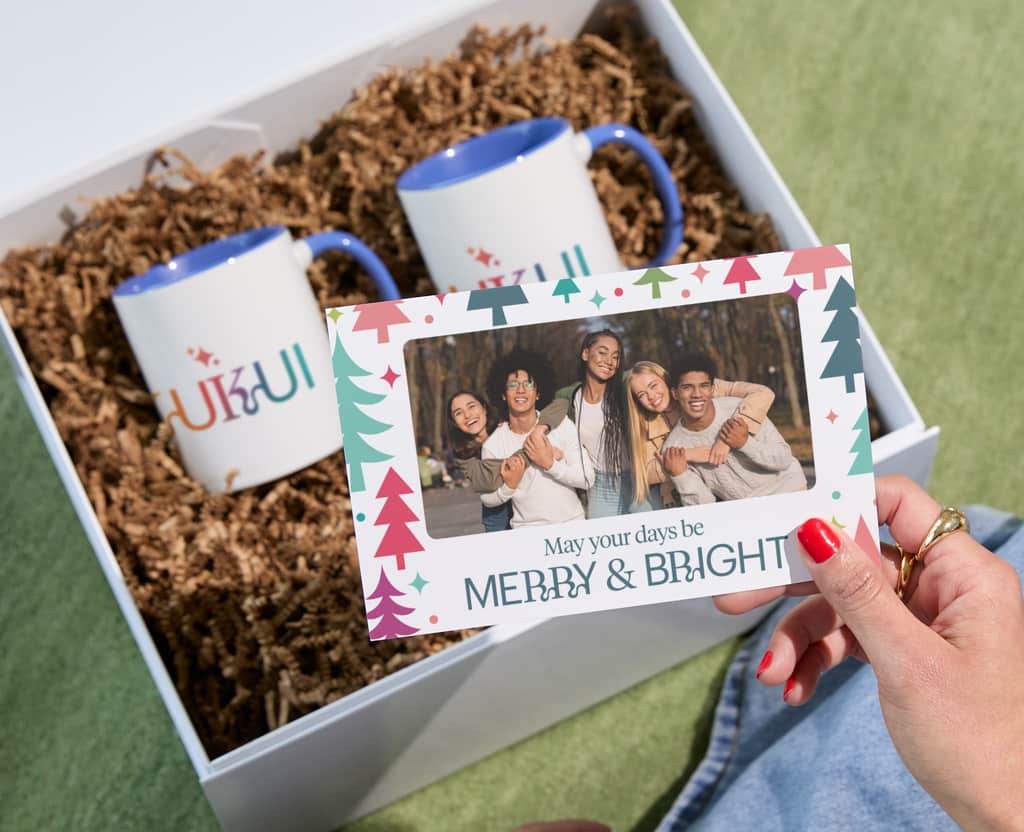
Merch performs best when it’s tied to a moment: a launch, a seasonal push, a referral drive or a community event. Think of merch as the physical receipt of your campaign, something that keeps the message alive after the click.
Common mistakes to avoid
- Buying junk swag that gets tossed: If it feels disposable, it becomes disposable.
- Over-branding: Huge logos can reduce quality and usage – clean, tasteful branding wins.
- Ignoring distribution logistics: Weight, packaging, lead times and address collection can make or break a merch drop.
- Inconsistent brand assets: If your logo files/colors aren’t consistent, your merch won’t be either.
- Skipping proofing and quality checks: Always proof. If possible, sample. Merch is a physical product, mistakes are harder to hide than a typo on a landing page.
Ready to print branded merchandise?
Branded merchandise is a powerful marketing tool for small businesses, offering endless possibilities from promotion to employee engagement and even generating extra revenue. The difference this year is that the best merch isn’t the trendiest, it’s the most strategically matched to your goal, audience and channel. Just make sure you’re choosing items people actually want, designing them with care and distributing them with a plan. That’s how custom branded merchandise becomes an asset, not a box of leftovers in your storage closet.
Branded merchandise FAQs
What is the difference between branded merchandise and promotional products?
They’re closely related and often used interchangeably. Branded merchandise is any item with your branding, while promotional products are branded items specifically used to market your business, such as giveaways, gifts or campaigns.
How much should businesses spend on branded merchandise?
Spend based on goal and audience. Awareness merch usually works best at scale with lower cost per item, while loyalty/partner gifts work better with fewer, higher-quality items. A simple rule: set a per-recipient budget that corresponds to the value of the relationship you’re trying to build.
What branded merchandise items have the longest lifespan?
The more long-lived goods are items that become part of a routine: drinkware, quality apparel, bags and desk items tend to last longer than novelty items. Keep in mind that high durability usually equals more impressions over time.
Is branded merchandise effective for small businesses?
Yes, especially because it creates long-lasting, real-world touchpoints. The key is choosing items that fit your customers’ lives and distributing them intentionally, not randomly.
When is the best time to use branded merchandise in a marketing strategy?
Branded merch works best when you have a clear moment or goal, like launches, seasonal campaigns, events, new hire onboarding, loyalty milestones, referrals and/or community partnerships. Merch works best when it supports a plan, not when it tries to be the plan.