Business card etiquette means presenting, receiving and managing contact details thoughtfully, whether you share a paper card or a digital profile. For small business owners, these little exchanges help turn introductions into conversations worth continuing.
If networking makes you nervous, you’re in good company. You don’t need a polished pitch or perfect choreography, a little preparation and genuine interest go a long way. Here’s how to handle the handoff, navigate cultural differences and follow up with confidence, plus creative ways to put your cards to work beyond networking events.
- Share your card when there’s a reason to stay in touch, and give incoming cards a moment of attention.
- Clean cards, readable details and thoughtful design help your business make a confident first impression.
- Adapt to local customs and individual preferences, whether you’re exchanging paper cards internationally or offering a digital contact.
- Follow up within 24–48 hours, organize your contacts and use packaging inserts to keep customer connections going.
The essentials of universal business card etiquette
Wondering how to exchange business cards without making it awkward? Start with these five habits:
- Timing: Offer your card during introductions at formal meetings or after finding common ground at casual events.
- Condition: Keep cards clean and crisp in a protective holder.
- Handoff: Hold the corners without covering details, with the text facing the recipient.
- Note-taking: Record conversation details privately in a notebook or contact app.
- Follow-up: Send a personal message within 24–48 hours, mentioning something you discussed.
1. How to exchange business cards with confidence and care
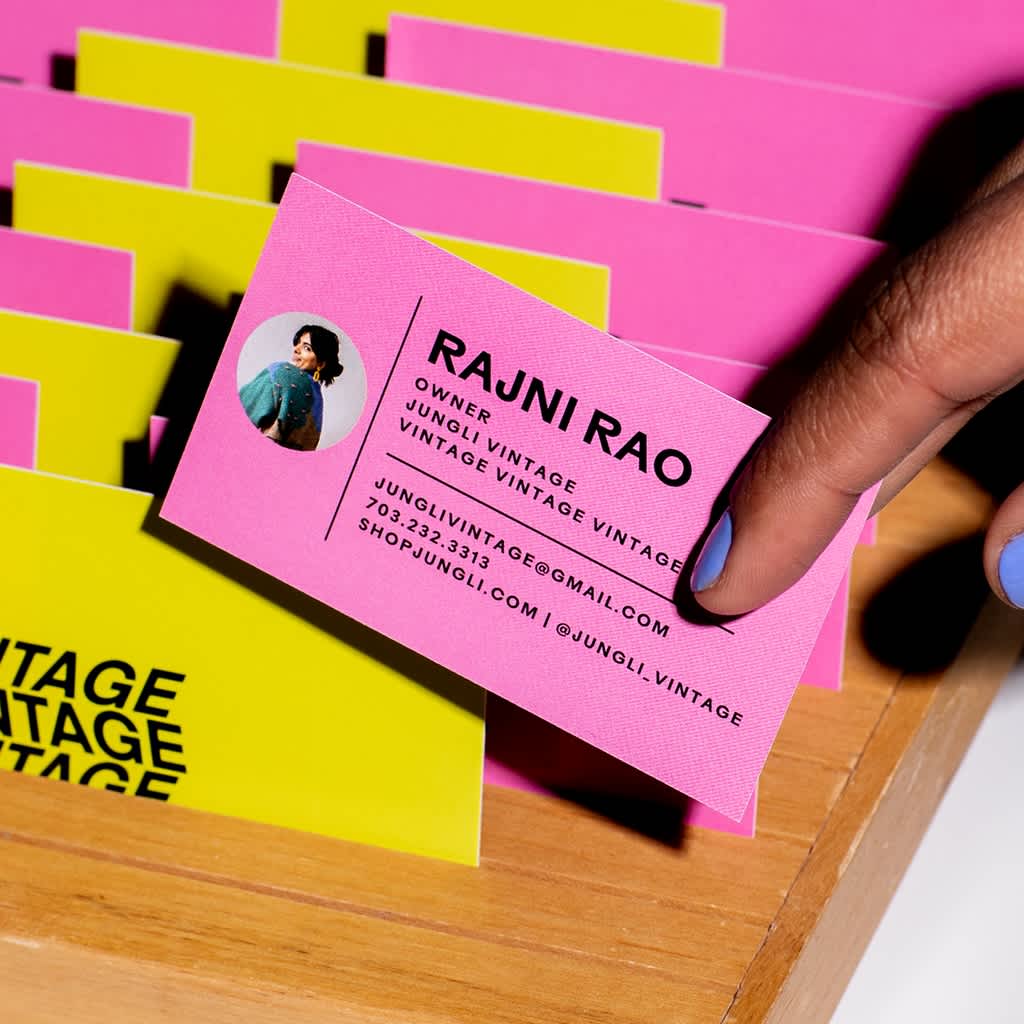
Present your card face-up, holding it lightly by the top corners so your fingers don’t hide your name or logo. Use your right hand or both hands, depending on local custom, and turn the text toward the recipient.
Make brief, comfortable eye contact as you offer it: around 2–3 seconds can be a starting point, but follow the person’s comfort level. A simple “I’d love to stay in touch, here’s my card” is plenty, there’s no need to deliver another sales pitch.
Connect card condition to professional credibility
Bent corners and faded printing can distract from an otherwise great introduction. A rigid case helps prevent dog-eared edges, scuffs and pocket lint, so the card you hand over reflects the care you put into your work.
Sturdy paper can reinforce that impression. Options such as 16 pt or 18 pt cardstock feel substantial. “Pt” describes thickness, with 18 pt thicker than 16 pt. Choose a finish that suits your brand and budget, keeping clear printing and accurate details at the top of your checklist.
2. Accept business cards with deliberate respect
The most useful rules for handling business cards start with attention: accept the card with your right hand or both hands, as appropriate. Spend about 3–5 seconds reading it, then acknowledge something relevant, such as the person’s role or business name.
Keep your response natural: “You mentioned your studio, does it specialize in restaurant branding?” During a seated meeting, follow your host’s lead about keeping cards visible on the table, arranged by seating position to help you remember names.
Take notes without causing offense
Writing on someone’s card in front of them is considered disrespectful in many professional settings, particularly in Japan and China. Elsewhere, expectations can be more relaxed, but taking notes separately is a considerate default. Once the conversation ends, jot down where you met and what you discussed in a notebook or customer relationship management (CRM) app.
3. Adapt your business card etiquette to international customs
Research local customs before an international meeting, then pay attention to the people in front of you. National conventions offer a starting point, while company culture and personal preferences shape the actual exchange.
In a formal Japanese meeting, for example, let your host guide the order of introductions instead of distributing cards around the table. If someone bows, a small acknowledgment is appropriate, you don’t need to improvise an elaborate ceremony. The U.S. Commercial Service’s Japan guidance also recommends bringing plenty of cards and including your title.
In China, a contact might offer a WeChat connection even when you’ve prepared printed cards. Follow their preferred format when practical: digital contact exchanges are increasingly common.
In much of Southeast Asia and the Middle East, it’s generally polite to offer and receive a card with your right hand or both hands. In many European countries, business card exchanges tend to be more casual, but taking a moment to acknowledge the card rather than immediately putting it away shows respect.
At a mixed international event, asking “How would you prefer to exchange details?” gives everyone room to choose.
![Hand picking up red, orange and pink rounded edge business card with white “Meraki Premium Chocolate” text from a metal stand]
Hand picking up red, orange and pink rounded edge business card with white “Meraki Premium Chocolate” text from a metal stand.](https://blogadmin.vpsvc.com/hub/wp-content/uploads/sites/14/2026/09/business-card-for-premium-choco-brand.jpg)
Global exchange customs at a glance
Use this table and our international business card etiquette guide as starting points, then check expectations with your host before important meetings.
| Country or region | Presentation gesture | Handling and titles | Storage and translation |
| Japan (meishi) | Present and receive with both hands, acknowledge a bow | Read the name and title carefully, never write on the card | Keep it face-up on your case during the meeting, then store safely, consider a Japanese reverse |
| China | Use both hands with the text facing the recipient, a small nod can accompany the greeting | Inspect the card and acknowledge the person’s role | Use a holder after reviewing, consider simplified Chinese for mainland China |
| Germany | Exchange during formal introductions or a relevant conversation | Pay attention to professional and academic titles | Keep cards tidy, consider German translation for local contacts |
| UAE | Offer and receive with your right hand | Allow time for greetings and respect titles | Store carefully, an Arabic reverse can be a thoughtful addition |
| Brazil | Begin with a warm greeting | Give the card attention without making the exchange overly ceremonial | Use a holder, consider Portuguese for local contacts |
| US / UK | A one-handed exchange is generally fine | Read the details before putting the card away | Use a case or clean jacket pocket, adapt language to your audience |
4. Create cards people want to keep
A memorable card makes it easy to recognize your business and contact you later. Give your name, service and preferred contact method enough space, then choose design details that fit your industry.
- Creative and design agencies: Try textured stock, a metallic foil accent or a custom shape. A studio might use a bold illustration on the front and simple contact details on the back, letting one distinctive feature do the work.
- Legal, financial and consulting services: Choose a classic layout, high-contrast typography and heavyweight matte stock. For example, a consultant could pair a restrained navy-and-white palette with a clear service description and generous margins.
Keep decorative effects away from small text so they don’t compete with essential information. Explore these business card design principles and our guide to how to design a business card for help bringing everything together.
5. Master digital and NFC card etiquette
Near-field communication (NFC) cards share information when held near a compatible phone. The etiquette is straightforward: explain what you’re offering, ask permission and make the exchange easy.
- Ask first: Try “Would you prefer a paper card or a tap to save my details?” Let the other person handle their phone and explain what will open.
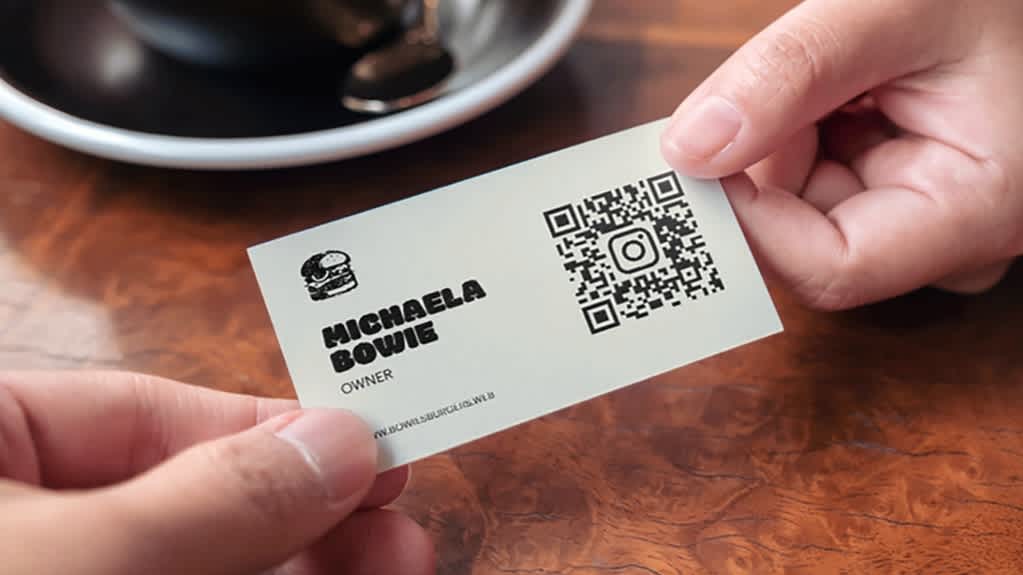
- Handle glitches calmly: If NFC doesn’t work, say “No problem, here’s a QR code, or I can give you a paper card.” Have the code ready on your screen so nobody has to watch you hunt through apps.
- Keep paper handy: A few crisp cards cover dead batteries, poor connectivity and people who prefer something tangible.
Test your digital profile beforehand and make sure your details are easy to find and save. If the other person seems hesitant, offer another option and keep the conversation moving.
6. Business card dos and don’ts for timing your exchange
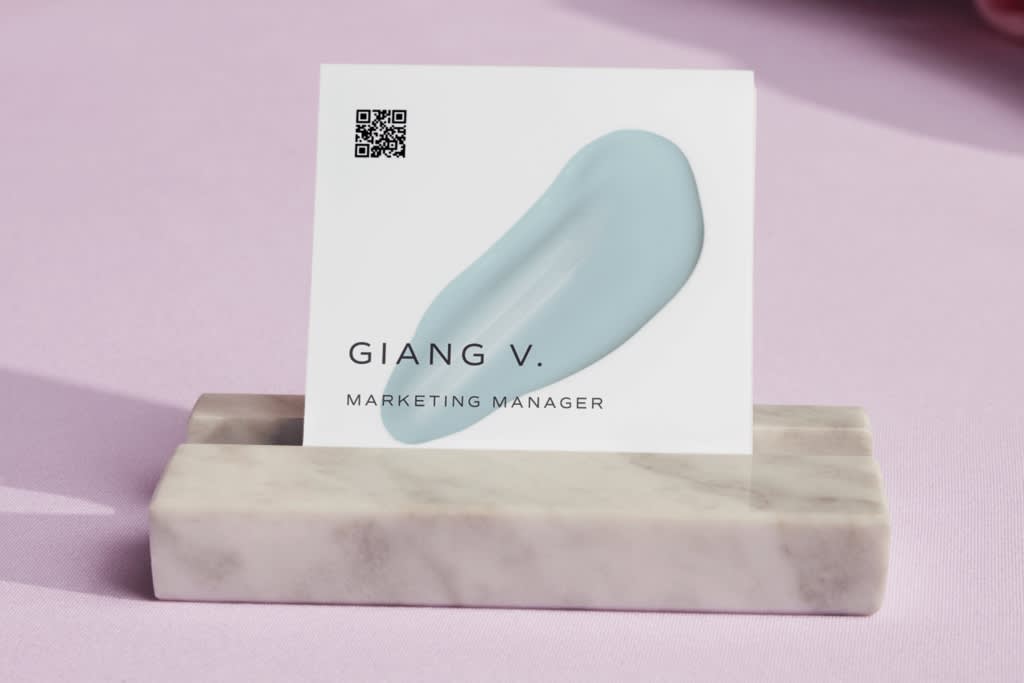
Offer your card when it supports the conversation. The right moment depends on the setting and whether there’s a clear reason to reconnect.
- Do exchange early at formal meetings: Share cards during introductions, following the host’s lead, so everyone can reference names and roles.
- Do wait at casual events: Offer yours after a useful conversation or as you’re wrapping up.
- Do respond to contact requests: “How can I reach you?” is your cue, even if it arrives earlier than expected.
- Don’t interrupt or distribute cards indiscriminately: Introduce yourself before offering one at a trade show booth or networking circle. A stack of cards can’t substitute for a conversation.
7. Follow up while the conversation is fresh
Aim to send a short, personal email within 24–48 hours of meeting. If you agreed on a different date or communication channel, follow that plan instead.
Mention where you met, reference one specific topic and suggest the next step you discussed. For example: “It was great talking at Tuesday’s makers market. Here’s the packaging supplier I mentioned, hope it’s helpful for your holiday launch.”
After the event, add each contact to your CRM or a simple contact list. Record the event, their business needs and any promises you made, then set a reminder for your next action. That small habit helps you follow through when your regular workload picks up again.

8. Keep cards organized and ready to share
Good rules for handling business cards extend beyond the event. Separate outgoing cards from incoming ones and organize new contacts promptly. A dual-compartment holder makes it easier to find your own card without accidentally handing over somebody else’s.
At your desk, file received cards in a binder or organizer, or transfer details with a scanning app. Check scanned names and email addresses for errors before relying on them.
Before your next event, restock your holder and remove cards with worn edges or outdated details. Check any printed QR code too, so it still leads to the right destination.
Thinking beyond the handshake: Alternative ways to share business cards
Your cards can help people discover your business even when you’re elsewhere. Ask a complementary business about a small counter display, include one with a requested sample or add a card to a customer pickup bag.
Always get permission before leaving cards on someone else’s premises. Explore more places to leave business cards to find locations your customers already visit.
Unboxing etiquette: Using business cards in product packaging
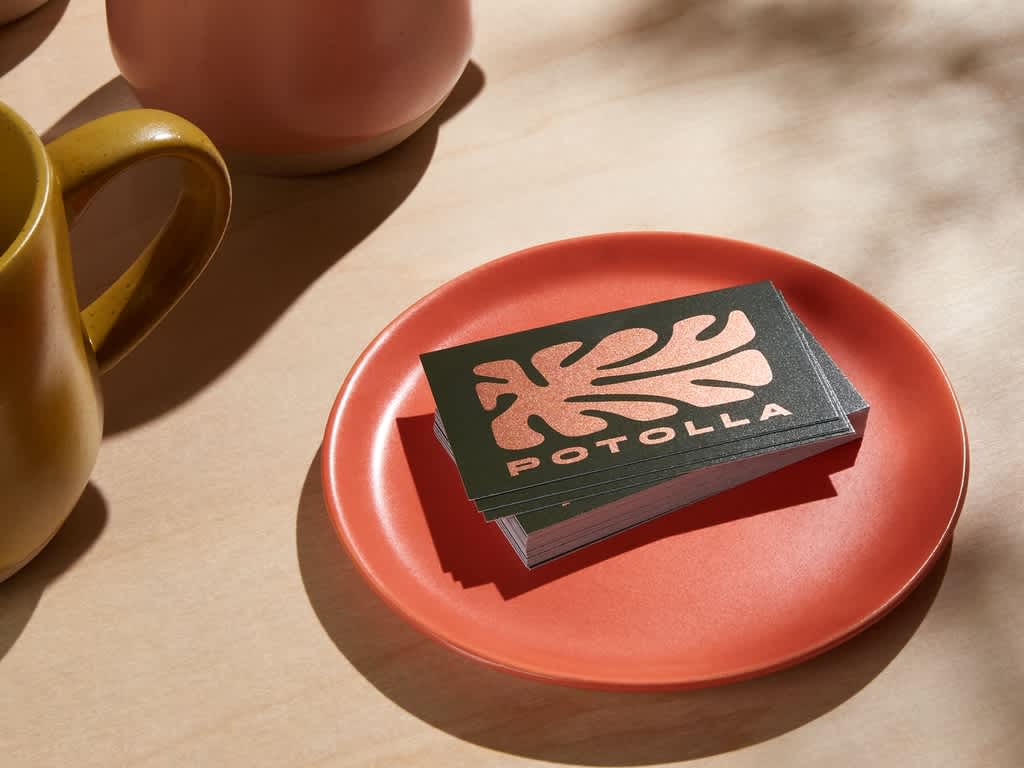
Place a card where customers will notice it as they open the package, such as on top of tissue paper or inside a jewelry pouch. A ceramics seller could write “Thanks Maya, enjoy your morning coffee!” on the back, while a skincare shop could add a QR code for a return-customer discount. Pick one clear next step, whether that’s redeeming an offer or leaving feedback, these ideas for small business cards offer more inspiration.
Choose a durable coated finish to help withstand handling, and tuck the card securely into the packaging to reduce rubbing and bending. If you’re handwriting notes, check that the reverse accepts your pen: VistaPrint’s glossy cards, for example, have a silk back suitable for ballpoint writing. Test your ink before packing, and explore how packaging shapes the unboxing experience for more ways to make deliveries feel personal.
Follow business card etiquette and make your next introduction count
Thoughtful business card etiquette and a well-designed card help your business make a credible, welcoming first impression. Give each exchange a little care, follow through on your promises and let your personality carry the conversation.
Business card etiquette FAQs
Can I politely decline a business card?
Yes. Thank the person and keep your response friendly: “Thanks for offering, but I don’t need your details today.” You don’t have to accept a card or offer your own simply because someone asks.
Does receiving a card mean I can add someone to my newsletter?
Don’t treat a personal exchange as permission for ongoing marketing. Ask whether they’d like your newsletter and share a signup link so they can choose. Keep your first personal follow-up focused on the conversation you had.
Can I pass someone else’s business card to a potential client?
Ask the card owner whether they’re happy to receive referrals and which details they want shared. If the card includes a direct personal number, offer to arrange an introduction rather than circulating it without checking.
Should I offer business cards at weddings or private parties?
Keep the occasion and your host’s wishes in mind. If someone specifically asks about your services, a discreet exchange can be appropriate. Save wider promotion for a business setting and let the celebration take priority.
Which card should I offer if I run more than one business?
Choose the card that matches the conversation and briefly explain which business it represents. If both businesses are relevant, ask whether the person wants details for each. That keeps the exchange clear and avoids an unexpected handful of cards.