Logo design is at the forefront of a strong branding core, and these days, there’s an increasing need for businesses to really hone in on creating this. During the design process, it’s essential for both business owners and designers to ask the right questions to ensure they are putting their best foot forward. Enter the logo questionnaire.
With the rise of social media and multiple marketing channels through which consumers do their research, it’s so easy for the business’s presence to get drowned out amongst the competition.
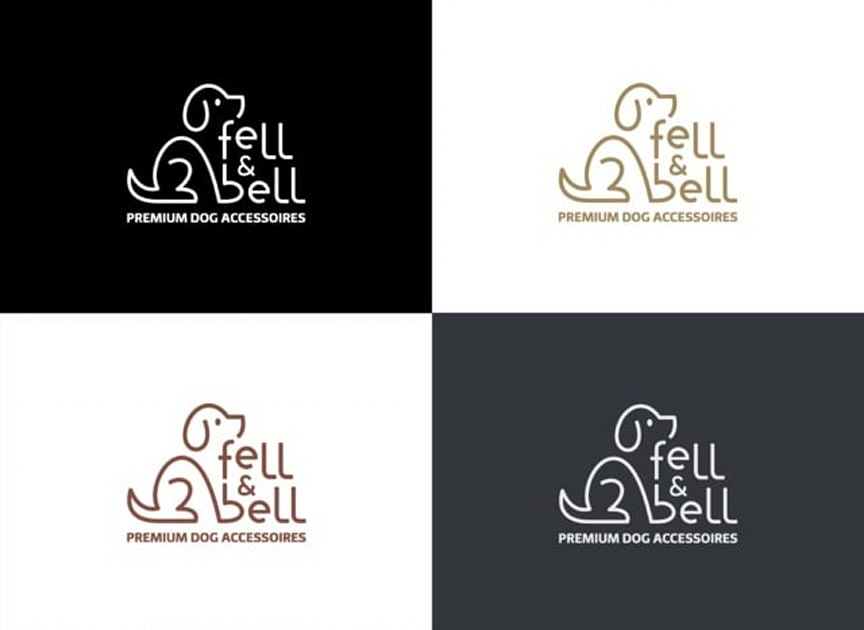
Fell & Bell dog accessories logo design by Chris Kay via 99designs by Vista.
- A logo questionnaire turns “I’ll know it when I see it” into a clear, designable direction.
- Small businesses can save time and money by aligning early on audience, brand identity and design direction.
- The strongest questionnaires cover story, values, target customer, competitors, style preferences and real-world logo usage.
- Practical details matter: where the logo will appear, scalability, required file formats and timeline/budget.
- Use the answers to create a simple brief, then iterate with feedback – not endless rebrands.
What is a logo questionnaire?
Asking yourself the hard questions about what you want in a logo design is very important. It allows you to dig deep and think about the core values of your business, and define your own voice that’s distinct from the competitors. While you may have a good idea of what your business will be about, specific questions will help you draw out details and information about your business that seem minor but could hold the key to unlocking your unique brand identity.

The logo design brief questionnaire is specifically designed for that: It’s a list of questions for business owners to answer to help uncover important aspects about the business and help shape a strong logo design. For small businesses, it also prevents expensive backtracking later by clarifying basics up front: who you serve, what you sell, what you want to be known for and how the logo needs to work in the real world (signage, packaging, social profiles, invoices and more).
Ready to create a logo? Learn everything you need from our ultimate guide on how to design a logo.
How does a logo questionnaire help?
A logo questionnaire isn’t just admin, it’s the fastest way to align your business goals with design decisions, so you and your designer can move forward with clarity (and far fewer revisions).
1. Create a clear focus for your brand and identity
The logo design questionnaire helps the business owner and designer fine-tune the primary focus around which the business revolves. By having the business owner answer specific questions around basic things such as the business operations and target audience, the process gets the conversation started and ideas flowing.
Charlee’s fried chicken logo design by EWMDesigns via 99designs by Vista.
Even if none of the answers clearly define the branding yet, usually the discerning designer will start to see a common theme emerging from those answers. That theme could help shape the core business identity and, from there, your logo design.
If you’re a solo founder, block 30 minutes, answer quickly and don’t aim for perfection – the patterns show up once everything is written down.
2. Uncover the details that shape the right logo
The logo questionnaire usually comprises an extensive number of questions. But before you get discouraged by this, it’s worth remembering that the questions ensure you leave no stones unturned to discover the right voice and the right style for your business logo.
Even for the most insightful business owner who knows what their business will look and feel like, there may be one or two forgotten things about their story that could actually be the key to unlocking that effective logo design.
If you feel stuck, answer in plain language. Your designer can translate “friendly but not childish” into colors, shapes and typography.
3. Build a cohesive brand
Think of the logo questionnaire as an effective fact-finding device. By culling as much information as possible early on in your branding journey, you will have all, if not most, of the tools ready to tackle the next phase of your business branding.
Pete’s Barber Parlor logo design by DSKY via 99designs by Vista.
Take this case as an example: A small bakery owner wants to upgrade from an online-only operation to a physical shop. When the time comes to decide on the shop’s interior decor, he refers back to his logo questionnaire to be reminded that it was his grandmother who first taught him how to bake. This compels him to recreate the interior of his grandmother’s kitchen in his new bakery.
Answering as many questions in the logo questionnaire form as possible can help set you up for success early on and better prepare you for well beyond the logo design phase.
Keep your answers in one shared doc (or folder) so you can reuse them later for your website copy, packaging notes and social bios.
What your logo questionnaire needs to cover
A good questionnaire balances two things: brand clarity (who you are) and design practicality (what the logo must do). For small businesses, that practicality is often the difference between a logo that looks nice and a logo that works everywhere you need it.
Business basics and brand identity
Start with the fundamentals: what you offer, what you stand for and what you want customers to feel. This is where you define your values, vision and mission in language that’s simple enough to guide design decisions.
Including questions around the story of the business will help uncover useful keywords that will inform where your logo design could go, stylistically. Include questions that encourage you to dig deep into the origin of the business, including when or where the business idea was first conceived, why you decided to go into this business or industry in the first place, and the important milestones the business has seen so far.
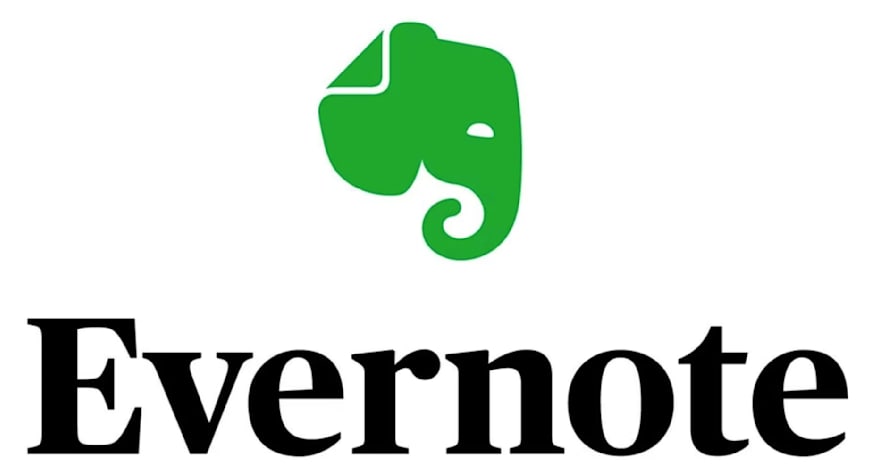
Logo design via note-taking app Evernote
Take the story of the Evernote logo as an example: As a note-taking app whose core function is to help users retain and memorize information, the logo features the head of an elephant, as it’s long been believed that elephants have a great memory. By conjuring up the common phrase “an elephant never forgets,” Evernote promises its users that they can rely on the app to remember important things in their lives.

Black Rooster Co. logo design by involve via 99designs by Vista.

Accident Law logo design by ludibes via 99designs by Vista.
The more details you can dig up about the business and its journey so far, the better equipped you will be in crafting that perfect logo design.
Pull out three to five keywords from your story, for example: heritage, handmade, quick, calm, premium – those words often become design direction.
Target audience
Identifying the business’s target audience is another sure-fire way to find that perfect logo design. By narrowing down the demographics of the business through an effective set of questions, you’ll be able to make better decisions about the styles and elements your logo should feature.
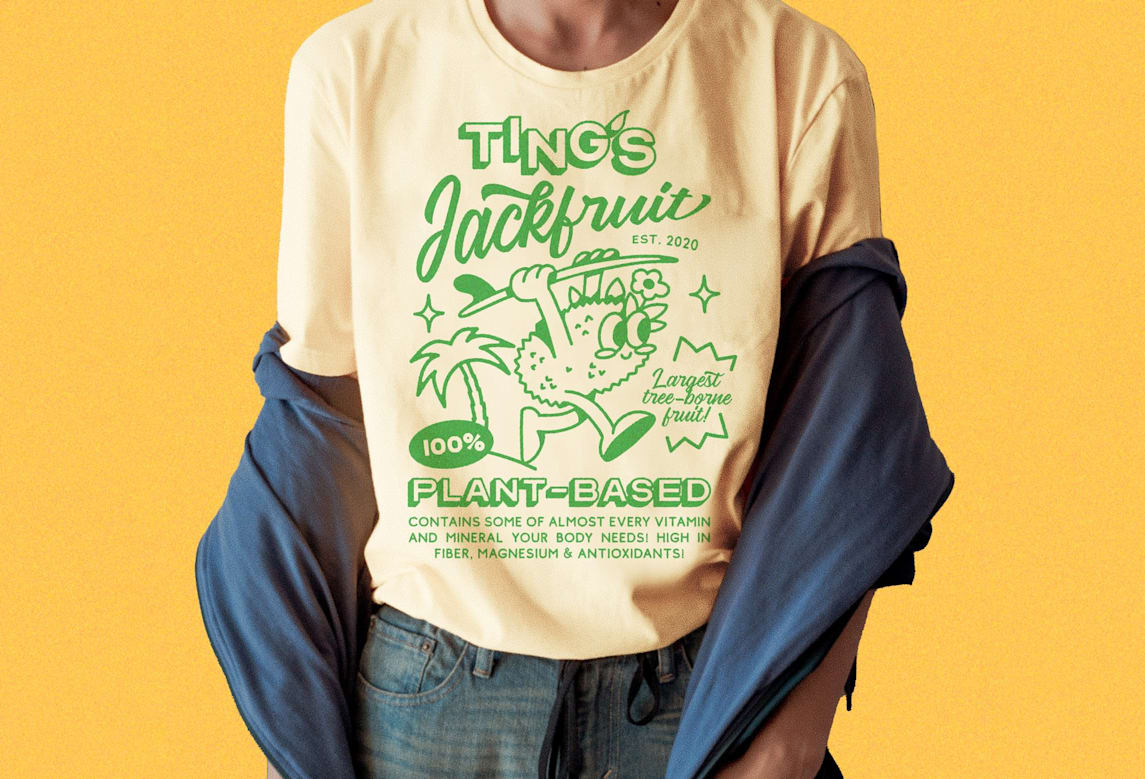
Ting’s Jackfruit logo design by Anastasia S. via 99designs by Vista.
It’s worth thinking about creating business customer personas, so you may better identify the wants, likes and dislikes of your target audience. The more you know, the better you can connect with them.
If you serve multiple audiences, pick your primary customer first– your logo can’t be everything to everyone.
Design direction
Identifying the design and style preferences for the business is the logical next step in narrowing down your logo design. Your logo questionnaire should dig deep into the visuals of the business, including colors, font style and even specific elements that speak to the business (e.g., round shape, text-focused design).
Watermark logo design by 3whales studio via 99designs by Vista.
Consider the choices of each element. Are you basing your decision on the brand colors around your own personal preferences or what makes the most sense for your brand?
You should be researching logo colors and their meaning to see what they symbolize, if your audience would connect to them and what other brands are using them. If you have not already done so, start developing a brand style guide with your designer to establish a set of guidelines that define your business’s creative style.
Bring examples of what you like and what you don’t like – both are equally helpful.
Competitor context
While it can be daunting to think about the business’s competition, it’s important to know what they look like and offer so you can see where your business fits in.
T-Shirt Elephant logo design by Cross The Lime via 99designs by Vista.
Does it do something similar to what they are, but more efficiently or cheaper? Does it offer extra services or products? How much overlap is there with your audiences? The more you can pinpoint and understand, the easier you’ll find it to hone in on a unique, authentic voice and visual identity, including the perfect logo.
Don’t copy competitors. Study them to avoid blending in.
Usage, scalability and longevity
While we can’t predict the future, there are some things to consider when developing a logo design. Among them is whether the business might venture into other services or expand on product offerings. Considering these will ensure the logo design isn’t tied to one style that may be outdated when the expansion happens.
Check out the history of logos and the world’s most famous logos to learn how these designs have stood the test of time and turn them into questions for your logo questionnaire.
Also consider where your logo must live: social icons, website headers, invoices, product labels, storefront signage, uniforms and vehicles. That usage affects layout, legibility and the file formats you’ll need.
If you’ll print anything at all, ask for vector files, not just PNGs.
Budget, timeline and deliverables
Especially for small businesses, the questionnaire should include constraints. A designer can propose smarter options when they know your budget range, deadline and what “done” means. Include practical deliverables like primary logo, alternate lockups, icon mark, color variations and a mini style guide, all scaled to what you truly need right now.
The 18 logo questionnaire questions (+ checklist)
These are designed to be detailed, specific and concise – the sweet spot for small business owners who want a logo that’s on-brand and usable. Answer in full sentences where you can.
- What is the nature of your business – what do you offer and what problem do you solve?
- In one sentence, what do you want your business to be known for?
- What are your business values, plus your vision (where you’re going) and mission (how you’ll get there)?
- Tell us the story behind your business: How did the idea happen, and what inspired you to start?
- What are the most important milestones you’ve hit so far (or hope to hit in year one)?
- Who is your primary target audience (be specific), and who is secondary?
- What do your customers value most (speed, price, quality, status, community, convenience, etc.)?
- What turns your customers off (pushy sales, “cheap” look, overly corporate tone, clutter, trendiness, etc.)?
- Where do customers find you today (Instagram, Etsy, local foot traffic, referrals, Google, pop-ups), and where do you want to grow next?
- Who are your top three competitors or alternatives customers might choose instead?
- For each competitor, what do you like and dislike about their look (colors, logo style, imagery, typography, overall vibe)?
- How are you meaningfully different (or better) than competitors – and what should your logo communicate about that difference?
- Given your mission, values and offerings, which colors feel right, and which colors should you avoid?
- What typography direction fits you best (serif, sans serif, script, bold, minimal, playful, etc.), and why?
- Describe your brand’s aesthetic in three to seven words. If helpful, choose sides: classic or modern, playful or sophisticated, organic or geometric, mature or youthful, illustrative or photographic, abstract or realistic.
- Where do you see your business in five years, and what might you add (new products/services, locations, markets)?
- Where will your logo be used most (website, social icon, packaging, storefront, invoices, uniforms) and what deliverables do you need (vector, PNG for transparency, JPG for web, plus black/white versions)?
- What’s your timeline and budget range?
Want a ready-to-use version? Download our logo questionnaire and fill it out in one sitting, then simply share your notes with your designer (or use it as a DIY checklist).
How to apply your answers
A questionnaire only helps if you turn it into decisions. Here’s how to put your answers to work without overcomplicating it:
First, highlight repeated words and themes (they’re your brand signals). Next, make a simple one-paragraph brief describing the business, the audience and the feeling you’re aiming for. Then, choose three to five visual references that match that feeling, plus two to three examples you dislike, so your designer knows what to avoid. Finally, define practical requirements: where the logo must work, what file formats you need and what success looks like (for example: readable at a tiny social icon size, and clear on a label).
If budget is tight, prioritize a strong primary logo, a simplified icon and a mini style guide. You can add deeper brand extensions later.
If you get stuck: Simple prompts that unlock better answers
While the above direct questions are often enough to pull out the key information for your logo creation, there are alternative methods to get ideas flowing, such as:
Picking one or the other
Select one or the other from a list of opposites. This list could be opposing personalities, characteristics or aesthetics. The idea is that you choose whichever option feels the most in sync with your brand and, when you take all your answers together, can provide a great springboard for your designer during their creative process. See below for an example of how to tackle this:
I see my brand as more:
- Abstract/realistic
- Cursive/block letters
- Illustrative/photographic
- Classic/modern
- Mature/youthful
- Playful/sophisticated
- Luxurious/urban
- Organic/geometric
Describe your business/brand to a friend
Including a prompt in your logo questionnaire to describe your business to a friend can be an effective brainstorming trick. It can help you word important info for your logo design that you might not have thought of otherwise.

White Willow Design logo design by RotRed via 99designs by Vista.
While the standard questions of a logo questionnaire may be enough to encourage you to tell your business story, sometimes a certain framing of questions can hinder you from thinking outside the box. By removing the constraints and providing the “safe space” of a friend, you could be more inclined to share details of your business that you may not think of otherwise, and find the gems among those details to craft your future logo.
Imagine a friend asks, “So what do you do?” and “Why should I choose you?” Your answers often become your best brand keywords.
Moodboard
Another great item to add to your logo questionnaire is a moodboard. This is where you add all the images, photos or illustrations that somehow resonate with the vision for your business. You could include mottos, fonts or mascots you see from other brands that could work. You could include specific campaigns or brand identities from other businesses and point out what you like about them. You could include the work of different artists, stylists or photographers who capture a certain atmosphere or aesthetic and identify what it is about their work you’d like to capture for your brand.
Whether it’s a collection of inspiring imagery or simply naming other companies most similar to yours, this will form the cornerstone of your business brand and logo design.
Keep your moodboard tight. Aim for six to 12 images max so the direction stays clear.
Ensure your logo stands the test of time
The logo questionnaire is the linchpin of your business’s perfect logo design. It provides a solid start to your branding and identity by doing it in three ways: It helps you stay focused on what your business is about, uncovers specific aspects by delving deep into your business objectives and ensures your logo stands the test of time. By asking all the right questions early on in your business journey, you’ll unlock a seamless creative process for the right logo design. For small businesses especially, this is how you get a logo that looks professional, feels authentic and works everywhere you need it without burning time or budget on guesswork.
Once you’ve got your logo, learn about trademarking your logo to find out how to protect your brand and logo from copycats and infringement.
FAQs
What should I do right after completing the logo questionnaire?
Turn your answers into a one-page brief: a short business summary, your audience, three to seven brand adjectives, three competitors and the practical usage requirements (where the logo must appear). Then share that brief with your designer or use it to guide your own concept sketches.
How do I make sure my logo is scalable for future growth?
Avoid overly detailed logos that disappear at small sizes and ensure you have alternates (for example: a full horizontal version and a simplified icon). Your questionnaire’s future and usage answers should guide this.
What if I don’t have a big budget – can I still use this questionnaire?
Absolutely. In fact, it’s even more useful on a tight budget. It helps you prioritize what you need now (often a primary logo, a simple icon and basic guidelines) and postpone extras until the business grows.
What are the different ways to create a logo design?
Common routes include hiring a freelance designer, working with an agency, using a template-based logo tool, running a design contest or generating initial directions with AI and then polishing them with a designer. The right option depends on budget, timeline and how custom you need the result to be.
How do I know the final logo is done?
A logo is done when it matches the brief, is legible at small sizes, works in black and white, looks good across your main use cases and you have the deliverables you need (including the correct file formats). If it meets those criteria, you can confidently move to rollout.