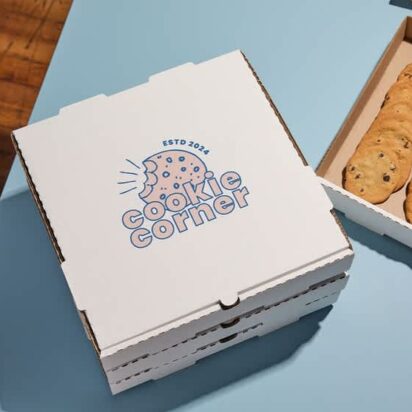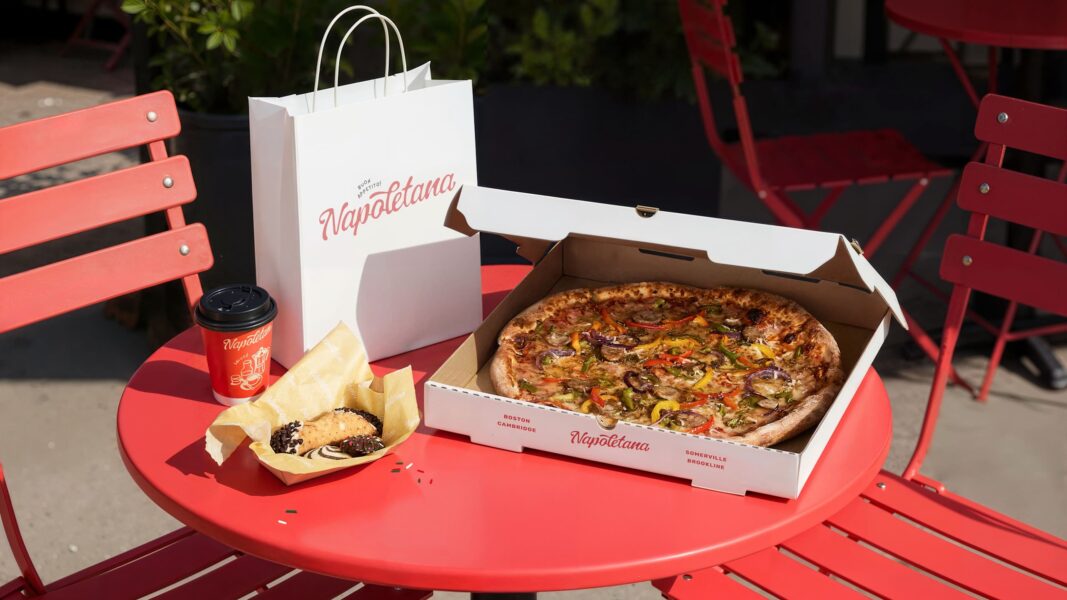
Getting the pizza box size right means your pizzas arrive with their crusts intact, toppings in place and plenty of appetite appeal. It sounds simple until you’re staring at a list of pizza box sizes and wondering whether a 12-inch pizza actually fits in a 12-inch box. How much extra room does the crust need? And does the type of box matter?
This guide breaks down standard pizza box dimensions, how to measure your pizzas for the right fit and what to look for in packaging that keeps deliveries in good shape. We’ll also cover cardboard materials, custom printing and a few clever ways to make your pizza boxes work harder for your restaurant.
- Standard pizza box sizes typically range from 8 to 18 inches, with 10, 12, 14, 16 and 18-inch boxes among the most common options.
- Choosing the right pizza box size keeps crusts from getting squashed, limits sliding during delivery and helps pizzas arrive looking their best.
- To calculate the right box size, measure your pizza after baking and add 0.5–1 inch of total clearance to determine the minimum internal box width.
- Pizza box materials affect durability and appearance, with B-flute corrugated cardboard providing protection and kraft or white finishes offering different printing results.
- Custom pizza box designs work best with a prominent logo, high-contrast colors and useful details like a QR code for direct ordering or a loyalty offer.
Standard pizza box sizes and dimensions
Standard pizza box sizes typically range from 8 to 18 inches, although you can find larger 20–24-inch boxes for oversized and party pizzas. Most are around 1.5–2 inches deep, depending on the manufacturer.
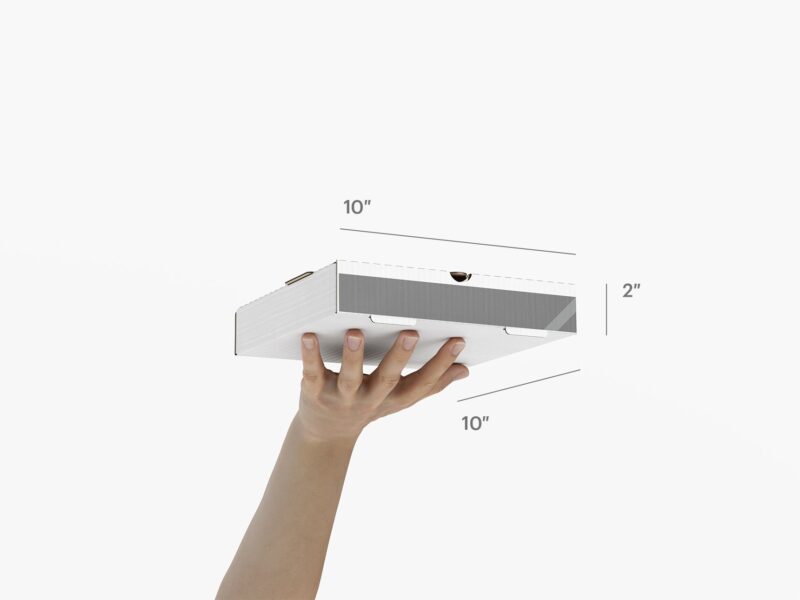
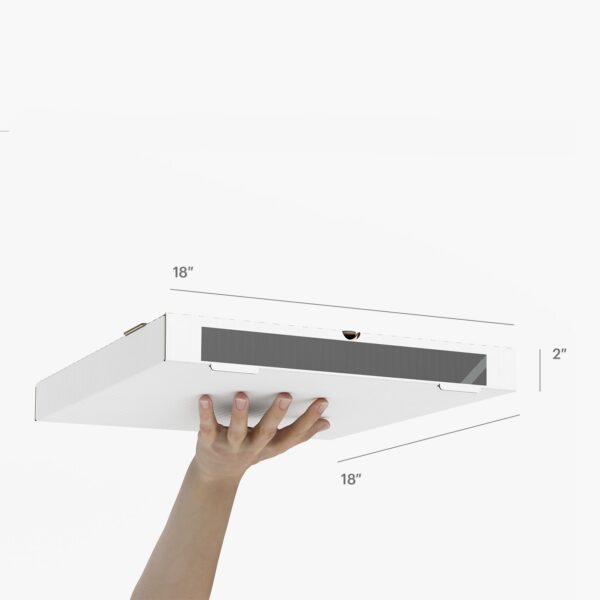
Pizza box dimensions are listed as length × width × depth. The first two measurements tell you how much space you have for the pizza itself, while the third determines how much room there is for the crust and toppings before they start getting too friendly with the lid.
Here’s a quick look at the pizza box sizes available at VistaPrint and what each works best for.
| Pizza box size | Dimensions (inches) | Dimensions (cm, approx.) | Best for |
|---|---|---|---|
| Single-slice | 8.25 × 8.25 × 2 | 21 × 21 × 5.1 | Individual pizza slices |
| Personal | 10 × 10 × 2 | 25.4 × 25.4 × 5.1 | Personal pizzas |
| Small | 12 × 12 × 2 | 30.5 × 30.5 × 5.1 | Small pizzas |
| Medium | 14 × 14 × 2 | 35.6 × 35.6 × 5.1 | Medium pizzas |
| Large | 16 × 16 × 2 | 40.6 × 40.6 × 5.1 | Large pizzas |
| Extra-large | 18 × 18 × 2 | 45.7 × 45.7 × 5.1 | Extra-large and sharing pizzas |
Keep in mind that pizza size labels aren’t universal. Your 14-inch medium might be considered a large at another pizzeria. Plus, advertised box dimensions don’t always reflect the usable space inside, so even a 12-inch pizza might need a larger box to leave enough room around the crust.
So, use the chart as a guide, but choose your box based on the actual dimensions of your finished pizza.
How to choose the right pizza box size for your menu
Got your eye on a particular pizza box size? Before you order, check that it can comfortably accommodate your finished pizza. Its diameter is the starting point, but the shape, crust height and toppings also matter.
Calculate the right clearance for your pizza
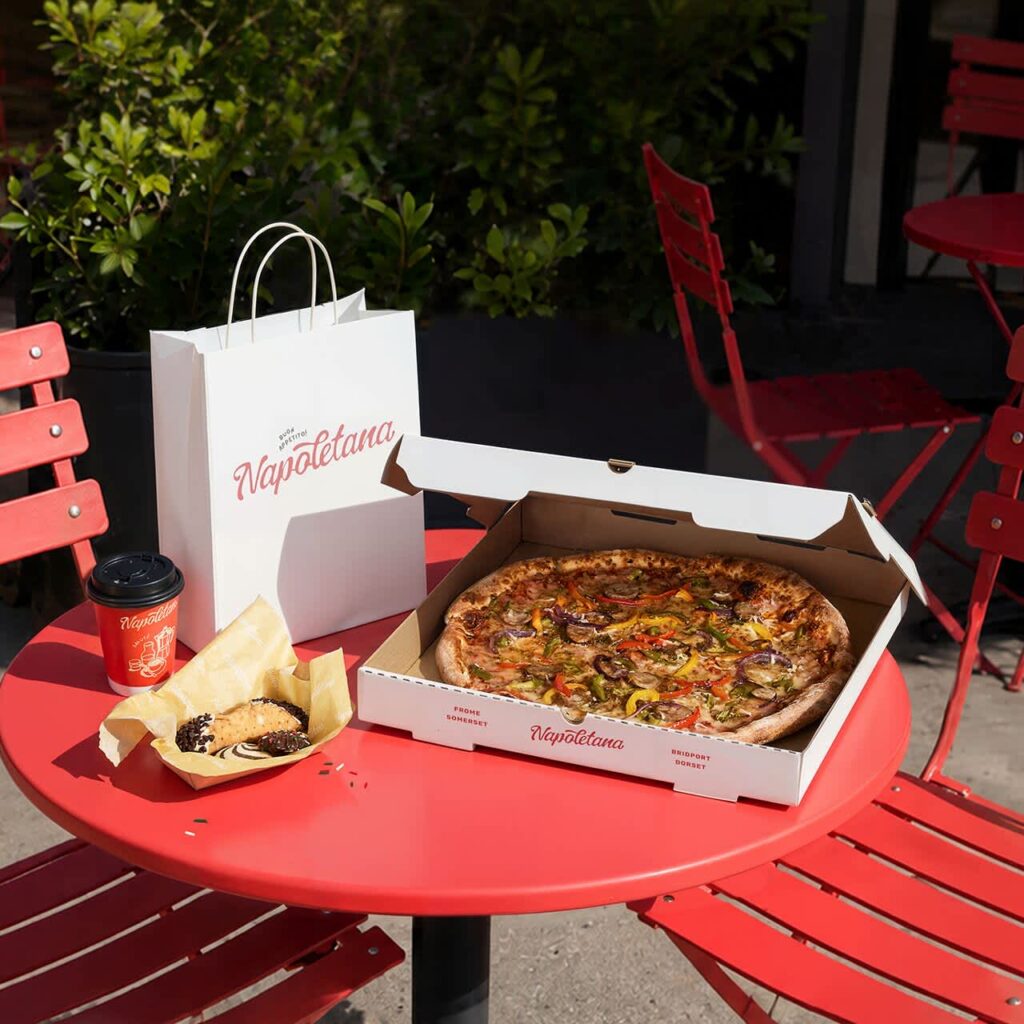
A snug fit might sound like a good idea, but you don’t want the crust scraping against the box walls every time the delivery driver takes a turn. As a general rule, allow 0.5–1 inch of total clearance between the pizza’s widest diameter and the box’s internal width.
Here’s how to find the right fit:
- Measure your baked pizza at its widest point, including the outer crust.
- Add 0.5–1 inch to that measurement to allow some room around the edges.
- Check the box’s internal dimensions, accounting for folded corners and walls that take up space.
- Choose the smallest box that meets your clearance requirements without squeezing the pizza.
The formula is simple: Minimum internal box width = Baked pizza diameter + 0.5–1 inch
For example, an 11.5-inch pizza needs at least 12 inches of usable internal space with a 0.5-inch allowance. If a nominal 12-inch box doesn’t provide that much room inside, size up to 14 inches.
If you’re estimating your packaging needs before baking, you can also calculate: Minimum internal box width = Raw dough diameter − Bake shrinkage + 0.5–1 inch
Here, bake shrinkage means the difference between the dough’s diameter before baking and the finished pizza’s diameter. It varies by recipe and preparation, and some pizzas actually expand, so test a few baked pies before relying on the calculation.
Choose the right box format for different pizza types
Diameter isn’t the only consideration. A thin-crust Margherita and a deep-dish pizza might be the same width, but they certainly won’t need the same amount of headroom.
| Pizza type | Recommended box | What to watch for |
|---|---|---|
| Traditional round pizza | Square pizza box | Enough room around the crust |
| Thin-crust pizza | Standard 2-inch-deep box | Stable base and minimal sliding |
| Thick-crust pizza | Standard box, if height permits | Clearance above crust and toppings |
| Deep-dish pizza | Deeper specialty box, if needed | Tall crust and toppings touching the lid |
| Sicilian or rectangular pizza | Square or rectangular box | Both baked length and width |
| Extra-large sharing pizza | Large, sturdy box | Base strength and fit inside delivery bags |
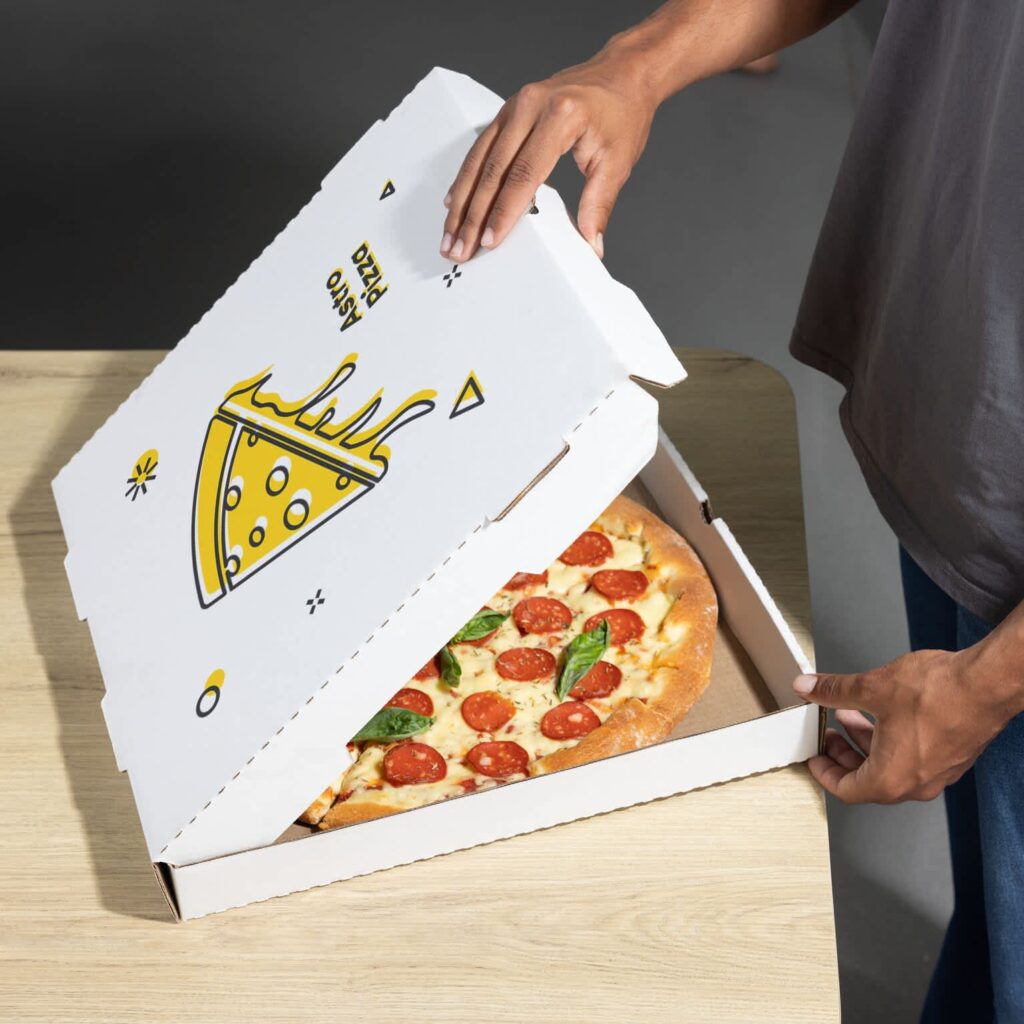
VistaPrint’s pizza boxes are all 2 inches deep, which works for many traditional and thin-crust pizzas. For especially tall deep-dish pies or heavily loaded toppings, measure the finished height with the lid closed. If there’s a risk of contact, you’ll need a deeper box.
How does pizza box design affect food quality during delivery?
A well-fitting box is a good start, but what happens between the oven and the customer’s doorstep matters just as much. Trapped steam, heat loss and rough handling can quickly undo all that hard work in the kitchen.
Ventilation, steam management and heat retention
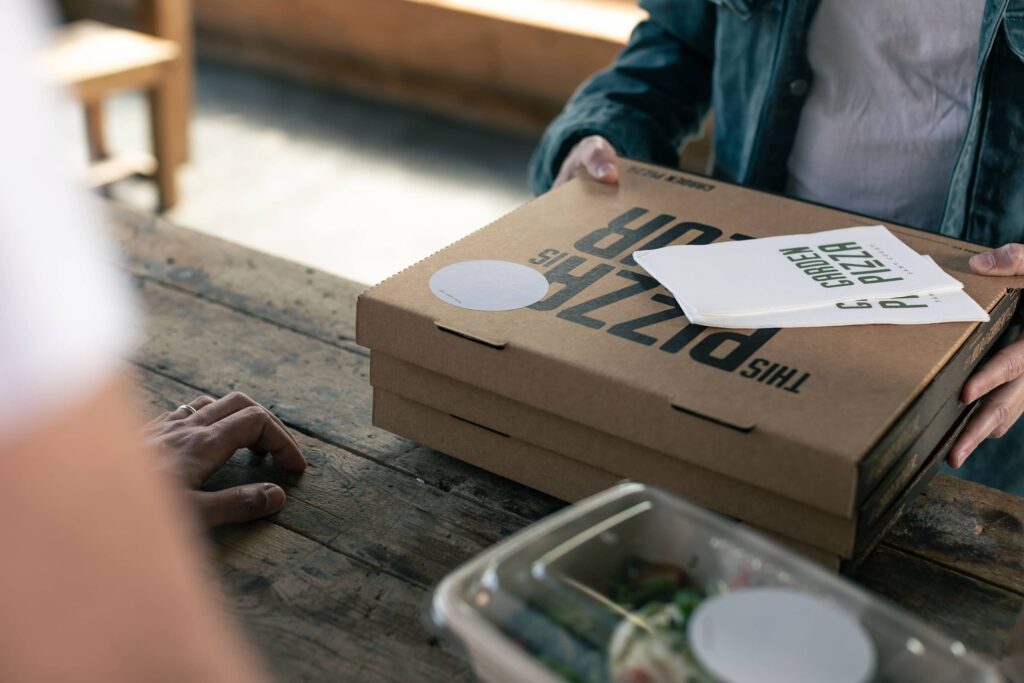
Freshly baked pizza releases steam, which condenses inside a closed box and can leave the crust soggy. Ventilation helps, but too much airflow can cool the pizza before it arrives.
Here’s what to consider:
- Ventilation holes: Openings near the upper sidewalls allow steam to escape. Check that they’re not blocked when the box is closed or stacked.
- Heat retention: Less ventilation generally keeps pizza warmer, but increases the risk of condensation. Insulated delivery bags help reduce heat loss, though they won’t fix trapped moisture inside the box.
- Delivery time: A box that keeps pizza crisp for a five-minute pickup might perform differently on a 30-minute delivery.
Test your packaging under real delivery conditions. Pack a hot pizza, leave it closed for your typical delivery time, then check the crust’s crispness, pizza temperature and condensation inside the lid.
How to stack and transport pizza boxes safely
A few handling habits can make a big difference, particularly when you’re sending out several orders at once:
- Stack by weight: Put larger, heavier boxes at the bottom and lighter ones on top.
- Watch the stack height: If the lower lids start bending, you’ve stacked too many.
- Keep boxes level: Secure them during transport to prevent pizzas from sliding and toppings from shifting.
- Use properly sized delivery bags: Boxes should fit flat without bent corners or crushed edges.
- Leave vents clear: Avoid blocking ventilation openings with other packaging whenever possible.
Pizza box materials: What you need to know
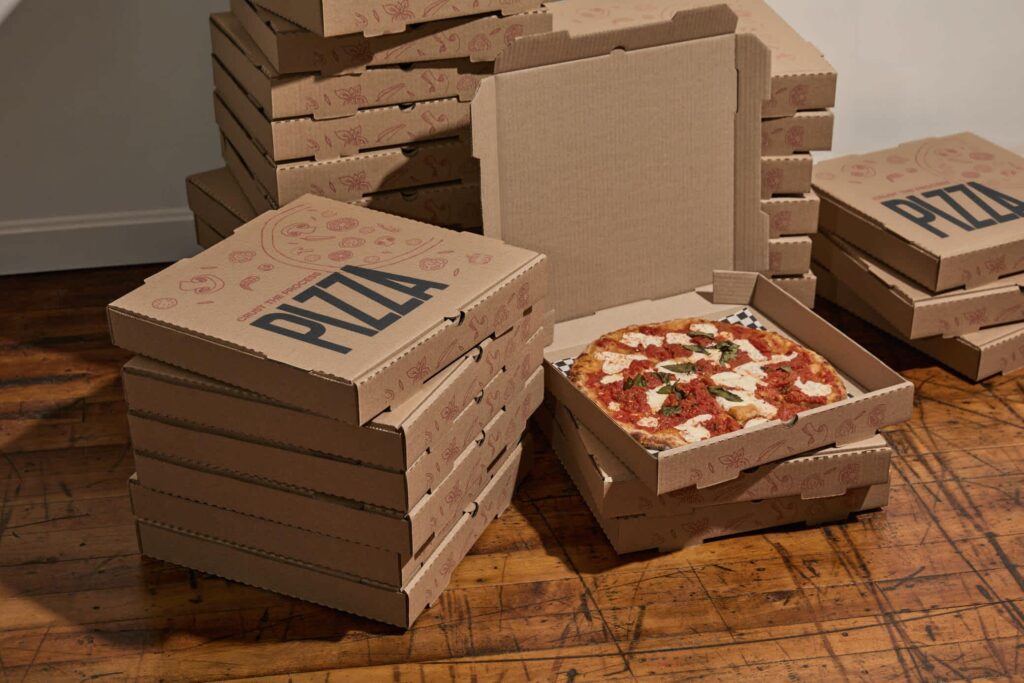
Pizza boxes typically use corrugated cardboard, with a wavy layer between two flat sheets that adds cushioning and helps protect against crushing and punctures.
Two common types are B-flute, which is sturdier and better suited to stacking, and E-flute, which is thinner and offers a smoother printing surface.
VistaPrint uses B-flute cardboard, approximately 1/8 inch (3 mm) thick, for its custom pizza boxes.
Kraft vs. white pizza boxes: Which should you choose?
Both options use the same B-flute construction, but the cardboard color affects how your printed design looks.
| Feature | Kraft pizza boxes | White pizza boxes |
|---|---|---|
| Appearance | Natural brown | White exterior, kraft interior |
| Printing | Brown background can mute lighter colors and reduce contrast | White background helps colors appear brighter and more accurate |
| Recycled content | 100% post-consumer recycled material | Partially recycled material |
| Best for | Dark logos, bold typography and natural-looking designs | Colorful logos, detailed illustrations and lighter shades |
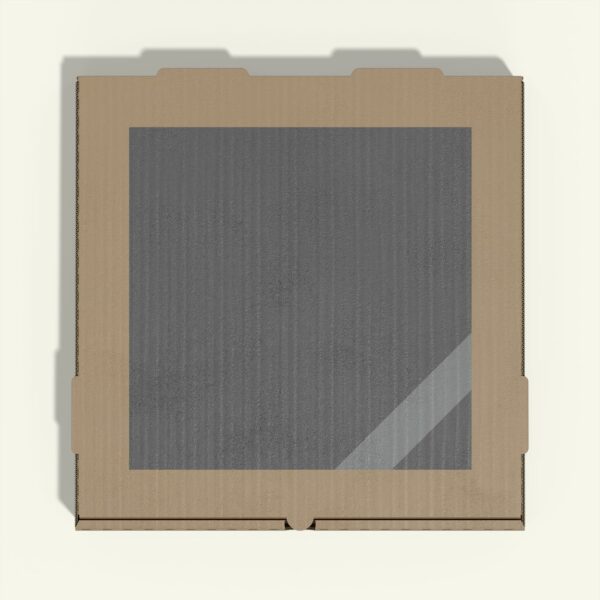
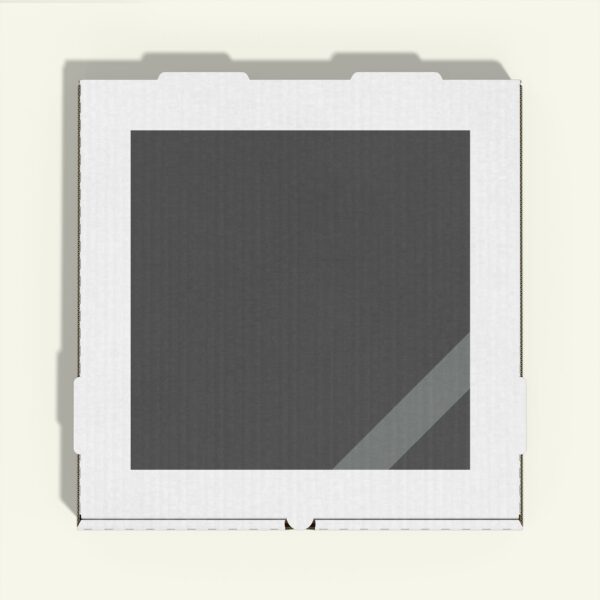
The biggest difference is how colors print. On kraft cardboard, a yellow logo might look more mustard than sunshine because the brown surface shows through standard printing inks. Pastels and fine details can also lose definition.
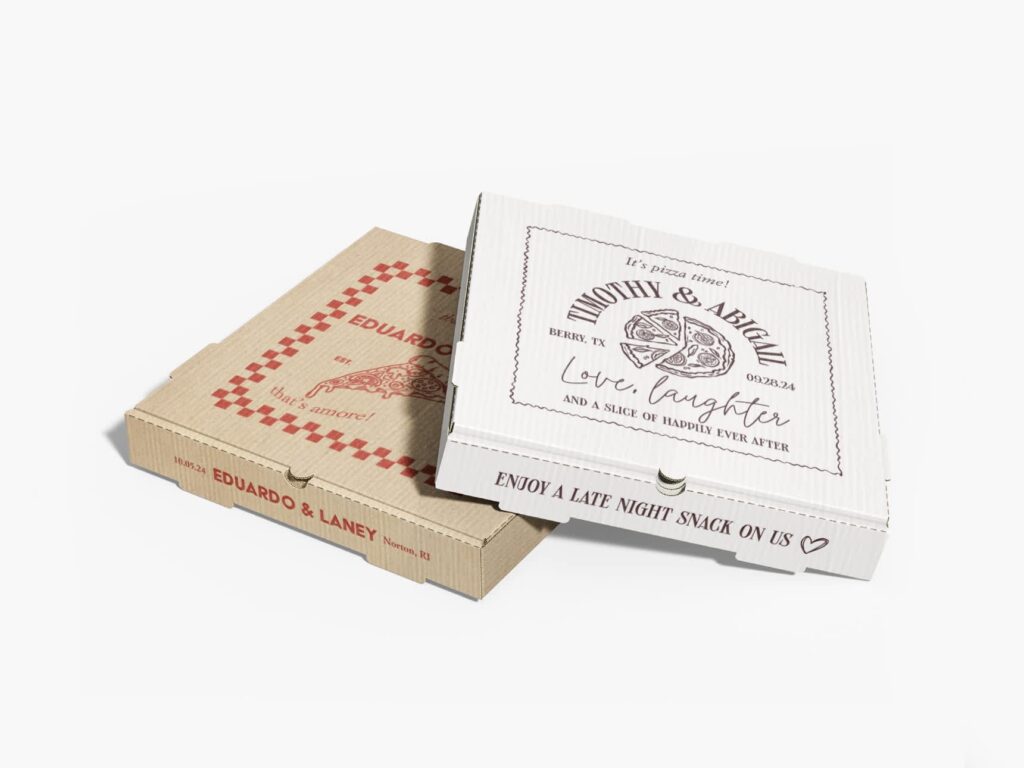
White cardboard provides a neutral background, making it a better choice for vibrant designs or brands with specific color requirements.
Whichever you choose, check a printed sample before ordering in bulk.
How to design custom pizza boxes that promote your brand
Every takeaway order puts your packaging in front of potential customers, from people passing your delivery driver to friends sharing a pizza night.
Custom pizza boxes help people recognize your restaurant, make the delivery experience feel more personal and give customers an easy way to find you again. With the right design, they might even earn your pizzeria a few Instagram mentions.
Make the most of your pizza box’s printable surfaces
Different parts of your pizza box can serve different purposes:
- Exterior lid: Make your logo, brand colors or signature illustrations the star of the show.
- Interior lid or flap: Add a thank-you message, special offer or QR code, if food-safe interior printing is supported.
- Side rims: Keep your restaurant name or website visible when boxes are stacked or carried.
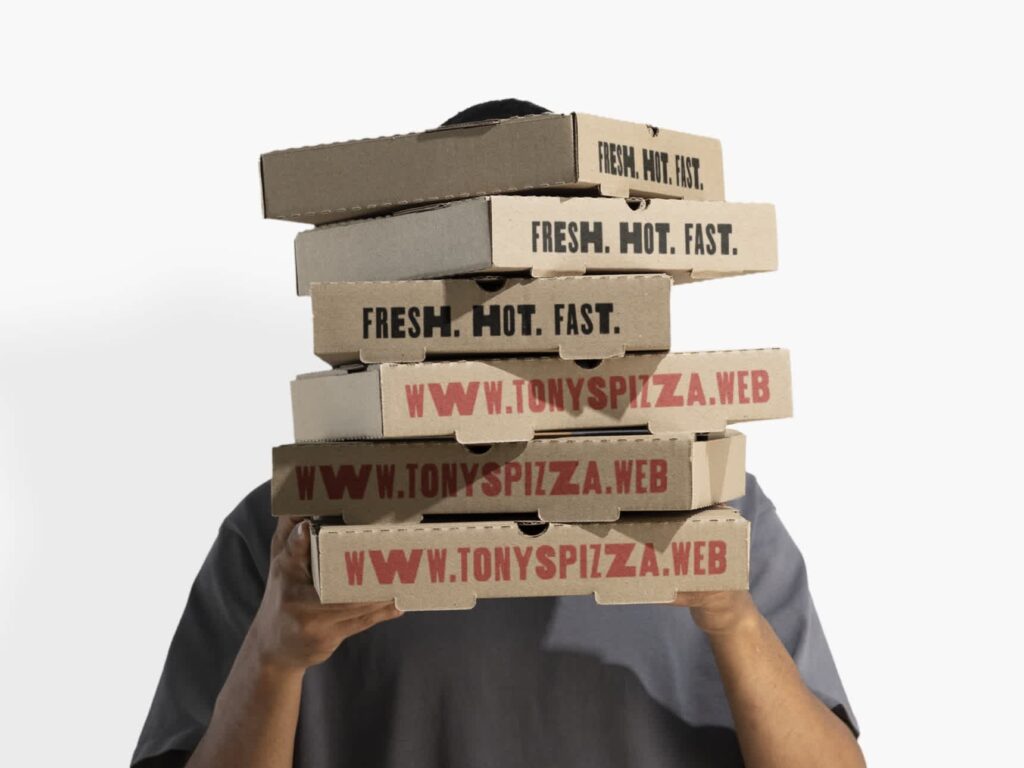
Here’s how much space different pizza box sizes offer:
| Box size | Exterior lid area* | Interior lid/flap idea | Side rim idea |
|---|---|---|---|
| 8.25-inch single slice box | ~68 sq. in. | Short message | Small logo |
| 10-inch | 100 sq. in. | QR code | Brand colors |
| 12-inch | 144 sq. in. | Special offer | Website |
| 14-inch | 196 sq. in. | Brand message | Short URL |
| 16-inch | 256 sq. in. | Promotional artwork | Repeating logo |
| 18-inch | 324 sq. in. | Campaign message | Brand pattern |
Check VistaPrint’s dielines and supported print locations before planning artwork for lids, interiors or sides.
Best custom pizza box design ideas for pizzerias
Here are a few ways to put that space to work:
- Make your branding impossible to miss: An oversized logo, signature colors and distinctive typography help people recognize your restaurant before they even see the pizza.
- Give your neighborhood a shout-out: Feature local landmarks, street names or inside jokes that make your pizzeria feel like part of the community.
- Design for the Instagram shot: Try playful illustrations, a witty one-liner or a bold pattern that looks great next to a fresh pizza. Add your social handle so customers can tag you when they post.
- Turn the box into a shortcut to your menu: A QR code linking to your direct ordering page saves customers from searching for your restaurant or going through third-party delivery apps.
- Reward the next order: Include a discount code or loyalty offer with a clear expiration date to encourage customers to come back.
- Give regulars something new to look at: Create limited-edition artwork for seasonal specials, neighborhood events or collaborations with local artists.
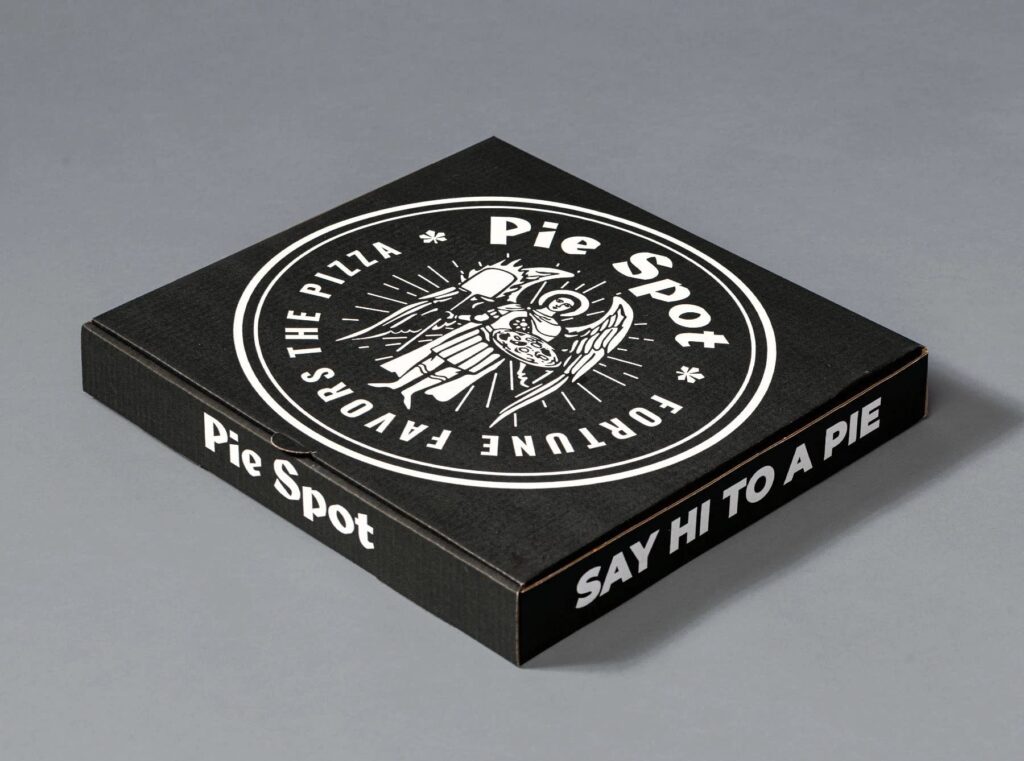
Source: Pizza box design by Barmaleys studio via Behance
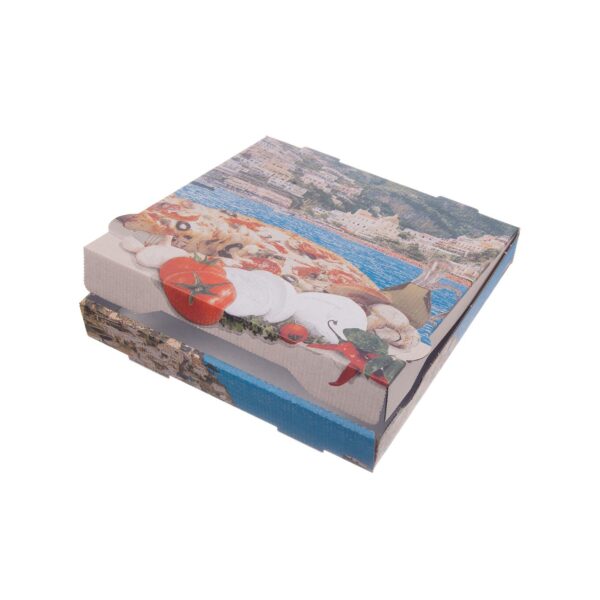
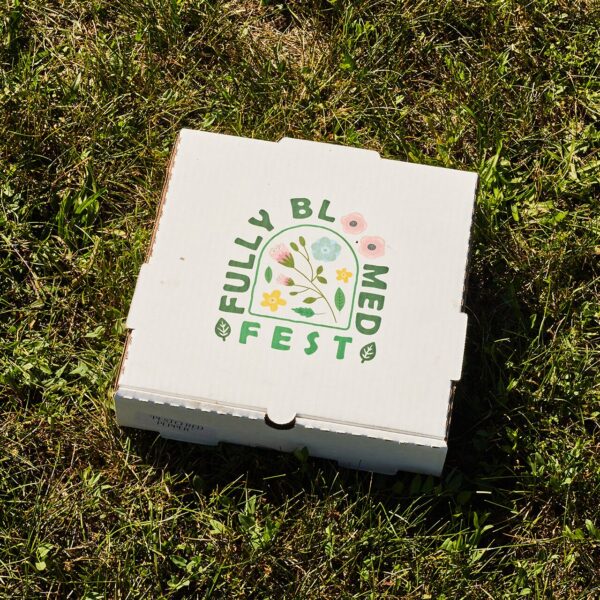
Whatever direction you take, keep your logo readable from a distance, use high-contrast colors and avoid placing important details across folds or edges. Get the printer’s dieline and confirm which surfaces support printing before finalizing your artwork.
Complementary pizza packaging products to consider
The right extras can help your pizza arrive in better condition, keep orders organized and make the whole takeaway experience feel a little more polished.
| Product | Purpose | Best use case |
|---|---|---|
| Greaseproof liners | Help prevent oil from soaking into the cardboard | Oily pizzas and takeaway orders |
| Pizza savers | Keep the lid from pressing against toppings | Large or heavily topped pizzas |
| Custom stickers | Add branding and help indicate whether a package has been opened | Delivery and takeaway |
| Sauce containers | Prevent dips and dressings from spilling onto the pizza | Pizza combos and side orders |
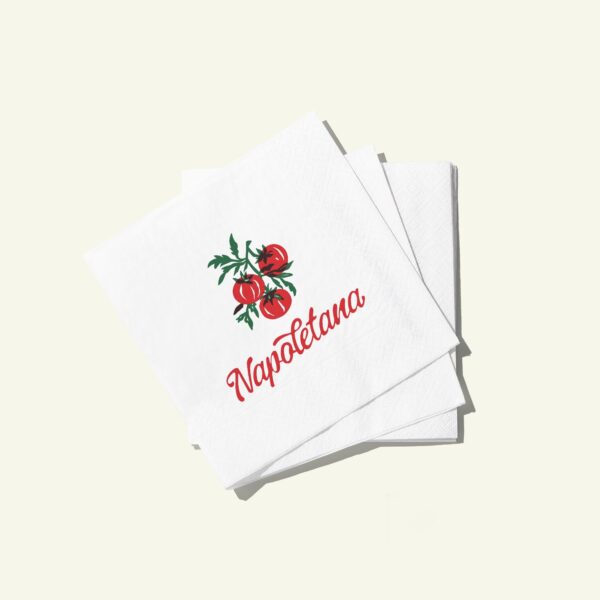
| Branded napkins | Keep things tidy while reinforcing your branding | Takeaway, catering and events |
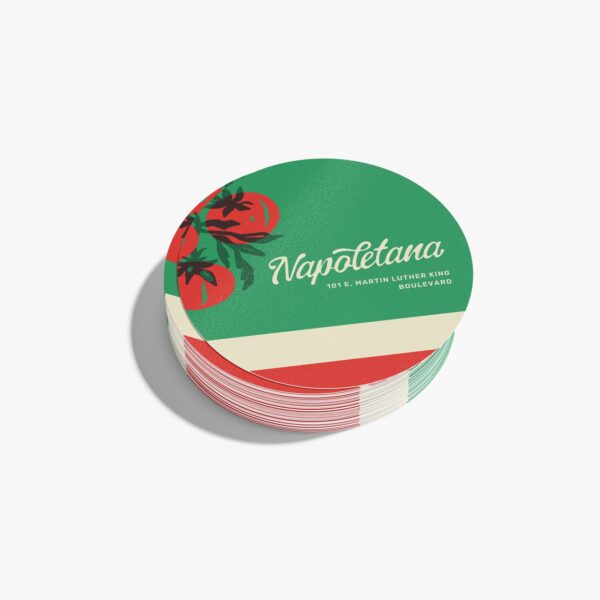
Selling wings, garlic knots or other sides? Pack them in separate food-safe containers, especially if they’re greasy or covered in sauce. Nobody wants their crispy pizza crust soaking up buffalo sauce before the first bite.
Knowing what pizza box size your restaurant needs
A great pizza deserves a box that fits. Too small, and you’re squashing the crust. Too big, and your carefully arranged toppings could end up anywhere but on the pizza.
Start with your pizza’s baked dimensions, leave enough clearance and choose a box sturdy enough to handle the trip from oven to doorstep. Then think about the finishing touches: the right cardboard, a design customers will recognize and packaging extras that keep everything in place.
Standard pizza box dimensions FAQs
What size box do I need for a 14-inch pizza?
A 14-inch pizza generally needs at least 14.5–15 inches of usable interior space to leave enough clearance around the crust. A 16-inch pizza box is usually the safer choice, but check the internal dimensions before ordering.
What size container is best for individual pizza slices?
For single-slice takeaway, look for a container that accommodates the slice’s length and widest edge without bending the crust. VistaPrint offers an 8.25 × 8.25 × 2-inch single-slice box, but measure your largest slices first, especially if you serve oversized New York-style pizza.
Should I order one pizza box size or several?
If your menu includes personal, medium and large pizzas, stocking multiple sizes usually makes sense. Start with your bestselling sizes and review order volumes before buying in bulk. This helps you avoid paying for oversized boxes or running out of the ones you use most.
How many custom pizza boxes should I order at once?
Use your average weekly pizza sales to estimate demand, then account for storage space, supplier lead times and seasonal peaks. If you’re testing a new design or menu size, start with a smaller run before committing to a larger order.