Which T-shirt material is best for gym wear? With cotton, polyester, nylon and countless blends to choose from, the answer comes down to more than the fiber name on the label. Fabric construction, stretch, sweat management and even the way a shirt is printed can change how it performs once you start moving.
This guide breaks down those differences so you can compare popular gym apparel fabric types, understand the trade-offs and confidently choose a material for your workouts, team apparel or custom fitness gear.
- Gym T-shirt material affects sweat management, breathability, movement, durability and comfort.
- Compare moisture-wicking, airflow, stretch and maintenance based on how the shirt will be used.
- Polyester, cotton, nylon and blends each suit different workout needs and priorities.
- Design gym shirts around movement, visibility, placement and intended use.
- Match the printing method to the fabric, artwork and performance needs.
- Choose by use case, from high-sweat training and CrossFit to staff apparel and gym merchandise.
Why material matters for gym T-shirts
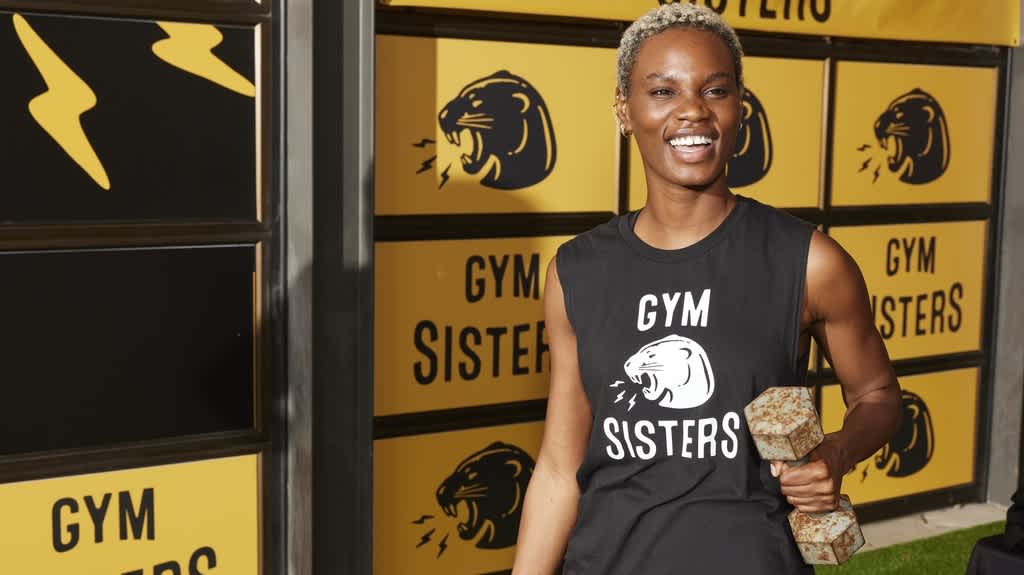
A gym T-shirt works harder than an everyday tee. Sweat, repeated movement and frequent washing all put the fabric to the test, so the material you choose can noticeably change how the shirt feels, performs and holds up over time.
The best workout shirt material can make a difference in several ways:
- Comfort during exercise: Fabric affects how the shirt feels against the skin as you sweat and move.
- Heat and sweat: Different materials handle moisture and airflow differently, which becomes increasingly important as workout intensity rises.
- Freedom of movement: Some fabrics offer more give than others, helping the shirt move with the body rather than restrict it.
- Long-term wear: Regular workouts and washing can take their toll, making durability particularly important for frequently worn gym apparel.
- Odor: Some fibers are more prone to holding onto sweat and body oils, which can affect how fresh a shirt stays over time.
- Customization: For branded gym wear, the material also influences which printing methods are suitable and how the finished design feels when worn.
Key factors to consider
What makes a good gym T-shirt? Look at how well the fabric handles sweat, heat, movement and frequent washing – and, for custom shirts, how it works with your chosen print method.
Moisture-wicking properties
Moisture-wicking and moisture-absorbing fabrics handle sweat differently. Cotton absorbs moisture into its fibers, while moisture-wicking fabrics are designed to move sweat away from the skin and spread it across the surface, where it can dry faster.
This matters most during high-sweat workouts, including running and cycling, HIIT and cardio, long or particularly intense training sessions.
Performance synthetics are commonly used for moisture-wicking shirts, but the fiber alone doesn’t determine how well a shirt manages sweat. Fabric construction, print method and performance treatments matter too.
Breathability
Breathability is about how easily heat and moisture can escape through the fabric. It’s different from moisture-wicking, which describes how the material handles sweat.
A shirt’s breathability depends on several things:
- Fabric: Some fibers allow more airflow than others.
- Weight and construction: A lightweight, open knit can feel cooler than a dense fabric made from the same fiber.
- Print coverage: A large printed area can make part of the shirt less breathable.
Durability and maintenance
Gym T-shirts are exposed to sweat, repeated movement and frequent washing, so durability matters from the first workout to the fiftieth.
Look for a shirt that can hold up in these areas:
- Shape: Stretching and washing shouldn’t quickly leave it saggy or misshapen.
- Color: Frequent laundering can gradually dull some fabrics and dyes.
- Print: Custom graphics need to withstand the same wash-and-wear cycle as the shirt itself.
- Cleaning: There’s an odor trade-off. Synthetics may handle sweat well but are more prone to holding onto body oils and developing lingering smells.
This becomes particularly important for gym staff, fitness teams and clubs, where branded shirts may be worn and washed several times a week. Always check the garment’s care requirements before placing a larger order.
Flexibility and stretch
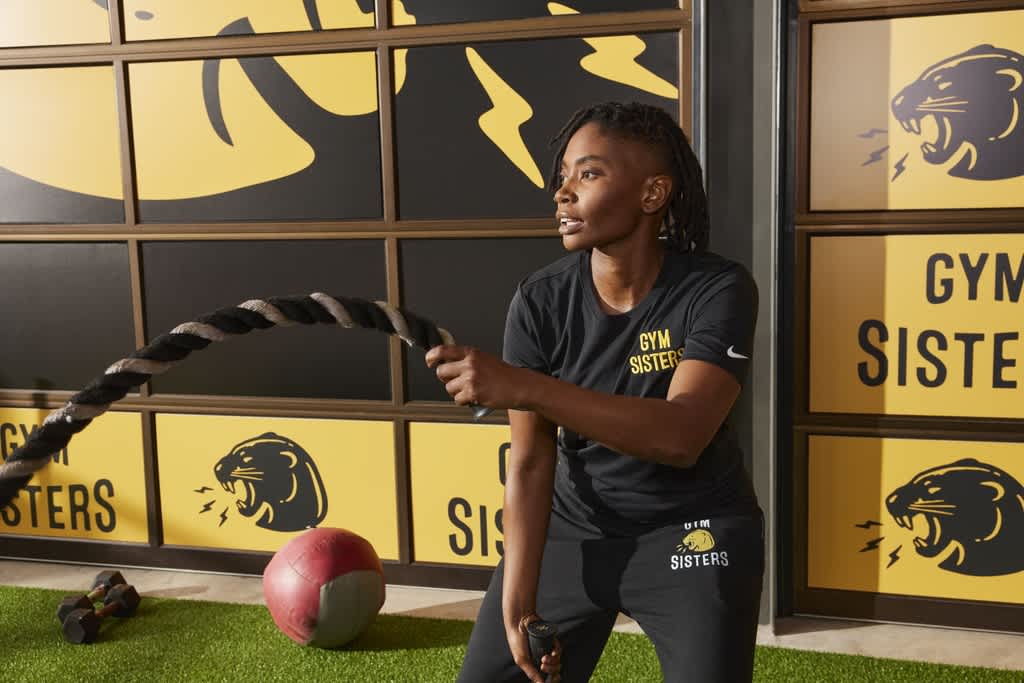
Stretch matters most when the workout involves a wide range of motion. Yoga, Pilates, CrossFit and functional training all put more demand on a shirt as the wearer reaches, twists, bends and lifts.
Elastane, also called spandex, is often blended with polyester, nylon or other fibers to add flexibility. But more stretch isn’t automatically better. For conventional strength training or staff shirts, comfort, shape and durability may matter more than maximum elasticity.
Printing quality
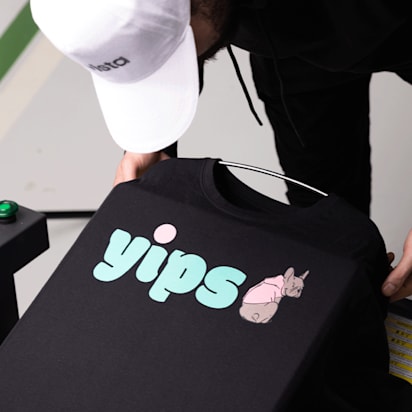
For custom gym shirts, fabric and printing methods should be chosen together. Cotton works with popular options such as screen printing and direct-to-garment (DTG) printing, while performance synthetics call for methods compatible with the specific material.
There’s another consideration: how much of the shirt you’re printing. A small chest logo on a T-shirt and a large graphic covering most of the back feel very different during a workout.
As VistaPrint Product Manager David Dole explains:
“Because with heat transfer, you’re printing direct to a film which is then adhered to the polyester. Your polyester is already not very breathable as a fabric. If you then stick a large area to the front or the back of that, it’s going to become very hot for the wearer.”– David Dole, Product Manager at VistaPrint
For performance shirts, consider three things together: fabric, print method and print coverage. A design that looks great on an everyday tee may need a lighter touch on a shirt intended for intense exercise. We’ll cover this a bit more later
Overview of common gym T-shirt fabrics
No single fabric wins across every type of workout. Some handle heavy sweating better, while others prioritize softness, stretch or long-term durability. Use this quick comparison to narrow down the best workout shirt material for how the T-shirt will actually be worn.
| Material | Sweat management | Breathability | Stretch | Durability | Odor tendency | Best for |
| Polyester | High | Moderate to high* | Moderate | High | Higher | Running, HIIT, team and staff shirts |
| Cotton | Low | High | Low | Moderate | Lower | Strength training, light workouts, casual gym wear |
| Cotton-poly blends | Moderate to high* | Moderate to high* | Moderate | High | Moderate | General gym wear, trainers, branded fitness apparel |
| Nylon | High | Moderate to high* | High* | High | Higher | Yoga, CrossFit and high-movement training |
| Bamboo & Tencelfabrics | Moderate to high* | High* | Low to moderate* | Moderate* | Low to moderate* | Lower-impact workouts, comfort-focused activewear |
*Performance varies by blend, fabric construction, weight and any added treatments.
Polyester
Polyester is one of the most practical choices for high-sweat workouts. Its fibers absorb very little water, so the fabric dries quickly instead of becoming saturated with sweat. That makes it a strong option for running, HIIT, cardio and other intense training.
It also stands up well to repeated wear and washing, which is particularly useful for gym uniforms, team shirts and other durable training apparel. As VistaPrint Product Manager David Dole explains:
“Gyms and schools like polyester because it’s extremely well wearing. You can wash it a hundred times, and it’s not going to fade. Situations and use cases where they require that longevity or a highly active environment would sit well within the polyester space. Cotton is more fashion.”– David Dole, Product Manager at VistaPrint
Breathability varies by weight and construction, though, and polyester can hold onto body oils and odors more readily than some natural fibers.
| Polyester pros | Polyester cons |
| Dries quickly and handles sweat well | Can retain body oils and odors |
| Durable enough for frequent washing | Breathability varies by fabric construction |
| Retains its shape and color well | Printing method needs to suit the fabric |
| Well suited to high-intensity training | Can feel less soft than cotton |
Best for: Running, HIIT, cardio, gym staff shirts and frequently worn team apparel.
Cotton
Cotton makes sense when comfort matters more than maximum sweat management. It’s soft, breathable and familiar against the skin, making it a good fit for strength training, lighter workouts and gym shirts that will also be worn casually.
So, why is cotton bad for sweating heavily? Cotton absorbs moisture into its fibers and dries relatively slowly. During a long run or intense cardio session, that can leave the shirt wet, heavier and more likely to cling to the body.
| Cotton pros | Cotton cons |
| Soft and comfortable | Absorbs sweat and dries slowly |
| Naturally breathable | Can become heavy when wet |
| Excellent surface for many printing methods | Less practical for sustained high-sweat workouts |
| Works well as both gym wear and casual apparel | May lose shape more readily than some synthetics, depending on construction |
Best for: Strength training, low-intensity workouts, casual gym wear and branded fitness merchandise.
Cotton-polyester blends and tri-blends
Blends offer a middle ground between the performance of synthetics and the familiar feel of cotton. The important detail is the ratio: changing the fibers changes how the finished shirt behaves.
- More polyester generally means quicker drying and greater durability.
- More cotton creates a softer, more traditional T-shirt feel.
- Added rayon can give a tri-blend a softer, lighter feel and more fluid drape.
- Added elastane or spandex increases stretch.
A 50/50 cotton-polyester blend balances the characteristics of both fibers, while tri-blends add a third material, commonly rayon. Neither is automatically better; the right choice depends on how the shirt will be worn.
| Blend pros | Blend cons |
| Balances comfort and sweat management | Performance varies with the blend ratio |
| Usually dries faster than pure cotton | Cotton-rich blends can still hold considerable moisture |
| Durable and versatile for regular gym use | Printing results depend on fiber composition |
| Wide choice of weights, fits and fabric combinations | Requires closer attention to the garment specifications |
Best for: General gym wear, personal trainers, fitness studios and branded shirts designed to work both during and after a workout.
Nylon
In the nylon vs. polyester sportswear comparison, nylon stands out for its smooth feel and flexibility. It’s commonly combined with elastane or spandex in performance apparel designed to stretch and move closely with the body.

These qualities make nylon blends particularly useful for yoga, CrossFit and functional training. Like polyester, nylon dries quickly and is highly durable, but it can retain body oils and odors.
| Nylon pros | Nylon cons |
| Durable and quick-drying | Can retain body oils and odors |
| Smooth, lightweight feel | Printing options depend on the garment and blend |
| Works well in flexible, stretchy blends | Often less straightforward to customize than cotton |
| Suited to a wide range of movement | Performance varies when blended with other fibers |
Best for: Yoga, CrossFit, functional training and other mobility-heavy workouts.
Bamboo, Tencel and other alternative fabrics
Bamboo-derived fabrics and Tencel are different materials, but both can appear in activewear designed around softness and comfort. Depending on the construction and blend, they can provide good breathability and moisture management while offering a different feel from conventional synthetics.
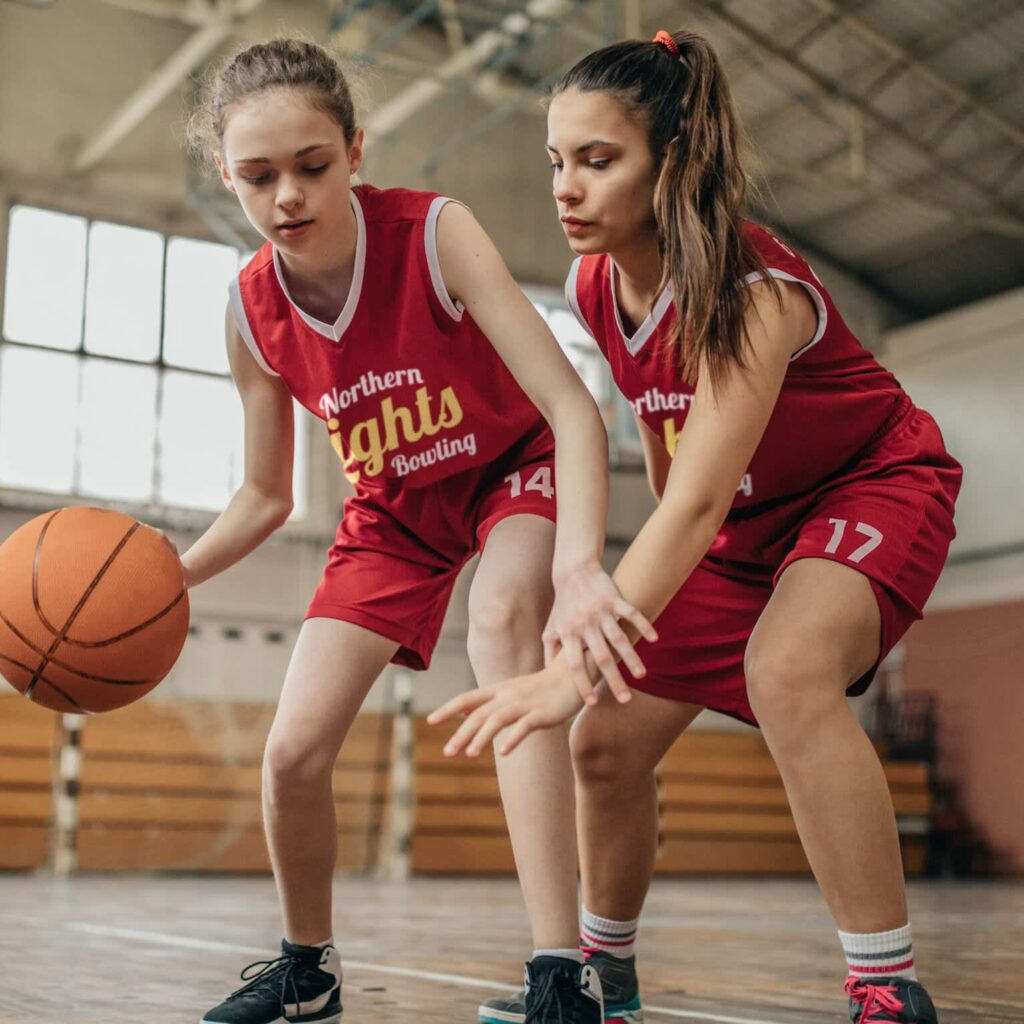
Some of these fabrics are called “antibacterial.” Claims around odor and bacteria need more care, however. A bamboo-derived fabric isn’t automatically antibacterial, and the way the original fiber is processed affects the properties of the finished textile. If you’re specifically looking for anti-bacterial gym clothes, check whether the finished garment has a documented antimicrobial treatment rather than relying on the fiber name.
| Alternative fabric pros | Alternative fabric cons |
| Often soft and comfortable | Performance varies considerably by fabric and blend |
| Can provide good breathability | Durability varies between garments |
| Can manage moisture well depending on construction | Fiber name alone doesn’t guarantee odor or antibacterial performance |
| Useful alternative for comfort-focused activewear | Printing compatibility needs to be checked for the specific garment |
Best for: Comfort-focused activewear, lighter training and lower-impact workouts.
Style and design for gym T-shirts
Once you’ve chosen the fabric, design for how the shirt will actually be used. A trainer uniform, running-club shirt and gym merchandise tee may carry the same branding but need very different layouts. Don’t have designs for your brand yet? Read our guide on how to design a T-shirt.
- Design for movement: Check how graphics sit when the wearer bends, stretches and lifts.
- Prioritize visibility: High contrast and clear lettering help staff, teams and event participants stand out at a glance.
- Use placement purposefully: A chest logo may be enough for staff apparel, while team names, roles or event graphics may need more prominent T-shirt design placement.
- Consider where it’ll be worn: Performance gear can prioritize function; merchandise should also look good outside the gym.
Browse these T-shirt design ideas for inspiration, then use our T-shirt proportions and design guide to fine-tune placement and size.
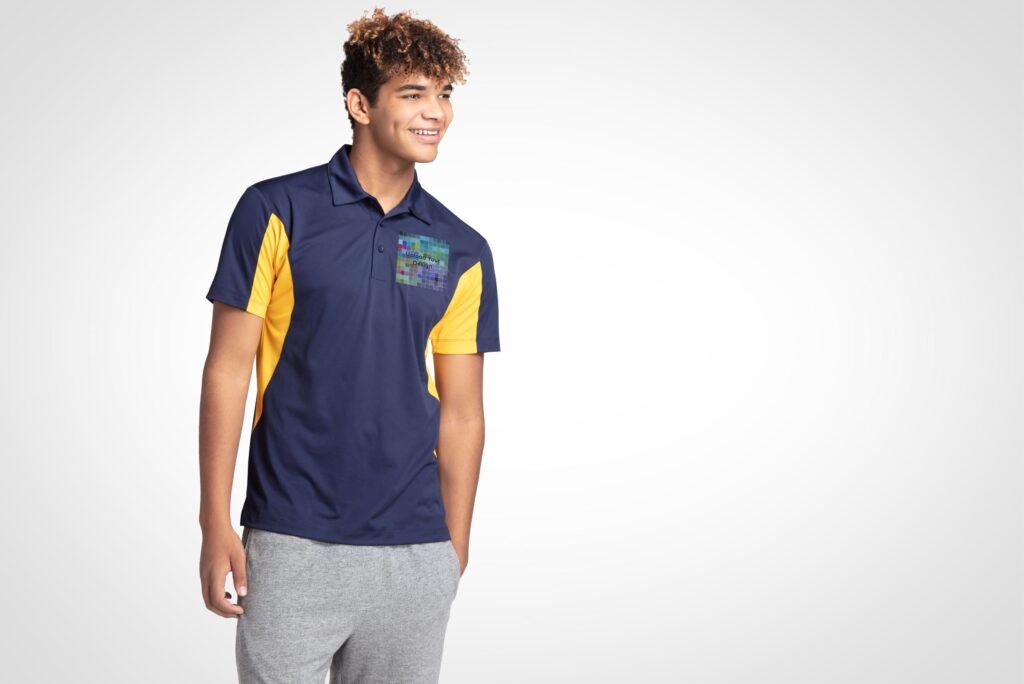
How printing affects gym T-shirt performance
Your fabric and design narrow down which printing methods make sense. Compare how each option works with the garment and the type of artwork you’re creating.
Print technique breathability: Dye sublimation vs. heavy screen printing
Customizing athletic apparel requires choosing a decoration technique that preserves the physical properties of the underlying fabric. Selecting the wrong printing method can ruin a high-performance shirt’s ventilation.
The “sweat shield” phenomenon: Why heavy ink destroys performance
Standard custom screen printing often uses plastisol inks for graphics that adhere by solidifying into a layer of impermeable plastic resting on top of the textile. As a result, a large, solid screen-printed logo creates a non-breathable barrier known as a “sweat shield” that blocks air vents and moisture channels within the fabric. When the wearer sweats, moisture pools under the ink patch and against the athlete, causing skin chafing and adding uncomfortable weight to the the shirt.
Choosing breathable visuals: Dye sublimation vs. Direct-to-Garment (DTG)
To keep things cool and dry, select digital decoration methods engineered for athletic apparel performance:
Dye sublimation for 100% polyester: Dye sublimation uses heat-sensitive gaseous inks that bond directly with polyester polymers at a molecular level. The dye becomes an integral part of the synthetic fiber, adds no weight and leaves every ventilation pore open.
Direct-to-Garment (DTG) for poly-blends: When decorating tri-blends or poly-cotton fabrics, lightweight DTG printing applies thin, water-based pigments that soak into the natural fibers without building up a heavy exterior shell. DTG maintains fabric softness and allows air to move freely through the shirt matrix.
| Printing method | Best suited to | Good to know |
| Screen printing | Cotton, blends and compatible polyester | Durable and well suited to bold graphics and solid T-shirt colors |
| DTG | Cotton and cotton-rich blends | Good for detailed, multicolor artwork without a separate transfer layer |
| Heat transfer | Compatible cotton, polyester and blends | Versatile, but the transfer sits on the fabric and can affect the feel of larger designs |
| Dye sublimation | Polyester | Dye becomes part of the fibers, leaving no separate print layer on the surface |
Choose the method based on the fabric, artwork and intended use. A polyester running shirt and a cotton gym merchandise tee can carry the same logo but call for different printing approaches.
Read our guide on how to print a T-shirt to compare printing methods in more detail.
Tips for choosing the best material
Still weighing up your options? Start with what the shirt needs to handle most often. This decision matrix matches common gym use cases with the qualities worth prioritizing and the materials to consider.
| If you’re choosing a shirt for… | Prioritize | Materials to consider |
| Running, cycling or HIIT | Quick drying, sweat management, low weight | Polyester or performance synthetic blends |
| CrossFit or functional training | Stretch, durability, freedom of movement | Nylon or polyester blends with elastane |
| Yoga or Pilates | Stretch, softness, unrestricted movement | Nylon-elastane or other flexible blends |
| Strength training | Comfort, breathability, moderate durability | Cotton, cotton-polyester blends |
| Gym staff or trainers | Frequent washing, durability, comfortable all-day wear | Polyester or cotton-polyester blends |
| Sports teams and clubs | Durability, sweat management, consistent customization | Polyester or performance blends |
| Branded gym merchandise | Softness, printability, everyday wearability | Cotton, cotton-rich blends or tri-blends |
| One shirt for gym and everyday wear | Balance of comfort, drying time and durability | Cotton-polyester blends |
For bulk orders, test a sample in the conditions it will actually face before committing. Check the fit during movement, how the fabric feels once damp and how the shirt and print hold up after washing. A spec sheet can narrow the options; wearing the shirt tells you whether you picked the right one.
Compare the options in our custom T-shirt printing guide.
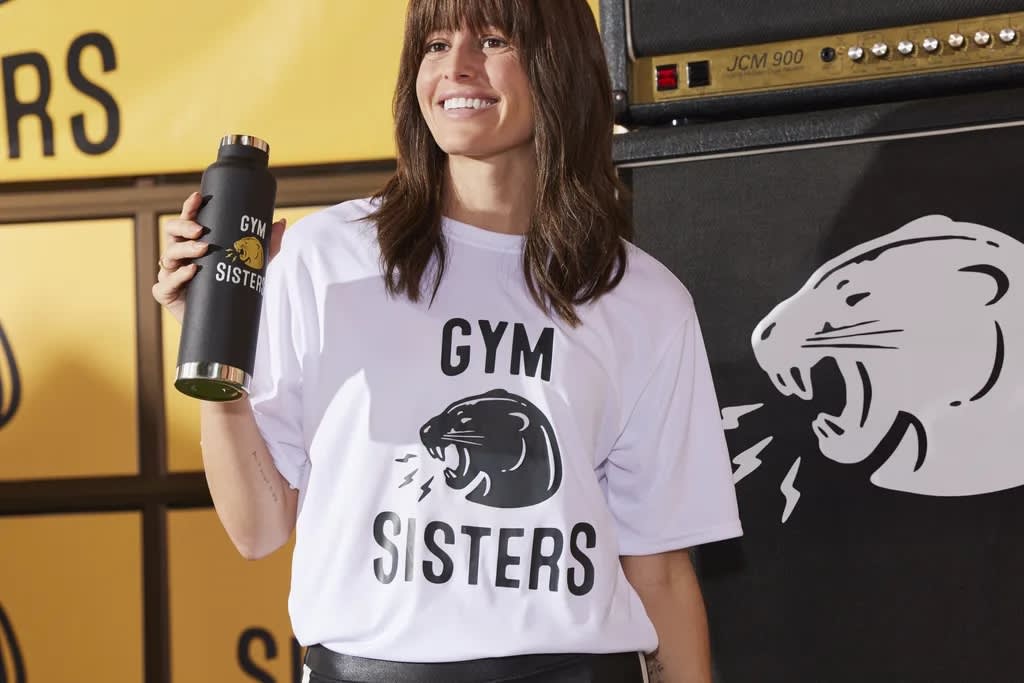
Design your gym shirt today
So, which T-shirt material is best for the gym? It depends on the workout. Performance synthetics suit high-sweat training, flexible blends work well when movement takes priority, while cotton and cotton-rich fabrics are strong choices for lighter workouts and gym merchandise.
Start with how the shirt will be worn, then choose the fabric, design and printing method to match. That way, your custom gym shirt works for its wearer as well as your brand.
Gym T-shirt material FAQs
Should I choose a lighter fabric for hot-weather workouts?
Usually yes, but fabric weight isn’t the only factor. A lightweight, open construction can improve airflow, while a dense fabric may feel warmer even at a similar weight. For outdoor training, consider fabric construction, sweat management and fit alongside weight.
Does a higher percentage of polyester make a cotton-polyester shirt better for workouts?
It generally shifts the shirt toward quicker drying and greater durability, while a higher cotton percentage gives it a softer, more traditional feel. Compare the actual blend percentages rather than treating all cotton-polyester shirts as interchangeable.
Should gym staff and members wear the same T-shirt material?
Not necessarily. Staff may wear their shirts for an entire shift and wash them frequently, making durability and all-day comfort important. Member merchandise may prioritize softness and everyday wear, while shirts supplied for classes or events may need stronger sweat management.
Should I order a fabric sample before buying custom gym T-shirts in bulk?
Yes, especially for uniforms, teams or recurring events. Wear and wash a sample first. Check how it fits during movement, whether it becomes noticeably heavier when damp and how the fabric, seams and print look after laundering.
How should I wash custom performance T-shirts?
Follow the garment’s care label first, as instructions vary by fabric and print method. Turning printed shirts inside out and avoiding unnecessarily high wash and dryer temperatures can help protect the design. Check the specific garment instructions before using fabric softener or other laundry additives.