Different hoodie materials offer different levels of comfort, warmth, durability and print performance. This guide compares the most common options, explains how fabric weight, blends and texture affect the final result, and helps you choose the right fabric for branded merch, workwear or retail apparel.
- The best fabric for hoodie printing depends on use, fabric weight (GSM), comfort and printing method.
- Cotton and French terry are comfortable, print-friendly hoodie fabrics.
- Fleece and wool provide warmth and hoodie fabric durability for workwear and cold weather.
- Polyester, nylon and spandex blends are ideal fabrics for performance hoodies, offering moisture management and flexibility.
- Fabric blends balance comfort and durability, though breathability depends on the fiber mix.
Hoodie fabric considerations
Before comparing hoodie materials, consider how and where the hoodie will be worn. The right fabric for gym merch may differ from what works for employee apparel, event giveaways or premium retail clothing.
Hoodie fabric weight (GSM guide)
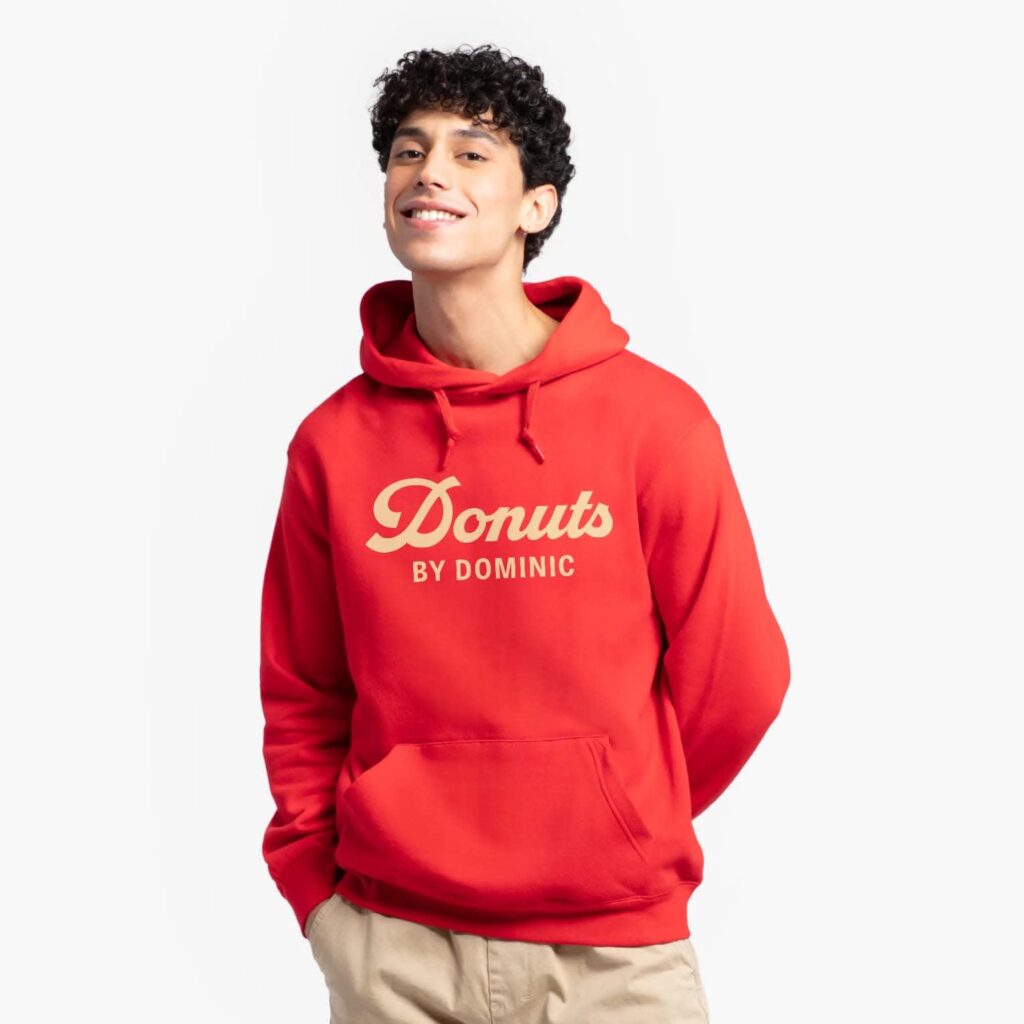
Hoodie fabric thickness is measured in GSM (grams per square meter) and affects warmth, structure and hoodie fabric durability.
- Lightweight hoodies (200–250 GSM): Breathable and easy to layer. Fabrics such as French terry and tri-blends work well for giveaways, activewear and spring merch.
- Midweight hoodies (250–300 GSM): A versatile everyday option. Cotton and cotton-poly blends offer a good balance of comfort, durability and print performance.
- Heavyweight hoodies (300–400+ GSM): Thick, warm and durable. Fleece and dense cotton are common choices for workwear, premium streetwear and cold-weather apparel.
You may also see hoodie fabric weight listed in ounces (oz). To convert oz/yd² to GSM, multiply by 33.9: 7.5 oz ≈ 254 GSM, 8.5 oz ≈ 288 GSM and 10 oz ≈ 339 GSM.
For custom embroidered hoodies, heavier fabrics generally provide more structure for stitching and help prevent puckering.
Hoodies make great business merch. Explore other small business promotional items you can customize with your logo.
What to consider when choosing hoodie fabric
Beyond weight, consider how each hoodie fabric handles warmth, moisture, movement and printing.
| Factor | What to look for |
| Warmth | Heavy cotton, fleece and wool provide more insulation for cold-weather hoodies. |
| Wicking capability | Polyester and performance blends manage moisture and dry quickly, making them suitable for athletic wear. |
| Stretch | Spandex (elastane) adds flexibility and shape recovery for activewear and fitted hoodies. |
| Breathability | Natural fibers such as cotton and bamboo allow more airflow, while synthetics generally manage sweat better. |
| Printing method | Cotton-rich fabrics work well for screen printing and DTG, polyester suits sublimation and thicker fabrics support embroidery. |
| Fabric texture | Smooth surfaces like French terry preserve fine printed details, while brushed fleece can soften print edges and may work better with embroidery or patches. Dense, heavyweight fabrics also support embroidered logos well. |

Need a branded hoodie for your small business? Learn how to design a hoodie in our guide.
Hoodie fabric types and uses
Not all hoodie fabrics perform the same, and the differences become clear once you start matching materials to real use cases. Some are built for comfort and clean print results, while others excel in durability, moisture control or sustainability.
Hoodie fabric comparison
| Hoodie fabric | Typical GSM | Insulation | Print compatibility | Durability | Care & longevity |
| 100% Cotton | 250-320 GSM | Medium warmth; breathable | Excellent for screen printing and DTG | Moderate; can wear down faster than synthetics | May shrink if washed hot; generally wrinkle-prone |
| Cotton-poly blend | 250-300 GSM | Medium warmth | Very good for screen printing; good DTG results on high-cotton blends | High; resists stretching and everyday wear | Less shrinkage than cotton; better wrinkle resistance |
| Fleece (and poly-fleece) | 280-350+ GSM | High warmth; traps heat well | Fair; embroidery usually works best | High; built for repeated wear | Can develop pilling; wash inside out to extend lifespan |
| French terry | 220-280 GSM | Light to medium warmth | Good for screen printing, DTG and embroidery | Moderate; lighter construction | Breathable and easy to maintain; minimal shrinkage with proper washing |
| Organic cotton | 240-320 GSM | Medium warmth; breathable | Excellent for screen printing and DTG | Moderate; similar durability to standard cotton | May shrink slightly; softer over time with washing |
Cotton vs. polyester vs. blends
Cotton offers softness, breathability and strong print quality, while polyester provides durability, moisture management and faster drying. Blends combine these qualities, making them a versatile choice for branded hoodies that need to balance comfort with performance.
Everyday comfort hoodie fabrics
These hoodie fabrics prioritize softness, breathability and print quality, making them popular for casual wear and mech.

1. Cotton
Soft, breathable and comfortable, cotton is a classic hoodie fabric.
- Comfort: Soft against the skin and often gets softer with washing.
- Print: Excellent for screen printing and direct-to-garment (DTG), producing crisp, colorful designs.
- Drawbacks: Can shrink and doesn’t wick moisture as well as synthetics, making it less suitable for athletic wear.

2. French terry
French terry offers warmth without the weight of heavier hoodie fabrics.
- Texture: Looped on the inside and smooth on the outside for a breathable, lightweight feel.
- Versatility: Works well for casual wear, office merch and light activity.
- Printing: Typically cotton or cotton-rich, making it suitable for screen printing, DTG and embroidery.
3. Rayon
Rayon is a semi-synthetic fiber made from wood pulp, known for its softness and drape.
- Feel: Smooth, lightweight and breathable, with a silk-like feel.
- Printing: Its smooth surface works well with screen printing and DTG.
- Care: Can shrink or wrinkle easily, so gentle washing and clear care instructions are important.
If your brand is luxe or fashion-forward, rayon or rayon blends can be an elegant choice.
Performance hoodie fabrics
Performance hoodies need fabrics that handle sweat, movement and repeated wear, making them suitable for gym apparel, outdoor gear and athletic merch.
4. Polyester
Polyester combines durability with useful performance properties.
- Moisture-wicking: Dries quickly and manages sweat well.
- Durability: Resists wrinkles and holds up to repeated washing.
- Printing: Sublimation produces vibrant, long-lasting designs. Screen printing requires suitable inks, particularly on dark polyester or poly-fleece where fabric dyes can migrate into lighter ink colors. Low-bleed inks and adjusted curing temperatures can help prevent discoloration.
If you’re starting a fitness clothing line, polyester and poly-spandex blends are practical hoodie fabric choices.
5. Nylon
Lightweight and durable, nylon works particularly well for sporty outer layers.
- Performance: Strong without being heavy and suitable for anorak-style hoodies or windbreakers.
- Weather resistance: Its slick surface provides some resistance to wind and light rain.
- Printing: The smooth surface can be difficult to print and may require specialized techniques.
6. Spandex (elastane)
Spandex is usually blended with cotton or polyester rather than used alone.
- Stretch and recovery: Adds flexibility and helps hoodies maintain their shape.
- Use: Particularly useful for fitted hoodies and athletic wear.
- Printing: Stretchy fabrics require suitable inks to help prevent printed designs from cracking as the material expands.
Durable hoodie fabrics for workwear and cold weather
When warmth and durability matter most, thicker hoodie fabrics are often the better choice for workwear, outdoor gear and cold-weather apparel.
7. Fleece
Fleece is a warm, soft hoodie fabric suited to cold weather and outdoor use.
- Warmth: Brushed polyester fibers create a plush surface that traps heat.
- Performance: Dries faster than cotton, making it practical for cooler or damp conditions.
- Care: Fleece can pill over time; washing it inside out on a gentle cycle can help extend its lifespan.
Not all fleece is constructed the same. Sponge fleece has a lofty brushed interior that helps trap air, creating an exceptionally soft, lightweight feel that suits premium retail hoodies. Cross-grain knit fleece is designed to reduce lengthwise shrinkage, helping heavyweight streetwear and workwear hoodies maintain their shape after repeated washing.
Whatever the construction, though, fleece is one of the softest hoodie materials – a great choice for comfort and warmth.

8. Wool
Wool combines natural insulation with moisture management.
- Thermal regulation: Provides warmth while allowing airflow.
- Moisture control: Absorbs moisture while remaining relatively dry and naturally resists odors.
- Cost and care: Typically costs more and may require gentle washing or dry cleaning.
Its combination of warmth and performance makes wool particularly suitable for premium outdoor merch.
9. Denim
Denim gives hoodies a structured, streetwear-inspired look.
- Aesthetic: Creates a distinctive alternative to traditional sweatshirt fabrics and can be lined for extra warmth.
- Durability: Stands up well to repeated wear.
- Printing: Its heavy texture makes screen printing more challenging, while embroidery works particularly well.
Eco-friendly hoodie fabrics
For brands prioritizing sustainability, alternative and recycled fibers can reduce reliance on conventional materials while still delivering the comfort or performance expected from branded apparel.
10. Bamboo
Bamboo-based fabrics can offer a soft, breathable alternative to conventional hoodie fibers, although their environmental impact depends heavily on how the fiber is processed.
- Resource use: Bamboo grows quickly and can require fewer resources than conventional cotton.
- Feel: Smooth, breathable and cool to the touch.
- Odor control: Some bamboo-based fabrics may help manage odor.

Recycled materials
Recycled polyester and fibers made from textile waste or repurposed plastics can offer performance similar to conventional synthetics while reducing the need for virgin materials.
Popular fabric blends
Blending fibers allows manufacturers to combine properties such as cotton’s softness with polyester’s durability. The fiber ratio determines how the hoodie feels, performs and prints.
| Blend ratio | Feel | Best printing method | Best for |
| 100% cotton | Soft, breathable | DTG, screen printing | Everyday retail hoodies, lifestyle merch |
| 80/20 cotton-poly | Mostly cotton with added durability | DTG, screen printing | Premium branded merch |
| 50/50 cotton-poly | Balanced comfort and durability | Screen printing | Company apparel, event merch |
| 65/35 cotton-poly | Durable, easy-care | Screen printing | Workwear, uniforms |
| 100% polyester | Smooth, moisture-wicking | Sublimation | Sportswear, performance apparel |
11. Cotton-polyester blends
Cotton-poly blends combine cotton’s softness and breathability with polyester’s durability and wrinkle resistance. Common ratios such as 50/50 and 80/20 also tend to shrink less and dry faster than 100% cotton.
For printing, higher-cotton blends provide a more absorbent surface for screen printing and DTG, helping colors and fine details reproduce clearly.
12. High-poly blends
Blends with a higher percentage of polyester prioritize performance and durability. They typically offer:
- Strong pilling resistance.
- Good color and shape retention after repeated washing.
- Moisture management suited to athletic apparel and durable branded hoodies.
Sublimation printing works particularly well on high-poly blends because the dye bonds with the polyester fibers. Screen printing may require specialized inks and curing methods to reduce dye migration, particularly on dark fabrics.
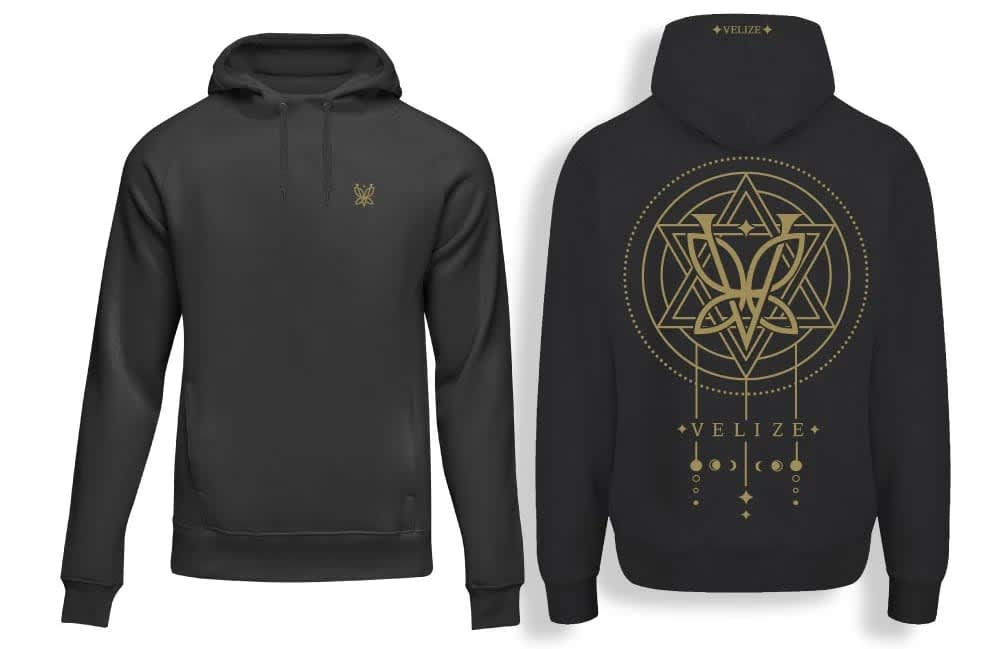
Source: Hoodie design by Irisha_design via 99designs by Vista
13. Tri-blends (cotton-poly-rayon)
Tri-blends combine cotton, polyester and rayon to create a lightweight fabric popular for retail and fashion hoodies.
- Rayon adds softness and drape.
- Polyester improves shape retention and durability.
- Cotton adds breathability.
The result is a soft, lightweight hoodie fabric suited to casual and premium branded merch.
How to choose the right hoodie fabric
When choosing the best fabric for hoodie printing, start with how your hoodie will actually be used. This quick step-by-step guide helps you find the right hoodie material.
Step 1: Define the hoodie’s purpose
Decide where the hoodie will be worn. Event giveaways like career fairs usually favor lighter, affordable fabrics like cotton blends. Premium retail hoodies often use heavyweight cotton, fleece or tri-blends.
Step 2: Choose the right fabric weight
Lightweight fabrics (200-250 GSM) work well for promotional merch and layering, while midweight hoodies suit everyday wear. Heavyweight fabrics provide warmth and durability for workwear or colder climates.
Step 3: Match the fabric to your printing method
Cotton and high-cotton blends are reliable for screen printing and DTG printing, while polyester and high-poly blends perform best with sublimation printing. Thicker fabrics handle embroidery well.
Step 4: Consider durability and care
If the hoodie will be used frequently – employee apparel or workwear – look for durable blends or polyester-heavy fabrics that resist pilling and hold their shape.
Step 5: Balance comfort with brand goals
The best hoodie material for branded merch supports your design, is comfortable and holds up over time. When those factors align, your hoodie is something people wear again and again, promoting your brand.
Explore these hoodie design ideas and create branded merch that stands out from the crowd.
Ready to pick the right hoodie fabric for your branded merch?
The best hoodie fabric fits your audience, use case and design. Choose well, and your branded apparel is more likely to be worn regularly, helping turn customers into brand advocates.
Hoodie fabric FAQs
Does 100% cotton hoodie fabric shrink more than blends?
Yes, cotton fibers absorb water and tighten when exposed to heat, which can lead to shrinkage after the first few washes. Cotton-poly blends are better because polyester helps the fabric keep its shape. To minimize shrinkage, wash cotton hoodies in cold water and avoid high-heat drying.
How do I prevent my fleece hoodie from pilling after washing?
Turn the hoodie inside out before washing and use a gentle cycle with cold water. Avoid fabric softener, which can weaken fibers over time. Air drying or using low heat also helps. These small steps reduce friction in the wash, which is what usually causes piling.
Why does my print crack or fade on polyester fleece hoodies?
Polyester fleece can be more challenging to print than cotton. If the wrong inks or curing settings are used, the fabric’s dyes may migrate into lighter prints, while inks that aren’t formulated for stretch or synthetic fibers are more likely to crack over time.
Is a higher GSM always better for durability
Not always. Higher GSM fabrics are thicker, but durability also depends on fiber type and knit quality. A mid-weight cotton-poly blend can be more durable than a heavier fabric if the yarns are stronger and the construction is tighter. Choose GSM based on hoodie use – heavyweight for workwear or cold weather, midweight for everyday hoodies.