Every product has a moment before it gets used. A customer opens the box, peels back the tissue paper, pulls something from a shopping bag or lifts the lid on a gift. And that unboxing experience shapes how they feel about what they bought before they even touch the product itself.
For small businesses, that moment really counts because it’s a first impression, a signal of quality and sometimes the reason someone shares a purchase with a friend, leaves a five-star review or comes back to buy again.
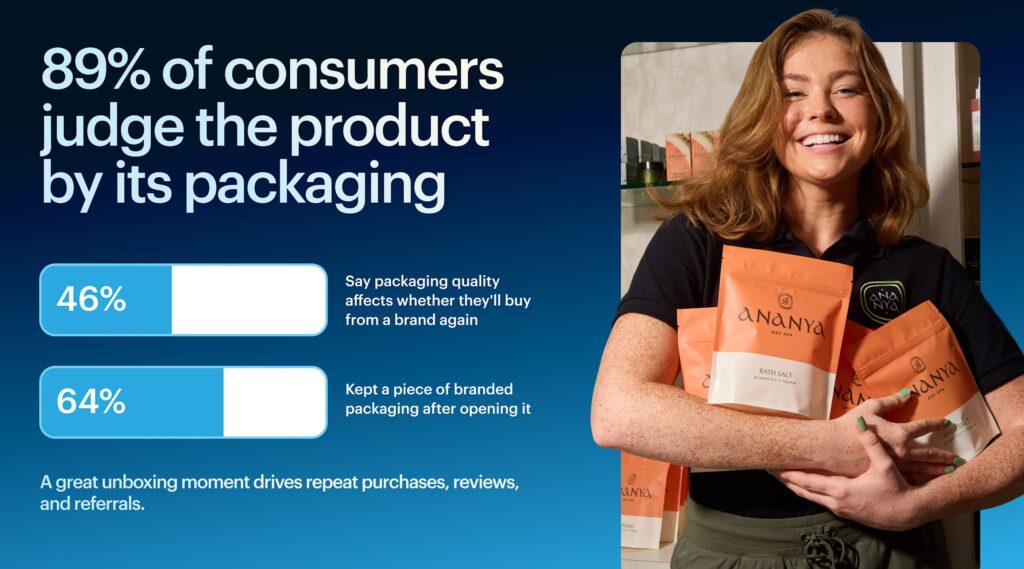
VistaPrint surveyed 1,000 U.S. adults who notice or pay attention to product packaging at least occasionally to understand how packaging shapes perception, loyalty and purchase behavior. The results show that customers are paying attention. In fact, 89% say packaging quality influences how they perceive the product inside. Nearly half say packaging quality affects whether they will buy from a brand again. And 64% have kept a piece of branded packaging after opening it.
- Packaging shapes perception – 89% of consumers say packaging quality influences how they view the product inside.
- Custom packaging can make a brand feel higher quality and more professional.
- Printed thank-you cards or inserts are the most surprising and pleasing packaging detail.
- A strong unboxing experience can support loyalty, reviews, referrals and social sharing.
- Branded packaging often gets reused, kept or shared.
- Gift packaging matters because it adds thoughtfulness, convenience and perceived quality.
How packaging shapes perception before customers see the product
Packaging is the first physical thing many customers touch when a product arrives. Before they try the skincare formula, hang the print or taste the baked goods, they have already noticed the packaging. Whether you ship in a box, bag or mailer, that first physical impression can change how they feel about the purchase.
Packaging quality affects how customers judge the product inside
Among consumers who notice packaging, 38% say packaging quality directly influences how they perceive the product inside and another 51% say it somewhat does. Together, that means 89% connect packaging quality with product perception.
Think about it from the customer’s side. A candle that arrives nestled in tissue paper inside a custom-printed box feels considered. The same candle rattling around in a plain mailer can feel less special, even if the product itself is exactly the same.
That doesn’t mean every small business needs premium packaging for every order; it just means that packaging should feel intentional. A branded sticker, thank-you card or neatly wrapped tissue paper can all help a product feel more polished.
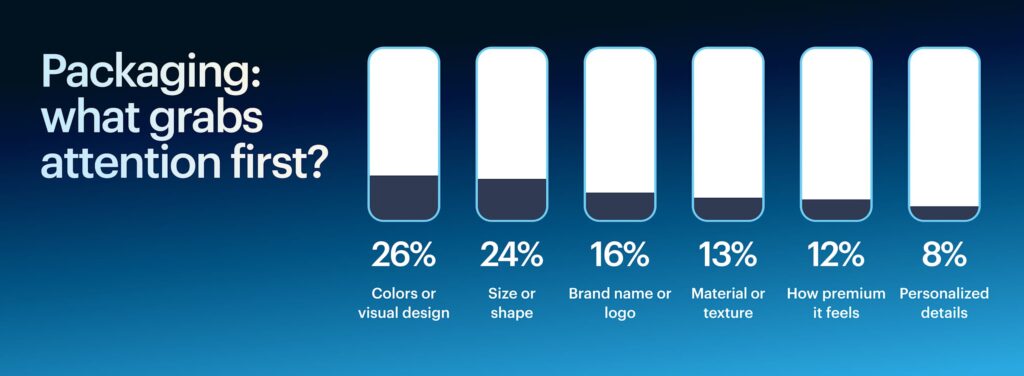
Customers also notice different details at different moments. When asked what first catches their attention about product packaging, consumers named:
- Colors or visual design: 26%
- Size or shape: 24%
- The brand’s logo or name: 16%
- Material or texture: 13%
- Whether it feels premium or high-quality: 12%
- Personalized or unique details: 8%
For small businesses, that creates a practical checklist. Choose colors that feel true to your brand, make your logo easy to spot and keep the experience consistent from the outside of the package to the product inside.
Custom packaging makes brands feel more professional and authentic
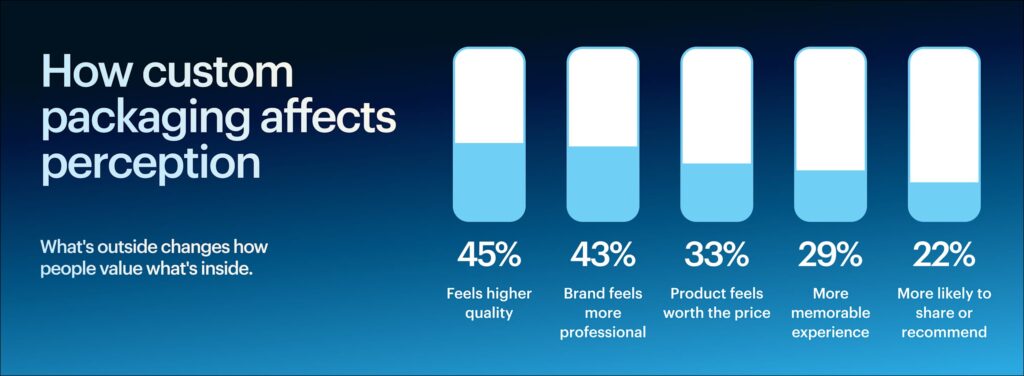
Custom packaging does a lot of work in a small amount of space. It can make a product feel more finished, make a brand look more established and make the purchase feel worth the price. According to the survey, branded or custom-designed packaging makes a purchase feel:
- Higher quality: 45%
- More professional: 43%
- Worth the price: 33%
- More memorable: 29%
- More shareable/more likely to recommend the product: 22%
If customers are buying from you for the first time, they may not know your story yet. But when the packaging feels thoughtful, it tells them quickly that your business cares about the details. Respondents also said a small business’s packaging says a lot about the brand:
- 54% said it shows how much the business cares about customers.
- 52% said it signals creativity and personality.
- 51% said it reflects the quality of the products.
- 49% said it indicates professionalism.
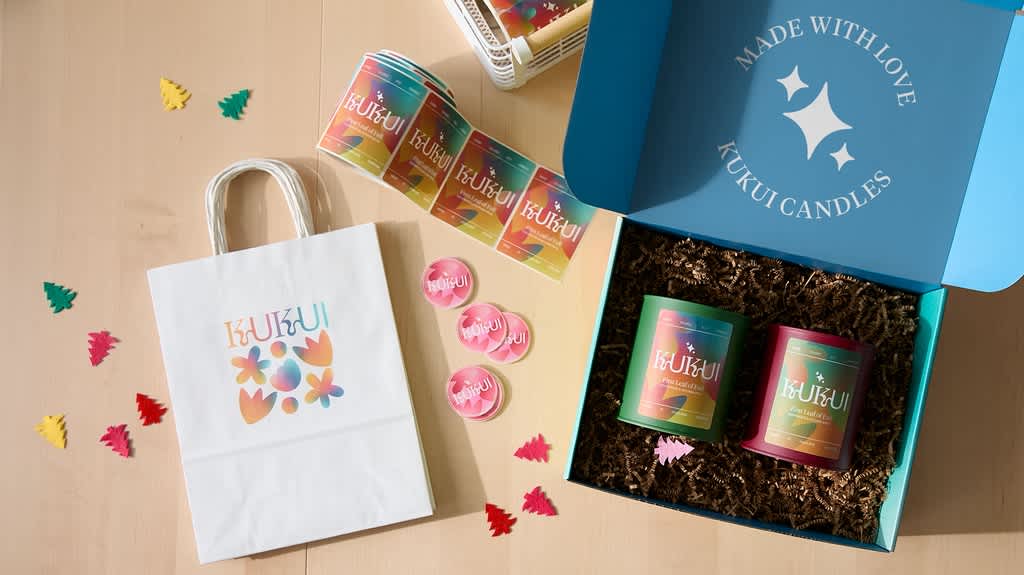
Custom boxes, mailers, printed labels, stickers, inserts and branded seals can make your product feel complete without needing a complicated redesign. For more inspiration, explore this guide to brand packaging examples.
The packaging details customers notice, remember and enjoy
A good unboxing experience is usually built from a few small details that work together. For example, the outside of the package, the way the product is arranged, the materials and the extra touch that makes the order feel personal. The data shows that customers notice both the practical and emotional parts of packaging.
The outside and the first look inside matter most
There are two key moments to think about. First is the arrival moment when a customer sees the package land on their doorstep or when they walk out of your store with a bag in hand. A custom mailer, branded box, shopping bag, label or sticker seal can make that moment feel more recognizable.
Second is the reveal moment. This is what customers see when they open the package. A neatly arranged product, tissue paper, a product label, a thank-you card or a small insert can make the order feel cared for.
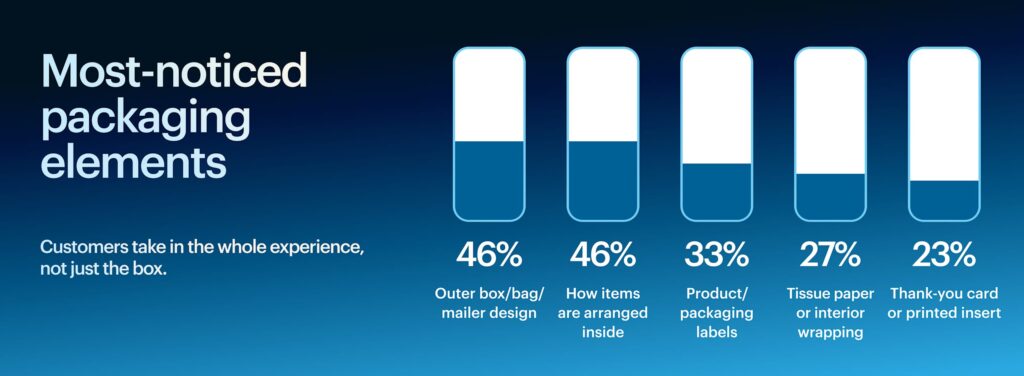
When people open a purchase, this is what gets the most attention:
- The outer box, bag or mailer design: 46%
- The way items are arranged inside: 46%
- Product or packaging labels: 33%
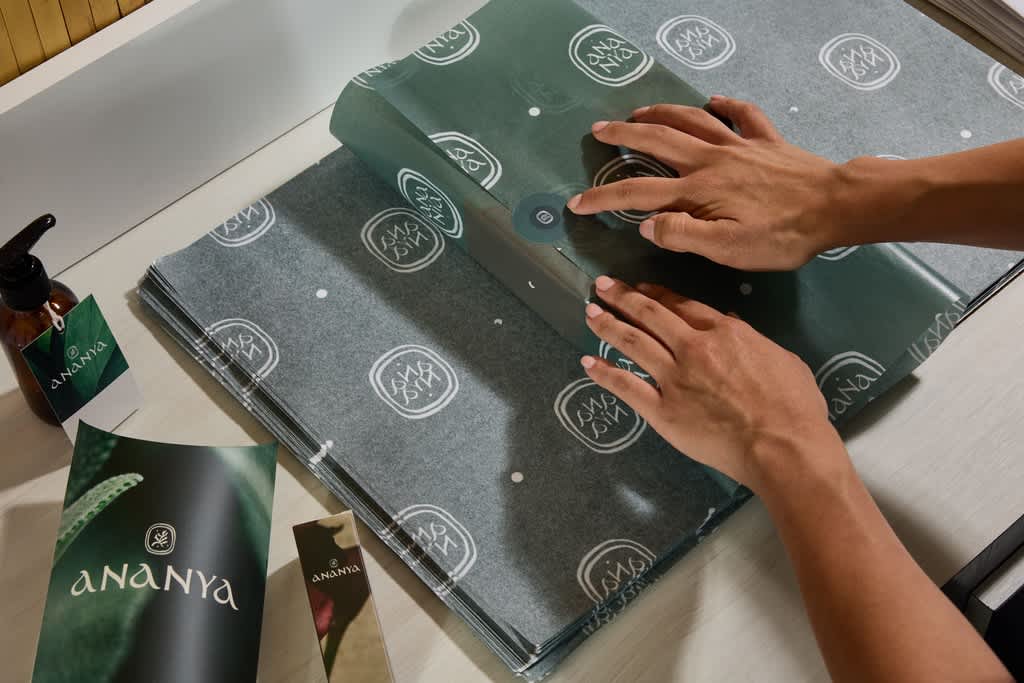
- Tissue paper or interior wrapping: 27%
- Thank-you cards or printed inserts: 23%
- Stickers: 15%
- Hang tags: 15%
- Branded tape: 11%
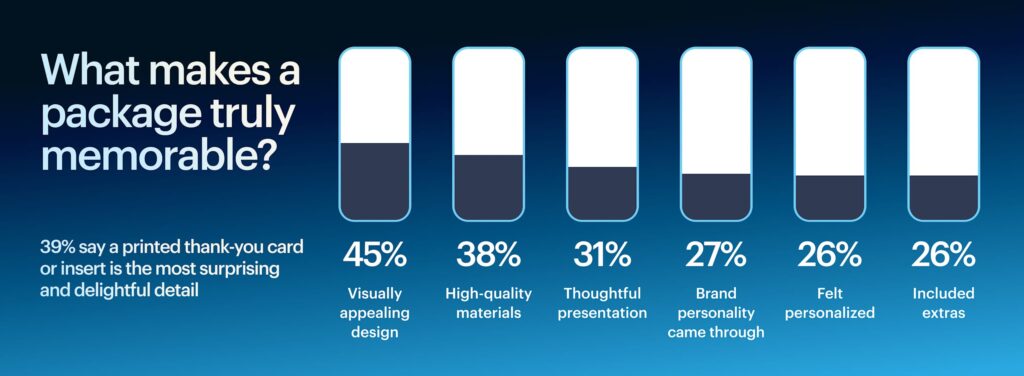
The most memorable packages tend to combine look, feel and intention. When asked what made the last memorable package they received stand out, respondents said:
- Visually appealing design: 45%
- High-quality materials: 38%
- Thoughtful presentation: 31%
- Clear brand personality: 27%
- A personalized feel: 26%
- Extras such as stickers, inserts or samples: 26%
That gives small businesses a simple way to think about packaging. Does it look good? Does it feel intentional? Does it reflect your brand? Does it give the customer something useful, personal or unexpected?
You don’t need every detail at once. Start with one or two packaging ideas that make sense for your product. For example, a bakery might focus on a sturdy branded box and a storage card or a jewelry brand might use a small box, tissue paper and a care insert.
Thank-you cards punch above their weight
Small details can make a big impression, and thank-you cards are a clear standout. When asked which packaging product is the most surprising or pleasing to receive with a purchase:
- 39% chose a printed thank-you card or insert.
- 25% chose custom-printed boxes or shopping bags.
- 8% chose branded stickers.
- 7% chose branded tissue paper.
- 5% chose branded packaging tape.
- 4% chose hang tags.
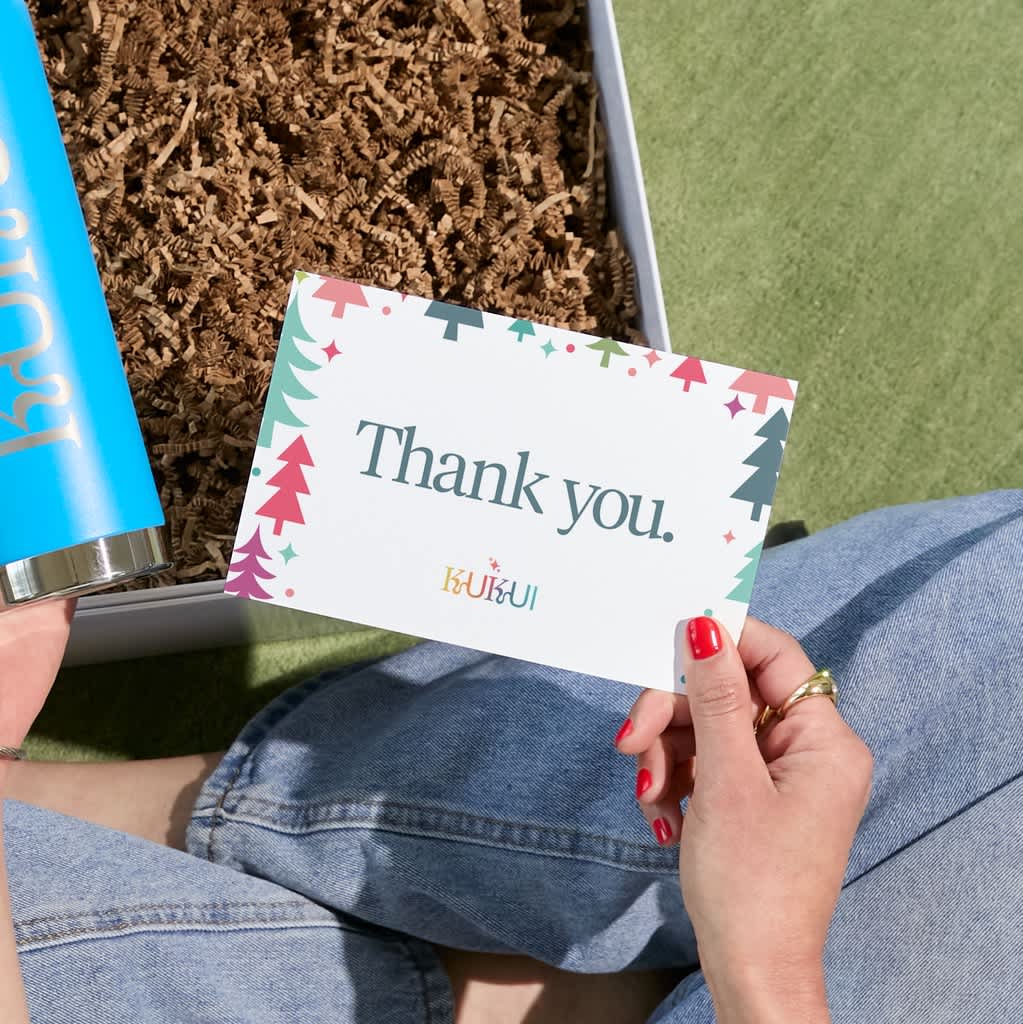
That makes sense, as a thank-you card gives your business a voice inside the package. It can make a customer feel appreciated and connected to the people behind the product. It can also be useful as a jewelry brand might include a care card, a coffee roaster might add brewing tips, a skincare brand might include a simple product guide or a discount code for the next order.
The key is to keep it simple. Write a short, warm message, add useful information if it helps the customer enjoy the product and include a loyalty offer or review prompt if it feels natural.
How a great unboxing moment can drive loyalty, reviews and referrals
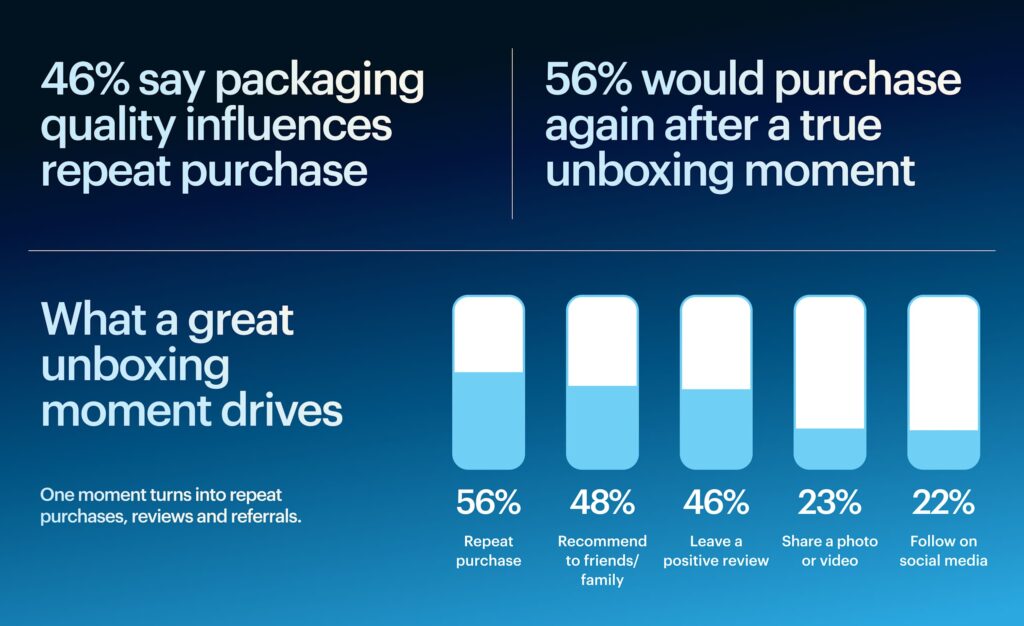
Nearly half of respondents (46%) said packaging quality influences whether they will buy from a brand again, which is a strong signal for small businesses. A customer may come for the product, but the overall experience can help decide whether they return.
How packaging can influence repeat purchases
When asked what they would do if a small business gave them a purchase that felt like a true “unboxing moment,” 56% said they would purchase from that business again. Forty-eight percent said they would recommend the business to friends or family, and 46% said they would leave a positive review. These are all powerful for small businesses because they build trust with future customers.
How packaging can encourage recommendations
The survey also looked at the types of packaging experiences that would make consumers more likely to recommend a brand to a friend.
- Bonus items or freebies: 52%
- High-quality presentation materials: 37%
- Personalized touches: 36%
- Premium-looking outer packaging: 34%
- Unique or creative branding: 30%
That does not mean every order needs a free product. A bonus could be a sample, a sticker, a useful care card or a small printed insert with a discount code. The goal is to give customers one more reason to talk about or recommend your brand.
If your margins allow, add small extras where they make sense. If they don’t, focus on presentation. A well-placed sticker, a neatly folded piece of tissue paper or a short thank-you message can still make the purchase feel more personal.
Why shareable packaging matters online and offline
Shareable packaging is great for encouraging customers to create public social media posts. But it’s also useful for private recommendations and product reviews. In other words, packaging does not need to go viral to still be valuable for your brand.
Customers are already photographing packaging
More than a third of respondents (37%) said they have taken a photo or video of a package or unboxing experience from a shipment, in-store purchase or gift.
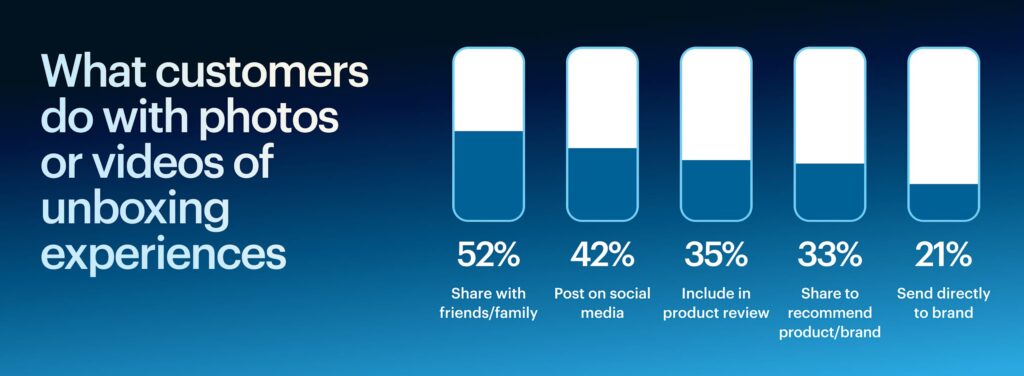
Among those who have photographed or filmed packaging:
- 52% shared the content privately with friends or family.
- 43% saved it on their phone or device.
- 42% posted it on social media.
- 35% included it in a product review.
- 33% used it to recommend a product or brand.
That means a good package can quickly travel beyond the original customer. It might appear in a group chat, a birthday message, a review photo or an Instagram Story. Each of those moments can introduce your business to someone new.
Unboxing content can influence purchases
Unboxing content also has purchase power. Among respondents who watch or see unboxing content, 47% said an unboxing video or post has influenced them to buy from a brand. But customers can tell when something is designed only for content. The best packaging feels natural, useful and on-brand first, then photo-worthy as a bonus.
For a small business, that is a reminder to make packaging camera-friendly:
- Keep your logo visible in one or two places.
- Use a color, pattern, sticker or insert that looks good in a photo.
- Make the product easy to see when the package opens.
- Include a gentle prompt for reviews or social posts.
Why packaging matters even more for gifts
Packaging matters for everyday purchases, but it can matter even more when someone is buying for another person. Gift buyers want the product to feel thoughtful before it is even opened. They also want the handoff to feel easy, polished and complete.
Gift packaging adds thoughtfulness and convenience
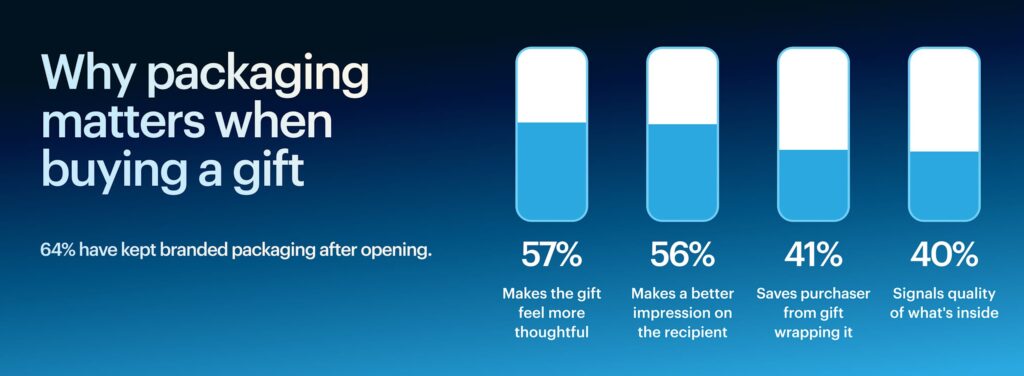
In the survey, 86% of respondents said packaging is important when purchasing a gift. Of those, 41% said it’s very important and 45% said it’s somewhat important.
Among respondents who said gift packaging matters:
- 57% said it makes the gift feel more thoughtful.
- 56% said it makes a better impression on the recipient.
- 41% said it saves them from having to wrap it themselves.
- 40% said it signals the quality of what is inside.
- 24% said it makes the gift more photo-worthy or shareable.
For small businesses that sell giftable products, packaging can become part of the reason someone buys. A gift-ready box, branded tissue paper, custom shopping bag or printed insert helps the buyer feel confident that the recipient will be impressed. That is especially useful for giftable and seasonal products like gift sets, bundles, subscription boxes, handmade goods, food gifts, beauty products and boutique retail items.
Branded packaging can have a second life
Sixty-four percent of respondents said they have kept a piece of branded packaging after opening it. Among those who kept packaging:
- 55% reused it for gifting or wrapping.
- 54% reused it for storage or organization.
- 34% kept it to display or decorate with.
That means a good piece of branded packaging can keep your brand visible after the first purchase. A sturdy product box might become a gift box. A printed shopping bag might be reused for another occasion. A beautiful piece of tissue paper might be saved for wrapping. A sticker might end up on a notebook or laptop.
Are customers willing to pay more for thoughtful packaging?
Packaging can also support perceived value. One in three respondents (33%) said they would pay more for a product if it came in thoughtfully designed, branded packaging. Another 21% were not sure.
Among those willing to pay more, the sweet spot was modest:
- 52% said they would pay 5-10% more.
- 35% said they would pay 1-4% more.
- 10% said they would pay 11-15% more.
- 3% said they would pay more than 15% more.
This does not mean customers will pay extra for packaging alone. The product still needs to meet their expectations. But it does suggest that packaging can be part of the product’s value, especially when it fits the brand, the product and the occasion.
Match your packaging investment to the product value and margin and save more premium details for gift sets, limited editions or higher-priced products. Use smaller branded touches for everyday orders.
You can also test upgrades before changing everything. Add a printed insert for one month, try branded stickers on shipped orders or create a gift-ready option during the holidays. Then watch for repeat purchases, reviews and social mentions.

How to create a better unboxing experience on a small business budget
A better unboxing experience is about choosing the details that matter most to your customers and your product. Start with the moments people notice, then build from there.
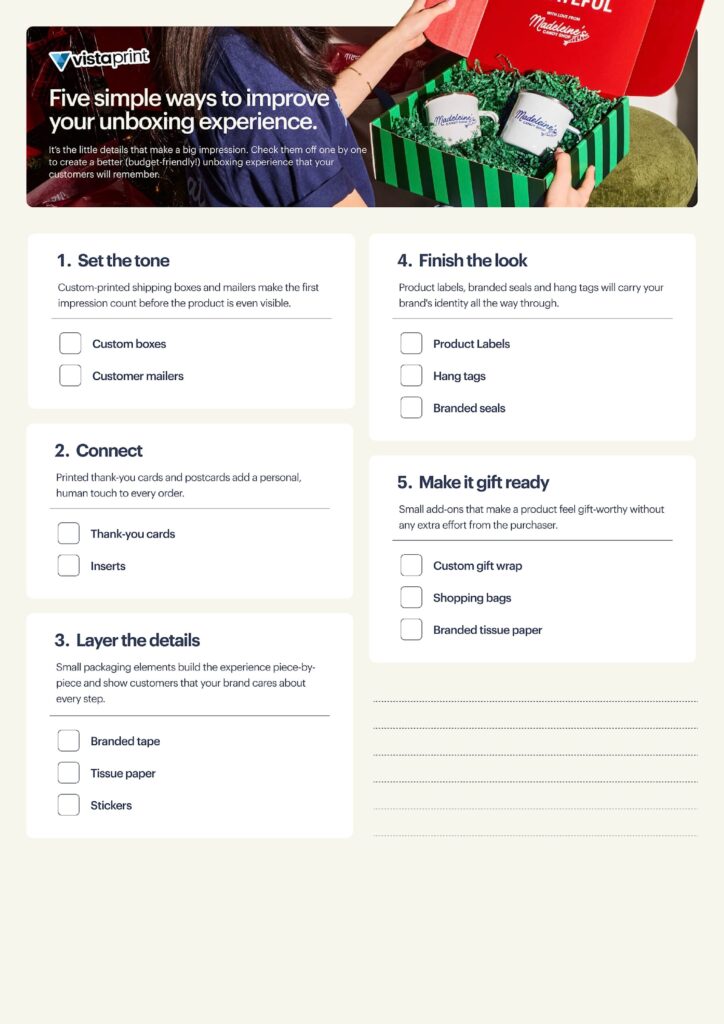
1. Choose the right outer packaging
The outside is one of the first things customers notice. For shipped products, that might mean a custom mailer, shipping box, branded tape or label. For in-store purchases, it might mean a shopping bag, product box, tissue paper or gift wrap.
2. Make the first look inside feel intentional
Keep products neat, protected and easy to see. Use tissue paper, filler, dividers or inserts where they make the reveal feel more thoughtful.
3. Add one personal touch
39% of respondents said a printed thank-you card or insert is the most surprising and pleasing packaging detail. A thank-you card, postcard, care guide or discount card can help the order feel more human.
4. Use branded details to connect the experience
You don’t need every piece of packaging to be custom printed. Stickers, labels, seals, branded tape and product labels can help create a consistent look with smaller, flexible pieces.
5. Think about reuse, gifting and shareability
Since 64% of respondents have kept a piece of branded packaging, consider what customers might want to reuse. Think sturdy boxes for storage, a bag nice enough to carry again, gift-worthy tissue paper or useful, saveable inserts.
6. Match packaging choices to your business type
Different businesses need different packaging moments. Here are a few simple starting points:
- E-commerce brand: custom mailer, tissue paper, sticker seal and thank-you card.
- Boutique retailer: shopping bag, tissue paper, hang tag and branded label.
- Bakery or food gift business: branded box, product label and insert with storage instructions.
- Skincare or beauty brand: product labels, care card, branded box and sample insert.
- Artist or maker: rigid mailer, custom sticker, thank-you postcard and branded wrap.
The best packaging choices are the ones that match your product, your margins and your customers’ expectations. Start small, keep it consistent and add the details that make the purchase feel more like your brand.
Methodology
This survey was conducted online on June 8, 2026, with a representative sample of 1,000 U.S. adults who notice or pay attention to product packaging at least occasionally (sometimes, often or always). Respondents who said they rarely or never notice packaging were screened out.
The unboxing experience matters
Packaging doesn’t need to be complicated to be effective. Customers notice details like the look of the box, the way the product is arranged, the feel of the materials and the small printed pieces that make the order feel personal.
The proof is clear. 89% of consumers say packaging quality influences how they perceive the product inside. Nearly half say it influences whether they will buy from a brand again. And when a small business creates a true unboxing moment, 56% say they would purchase from that business again.
For small businesses, the unboxing experience is a chance to show care before the customer even uses the product. It can help turn an ordinary purchase into something customers remember, reuse and recommend and share.