

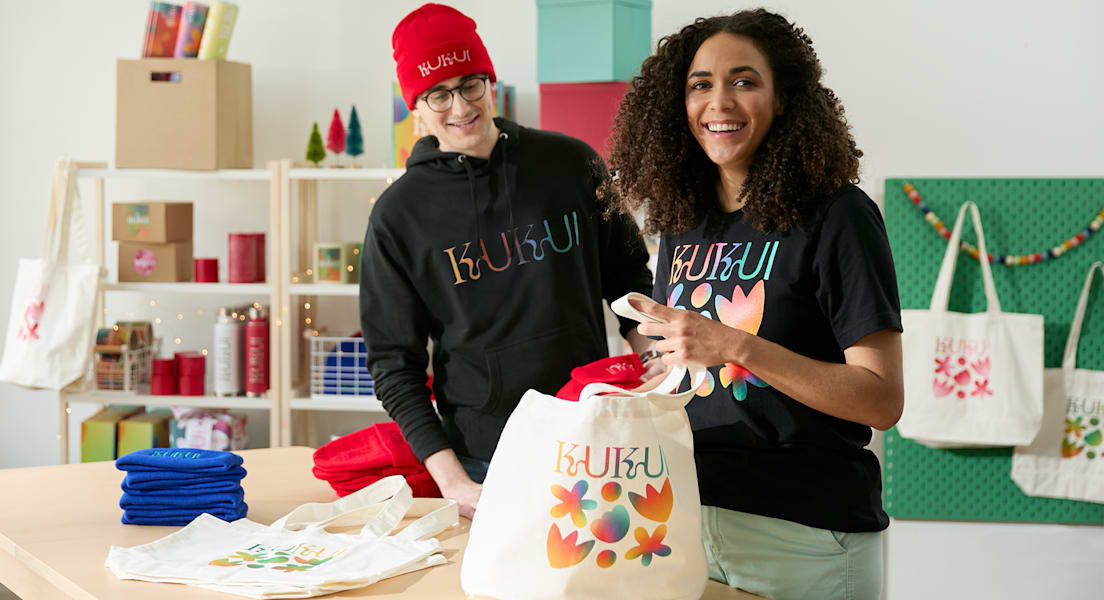
Hats can be stylish, useful and fun. Most importantly, they are a great marketing tool for your business because they are a highly visible and cost-effective way to get your logo, slogan or brand colors into the world. If you’re figuring out how to make merch, or even how to start a merch business, hats are one of the easiest types of merch to get right because they’re compact, lightweight and usually one size fits all.
But you should choose your promotional headwear with care. From baseball caps to bucket hats, different styles have different associations. In this guide, you’ll find practical hat design ideas for 2026, a style-to-use table to match popular hat types to real business scenarios, and printing and embroidery tips.
- The best hat design ideas for 2026 balance clear branding with wearability – for example earth tones and simple contrast are having a moment.
- Match hat design to your market niche: streetwear, rugged outdoor crews, hospitality and professional services all read differently.
- For readability, many front placements max out around 2″ × 4″, and embroidered text should generally stay at or above ~0.25″ tall.
- Embroidery feels premium and lasts, printing shines for complex, colorful logos, fine detail and gradients.
- Add function when it helps: moisture-wicking sweatbands, breathable mesh and sun-protective (UPF) fabrics can make your hat design a daily favorite.
Hat design ideas for 2026
If you’re collecting cool hat design ideas for your next drop, giveaway or uniform refresh, start by using these hat designs you can adapt to almost any brand.
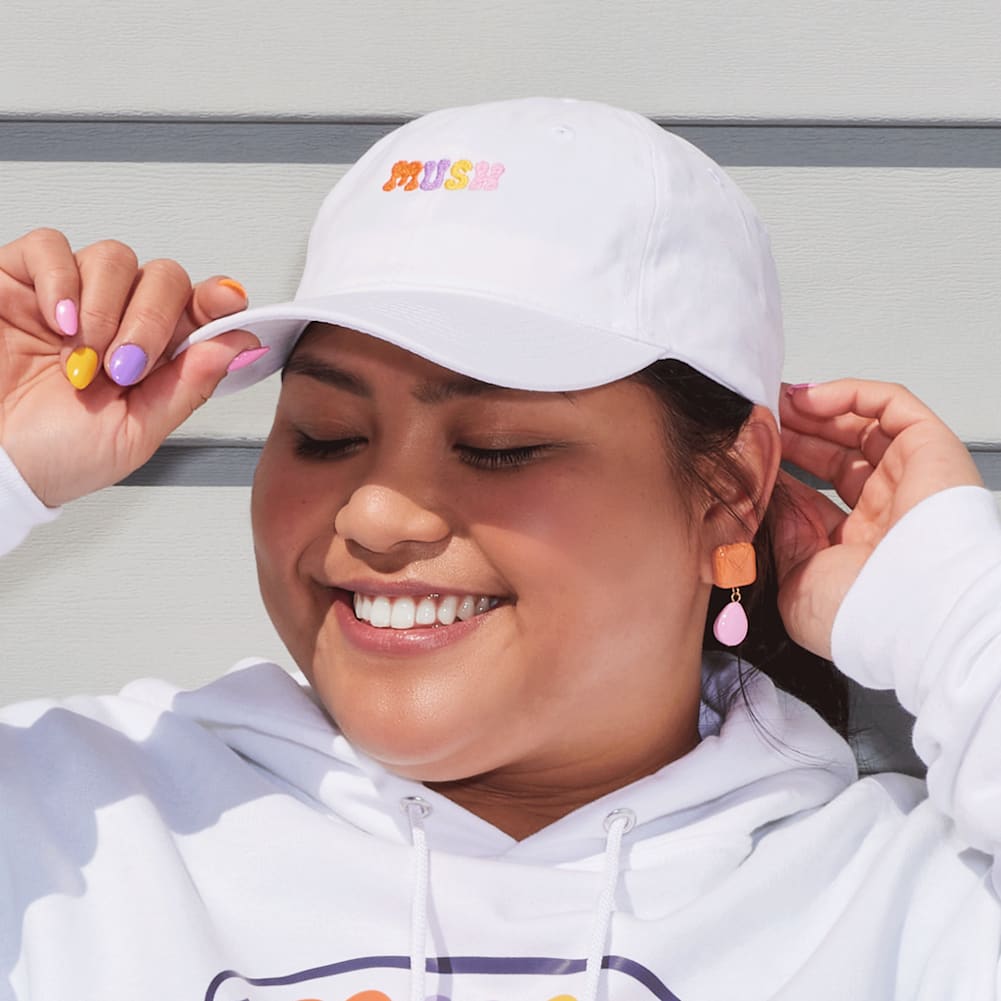
Tailor to your business niche
The fastest way to land on hat design ideas that actually get worn is to start with your niche, not the decoration method:
- Streetwear brands can push bolder cap design ideas like punchy graphics, contrast stitching and retro-corduroy panels because the hat itself is part of the outfit.
- Outdoorsy and rugged brands usually win with durable, high-contrast hat design that reads at a distance and still looks good dusty.
- Hospitality, wellness and professional services tend to do best with minimalist logo hats in clean colors that feel uniform-ready, not like a giveaway.
If you’re trying to start a clothing brand, this niche-first approach also helps you test cool hat design ideas without overcommitting: run one style, one tight logo placement and one color palette that matches how your customers already dress. The intensity of your design should also reflect your audience, like bold for retail merch and streetwear or calmer for service businesses.
Keep your main graphic readable at a glance. Most front placements top out around the 2″ × 4″ range.
Flaunt your company logo
We look at people’s faces again and again when we meet them. Hats frame those faces, making them prime real estate for the colors, symbols and messaging that define your brand identity. If you’re looking to spread brand awareness, it doesn’t get better than a hat design with your logo front and center.

Source: print_design via 99designs by Vista
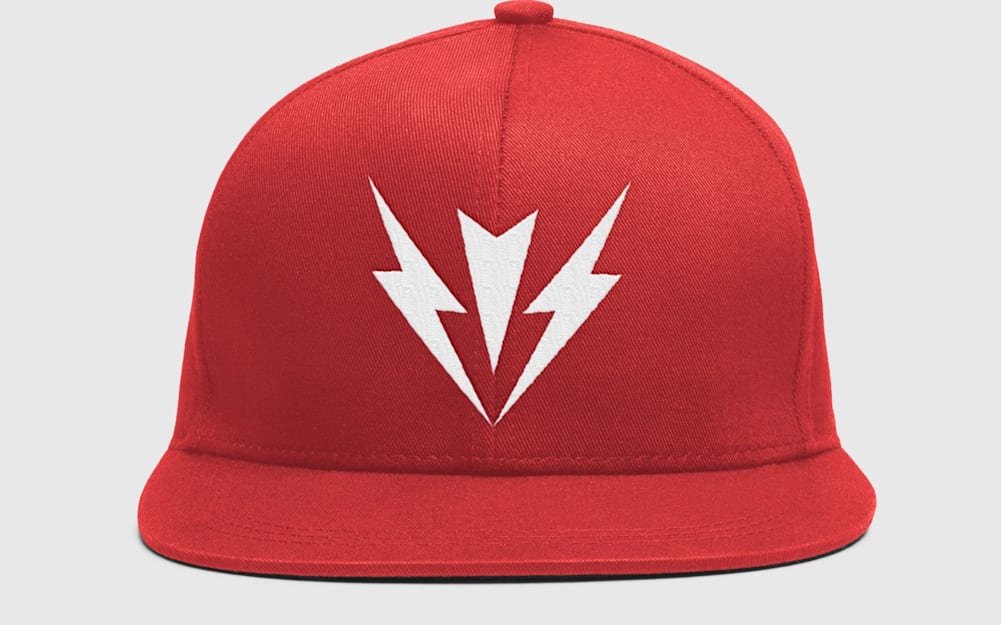
Source: HANA via 99designs by Vista
Logos are generally most memorable when using complementary colors set against a simple contrasting background. The most effective branded hats are often boiled down to the essentials – think of Nike baseball caps, which have evolved to an instantly recognizable simple swoosh and nothing else. Get a logo cap right and your customers will wear it with pride.
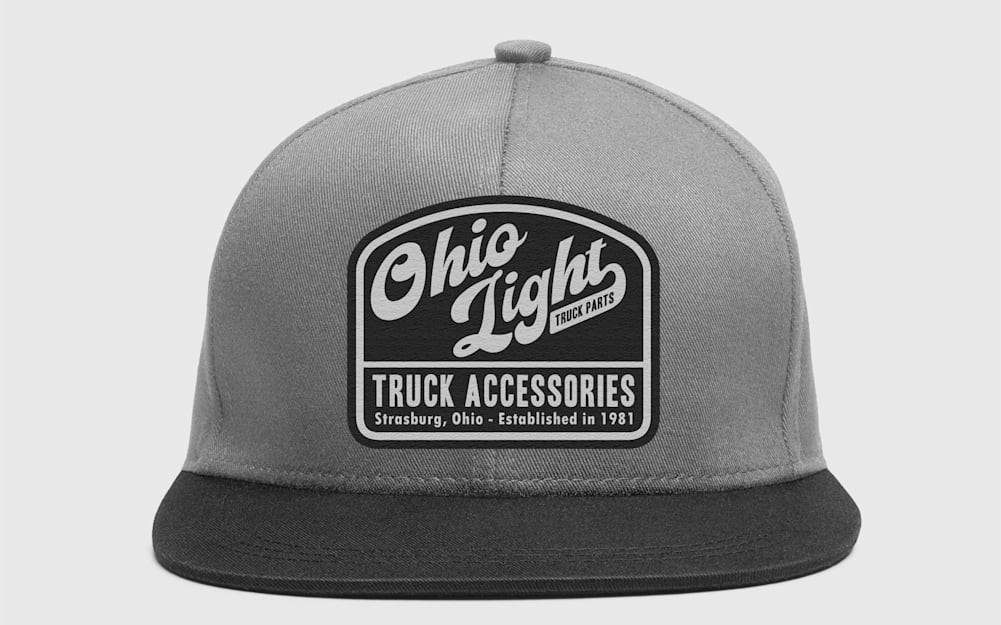
Source: FASK.Project via 99designs by Vista
The natural high visibility on the wearer’s head also makes a hat a good place to include key company information, such as a website, social handle or address. Many brands also work the year the company was founded into their logo.
If you’re embroidering, keep thin lines thick enough to stitch cleanly and keep lower-case text roughly 0.25″ tall or larger so it doesn’t blur.
Promote an event
Source: Irisha_Design via 99designs by Vista
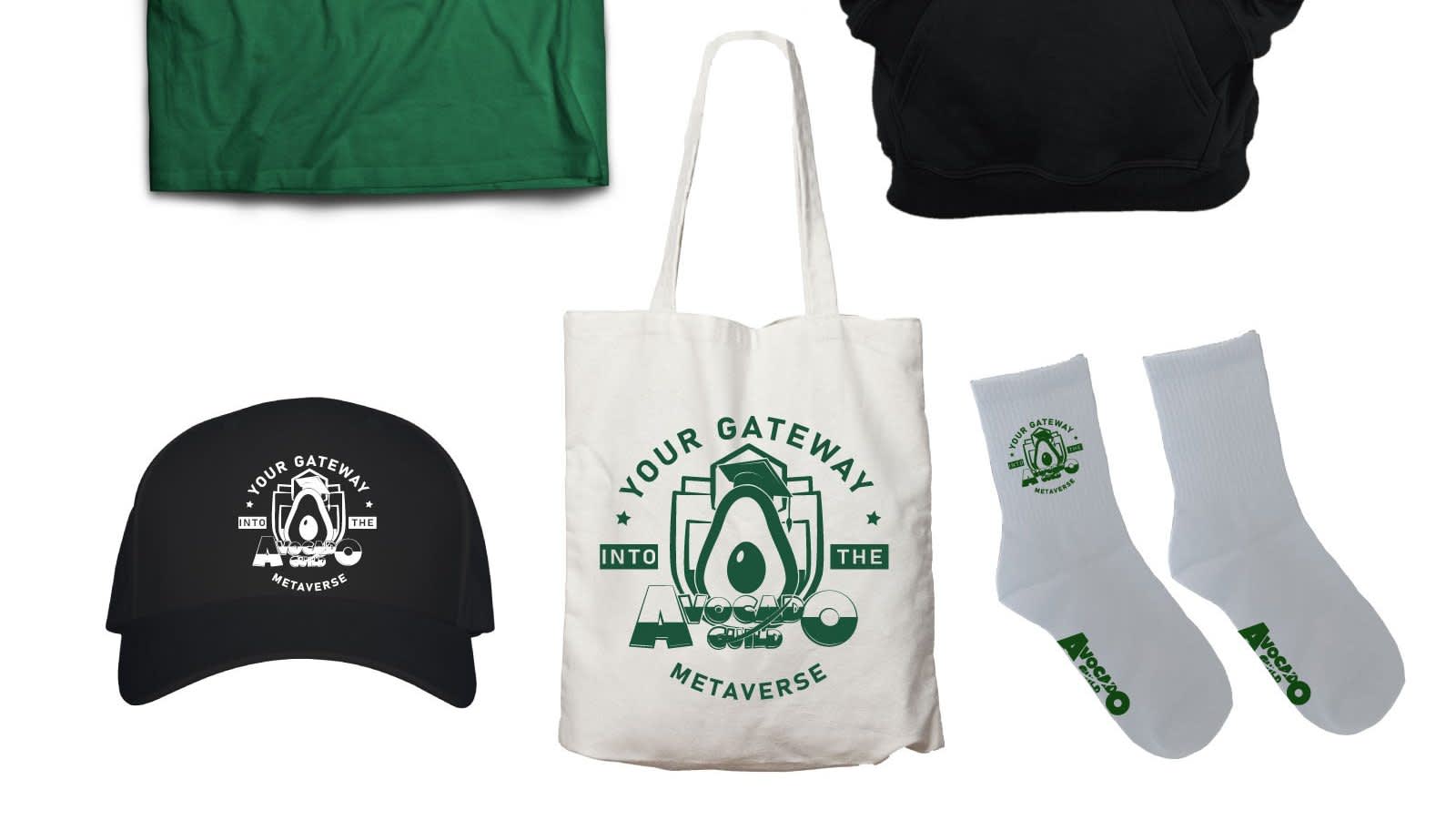
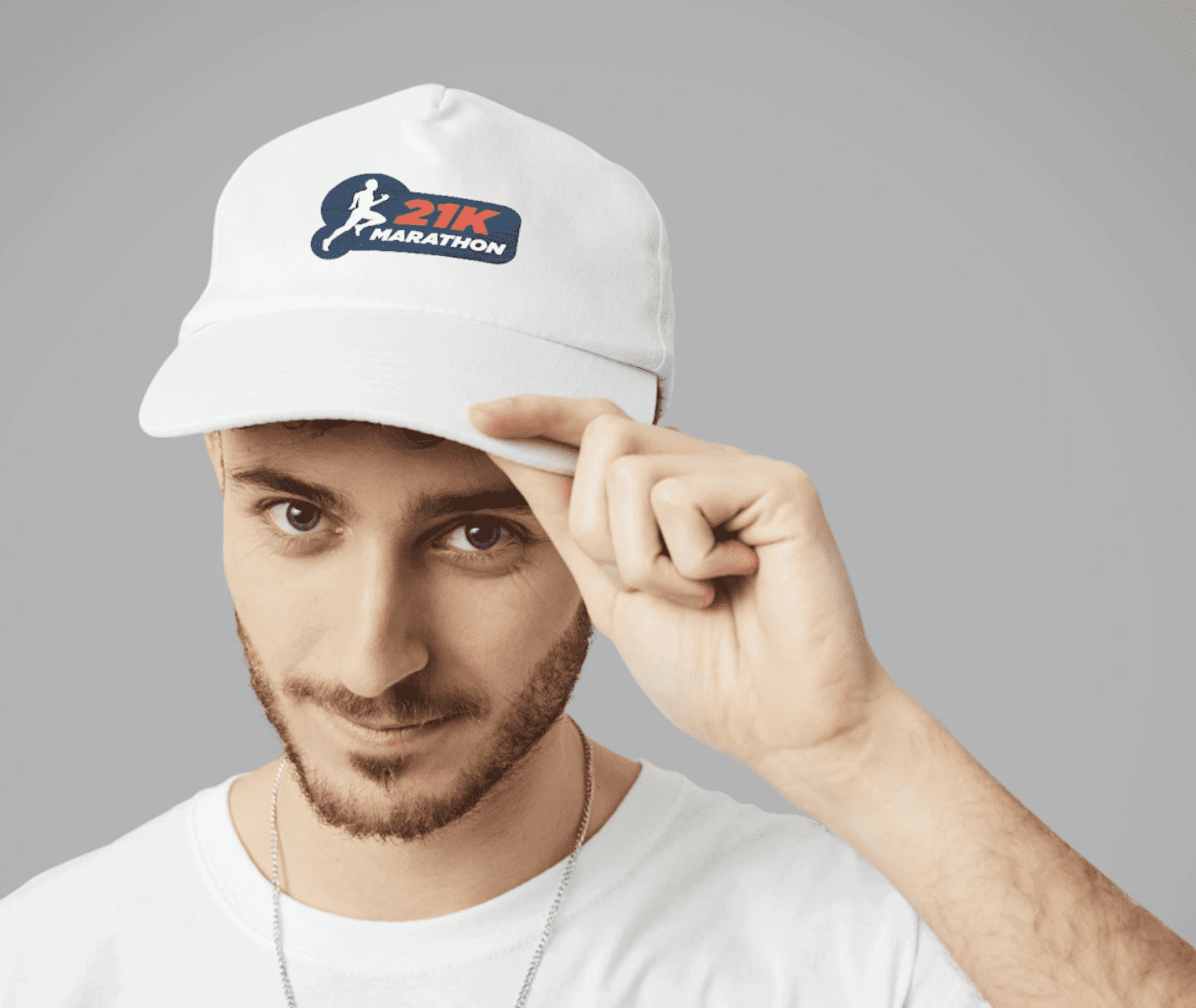
Branded hats are great tools for conferences, pop-up events, meetings or trade fairs. They can contain specific event details, such as its date, time or location, and be handed out to attract event-goers. Promotional hats can also be mementos for event attendees:
- They can be worn by your staff to spread the word.
- The portability and universal fit of most styles make them easy to give away to event attendees, customers or passers-by.
- They can be packaged with a tote bag or other merchandise to remind attendees about your event for years to come, as well as free future advertising.
- You can tailor the hat to the time of year, with caps or visors for the summer and beanies in colder months.
Events are an opportunity to collaborate and hats can be used to celebrate these collaborations with like-minded companies. By mixing brand colors, logos or imagery, you’ll create a souvenir of this synergy.
If you’re adding dates or locations, keep it short and readable from a few feet away. Use one typeface family, avoid ultra-thin fonts and size your text for the decoration method.
Say something with a slogan
A message-emblazoned hat is a great way to show off your brand values and increase recognition. If you don’t already have a company slogan or tagline, think about what your brand stands for and has to say. The colors and artwork you choose should complement and reinforce your message.
Slogans on hats should be short and use clean fonts since you want people to be able to read them quickly. One well-known example is the “I Love New York” slogan; its sharp text, tight layout and simple color scheme make it instantly recognizable on caps and T-shirts. But longer slogans that use the hat’s surface in inventive ways, or even make the reader squint, can work just as well. Distorted or jarring layouts and fonts work well if your brand wants to cultivate an edgier image.

Source: Diwaz via 99designs by Vista

Source: Graphics Guru 87 via 99designs by Vista
Eye-catching designs
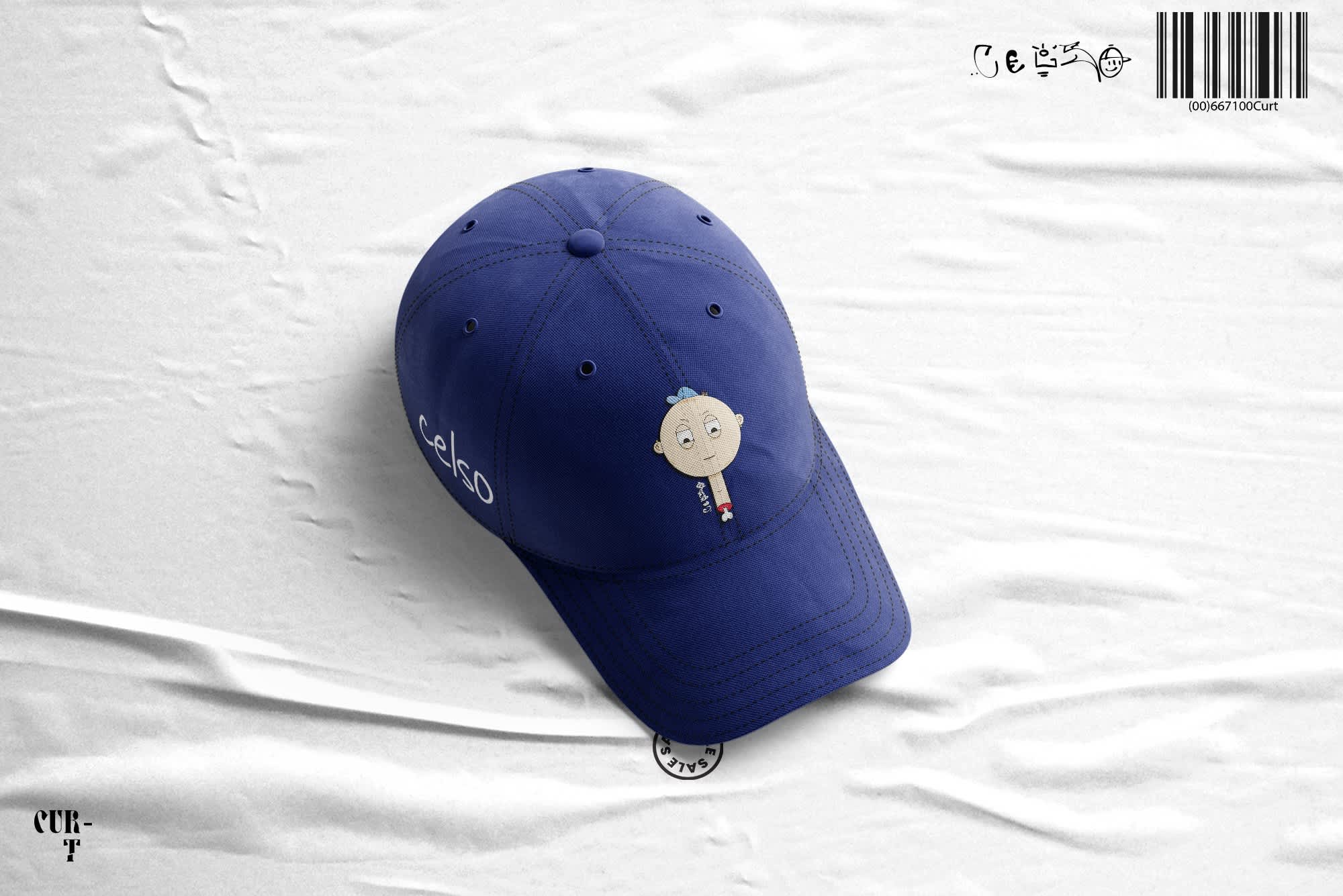
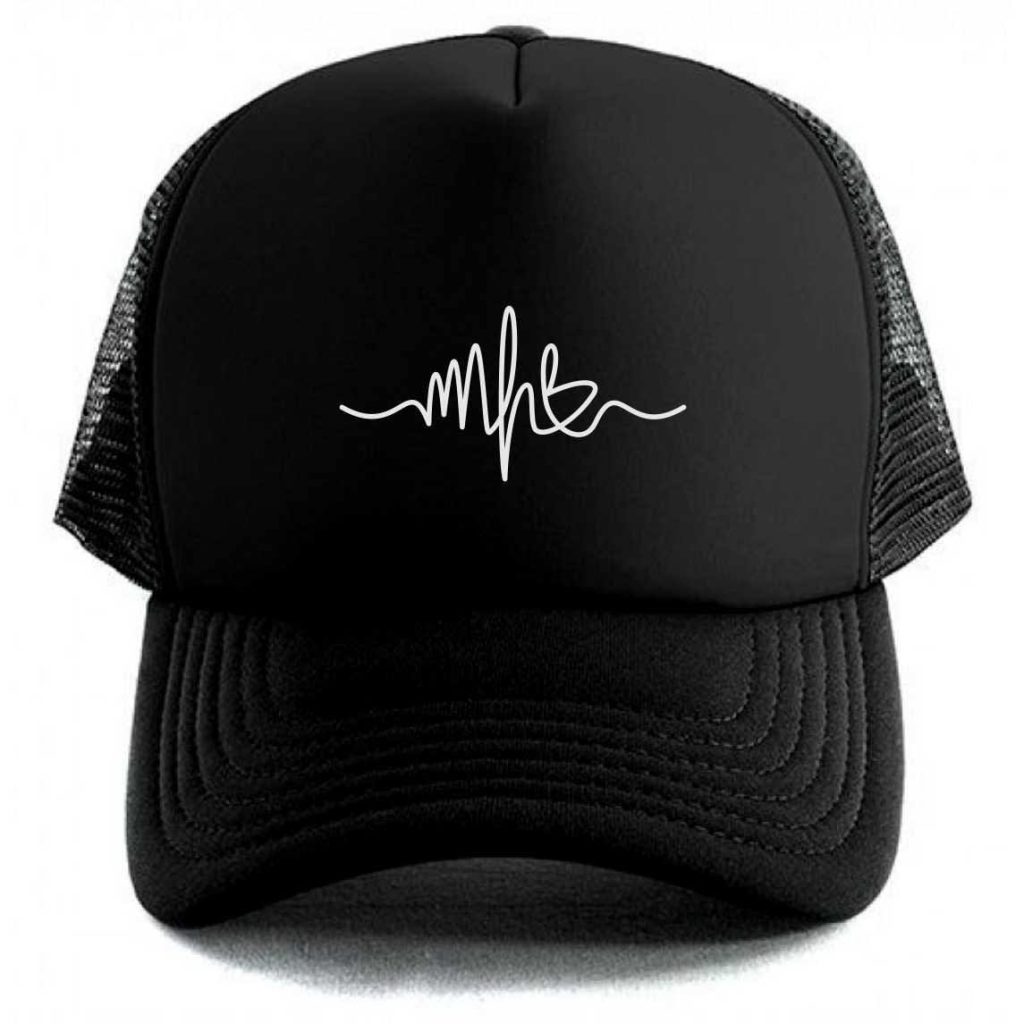
When it comes to eye-catching designs, simplicity is often best, especially if low-cost and streamlined production is high on your agenda. Straightforward designs can hit hard: a silhouette can allude to what your brand does, while angular fonts and neon colors can make your brand feel futuristic. Colorful illustrations can pop out from a dark cap, while a family of designs can riff on the same image or logo, using different color graphics.
Source: Curt Studio via 99designs by Vista
Creative hat designs can use:
- a contrasting mesh color on a trucker cap
- interesting patterns and materials, such as tie-dye, denim, corduroy or distressed
- contrasting embroidered eyelets for flashes of color
- subtle color variation at the brim edge
- distressed and contrasting stitching for a relaxed eye-catching look
- artful scruffs to give your cap a “street” feel
- 3D puff embroidery for big, tactile lettering, especially on truckers and snapbacks
Unusual hat design ideas won’t suit every business. They increase your costs and may have a narrower appeal. But they can also target a particular demographic and help your hats stand out.
Source: Curt Studio via 99designs by Vista
Functional trends
In 2026, some of the best hat design ideas aren’t just about looks, they’re about comfort. People keep and re-wear hats that solve a real annoyance: sweaty foreheads, harsh sun or a hat that feels stuffy after 10 minutes. If you’re brainstorming cool hat design ideas for outdoor crews, charity runs, festivals or summer promos, consider moisture-wicking sweatbands, breathable mesh panels and lightweight performance fabrics.
For sunny climates or long days outside, sun protection details like UPF-rated materials and slightly longer brims can turn a basic promo cap into an everyday favorite. Even simple cap design ideas feel more premium when the hat fits better and stays comfortable longer, because function is part of the vibe now.
If you’re adding functional features, keep the branding clean and minimal – one logo, one placement – so the hat feels like something people would buy, not just something they got for free.
Sustainability and green ideas
Sustainable headwear isn’t a niche anymore – it’s a buying signal, especially when your customers care about materials, waste or local impact. If you want hat design ideas that feel current and thoughtful, look for:
- recycled polyester blends
- organic cotton options
- made to last construction that won’t warp after a few wears
The design move that pairs best with sustainability is usually restraint: earth tones, tonal embroidery and minimalist logo hats that don’t rely on big, plasticky prints. You can also build greener choices into how you launch – produce smaller batches to test your hat design, offer pre-orders or run a limited drop so you’re not sitting on boxes of unsold merch. And if you’re thinking about how to make merch that doesn’t feel disposable, choose decoration methods that age well like embroidery or durable patches, so the hat keeps its shape and its message for years.
If you mention sustainability, be specific and keep the claim tied to something measurable, as customers can spot vague eco language from a mile away.
Types of hats
Even though baseball hats are a popular favorite, there are other kinds of hats on offer and a few styles are particularly effective for promoting your brand. Caps, beanies, visors and bucket hats are popular, easy to produce and have stood the test of time. To figure out which is the right fit for your business, get to know the characteristics of each style, as different hats suit different uses and audiences.
Hat type and use table
Here’s a quick hat type-to-use table that matches popular styles to the business situations where they perform best, so you can choose a hat design that makes sense before you start designing.
| Hat style | Best business use | Notes for hat design |
|---|---|---|
| Trucker | Trade shows, summer promos, food trucks | Big front panel = bold logos, perfect for retro trucker hat trends |
| Dad hat | Everyday staff uniforms, retail merch | Softer worn-in vibe, ideal for minimalist logo hats |
| Beanie | Winter events, mailers, employee gifts | Cozy & premium, embroidery pops on a cuff |
| Performance cap | Outdoor crews, fitness studios, charity runs | Breathable & sweat-friendly, printing keeps gradients crisp |
| Visor | Golf outings, beach events, warm-weather staffing | Small front area, keep it simple and high-contrast |
| Bucket hat | Festival merch, brand collabs, travel drops | Packs flat, great canvas for patches or embroidery |
Caps
Associated with sports such as baseball, custom caps have experienced waves of popularity over certain eras and trends, such as 90s hip-hop and the 00s rise of the hipster. The baseball cap is a casual option, great for younger audiences or sports-related brands but has increasing cross-generational appeal. Then there’s the low-profile dad hat with vintage-wash finishes and earth-tone colorways.
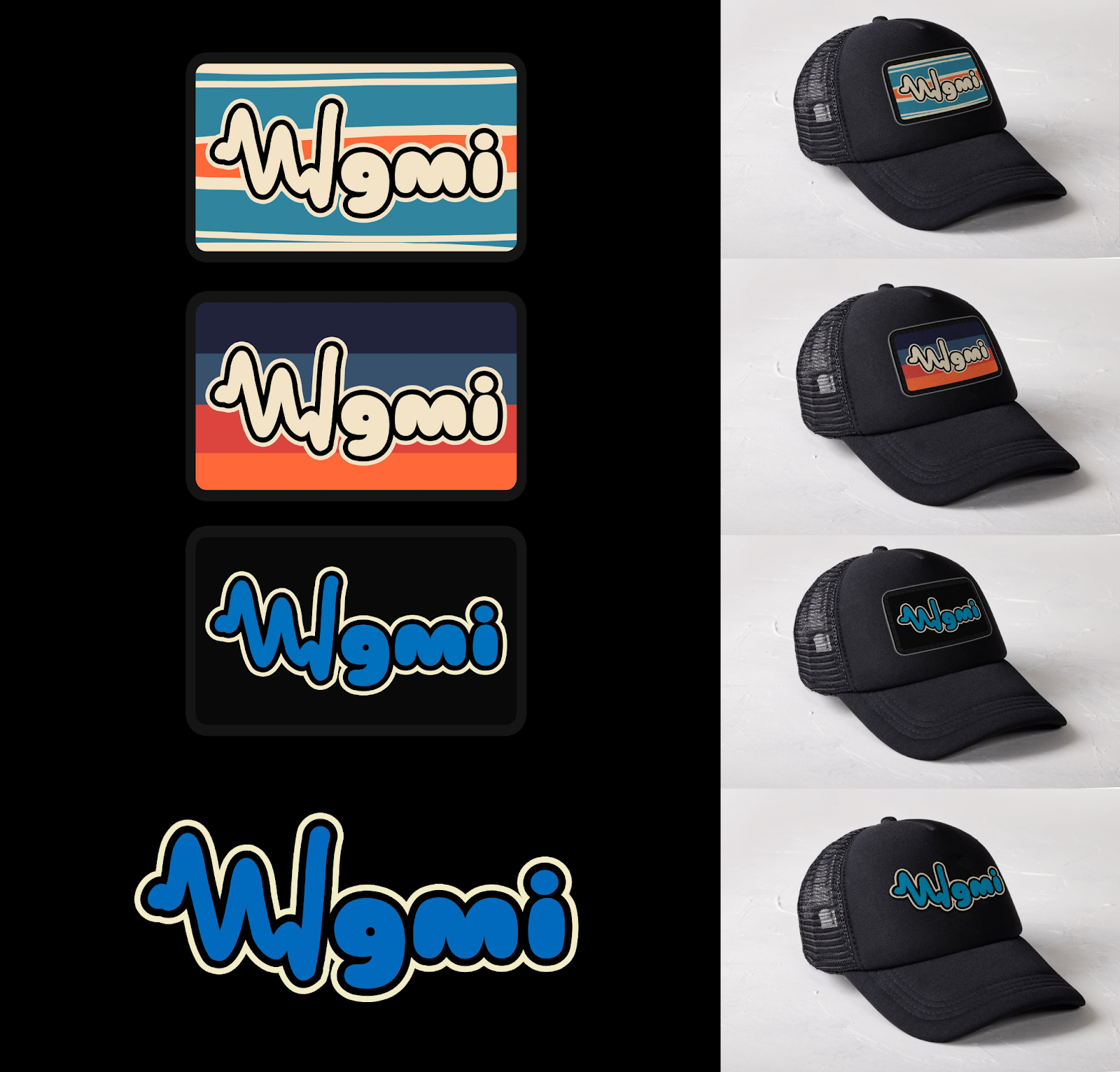
Source: Dude Owl via 99designs by Vista
Key varieties include:
- Snapback cap: The classic baseball cap comes with an adjustable strap at the back. Its flexibility means it should fit everyone.
- Fitted cap: This version of the baseball cap comes in a variety of sizes, with no adjustable strap. The fitted cap is well-shaped and robust – but won’t fit a wide range of head sizes.
- Trucker cap: This popular snapback variation has a mesh back with a foam front panel, making it a strong warm-weather option.
- Five-panel cap: The ‘panel’ refers to the pieces of fabric the hat is made from. Each panel can use different fabrics and colors, making it easily customizable for different design ideas. The five-panel cap has a single front section – great for displaying a brand name or slogan cleanly.
- Fidel cap: This army-style cap gets its name from former Cuban president Fidel Castro, so has associations with military chic. Depending on how you customize it, the Fidel cap can also give an edgier punk vibe.
- Performance: Tight-fitting endurance mesh caps help keep the wearer cool and reduce sweating. This lightweight and breathable style has associations with running, golf and yachting.
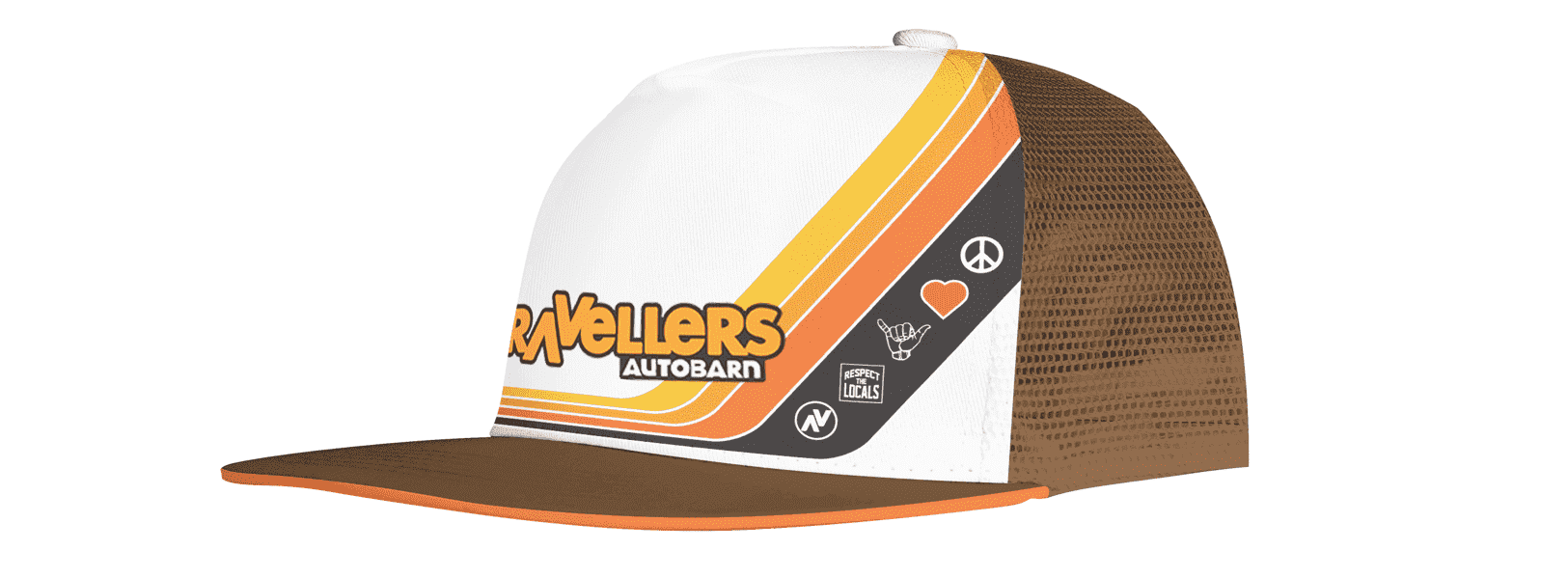
Source: athenabelle via 99designs by Vista
Visors
Visors are the ultimate in lightweight headwear, making them easy to distribute in numbers. They leave the head open to the air while protecting the wearer’s eyes and face from the sun. If you’re handing out merch at a warm-weather event, visors can shield attendees’ eyes, as well as promote your brand.
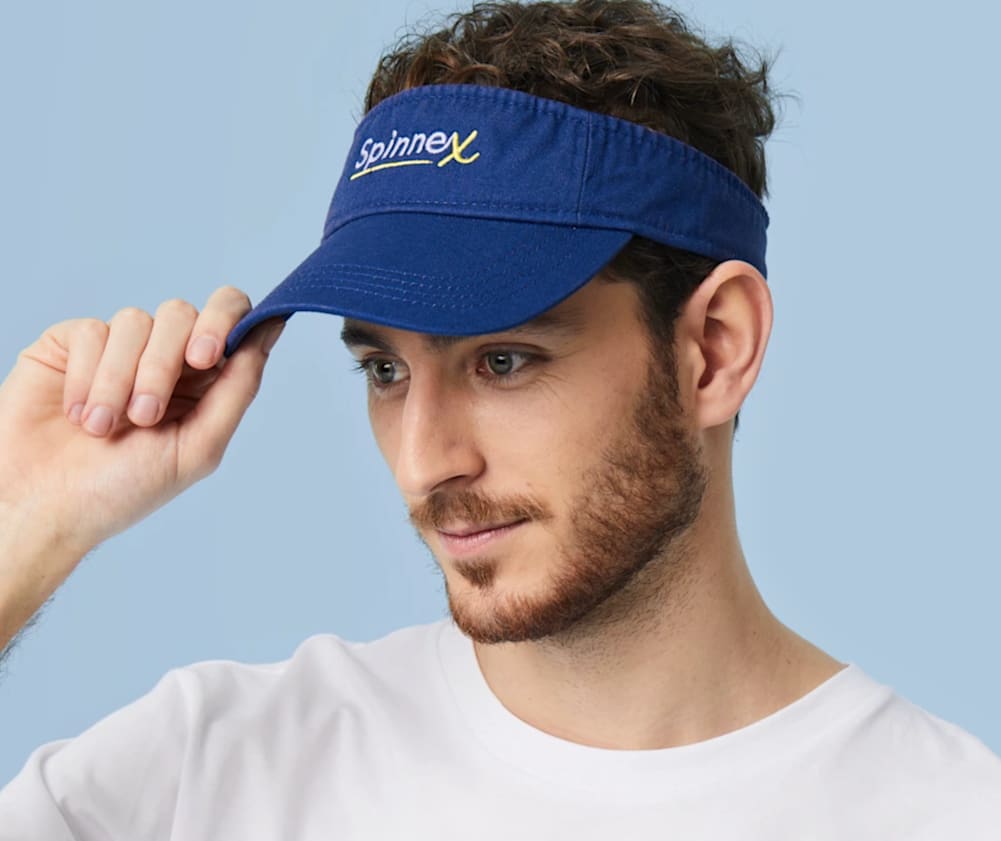
Often used to promote golf and Formula 1, visors are linked to everything from gaming to poker. They’re fun too, making them ideal for casual brands or travel companies. The drawback of this hat style is its space restrictions: the relatively short frontage doesn’t fit much more than a logo or brand name.
Beanies
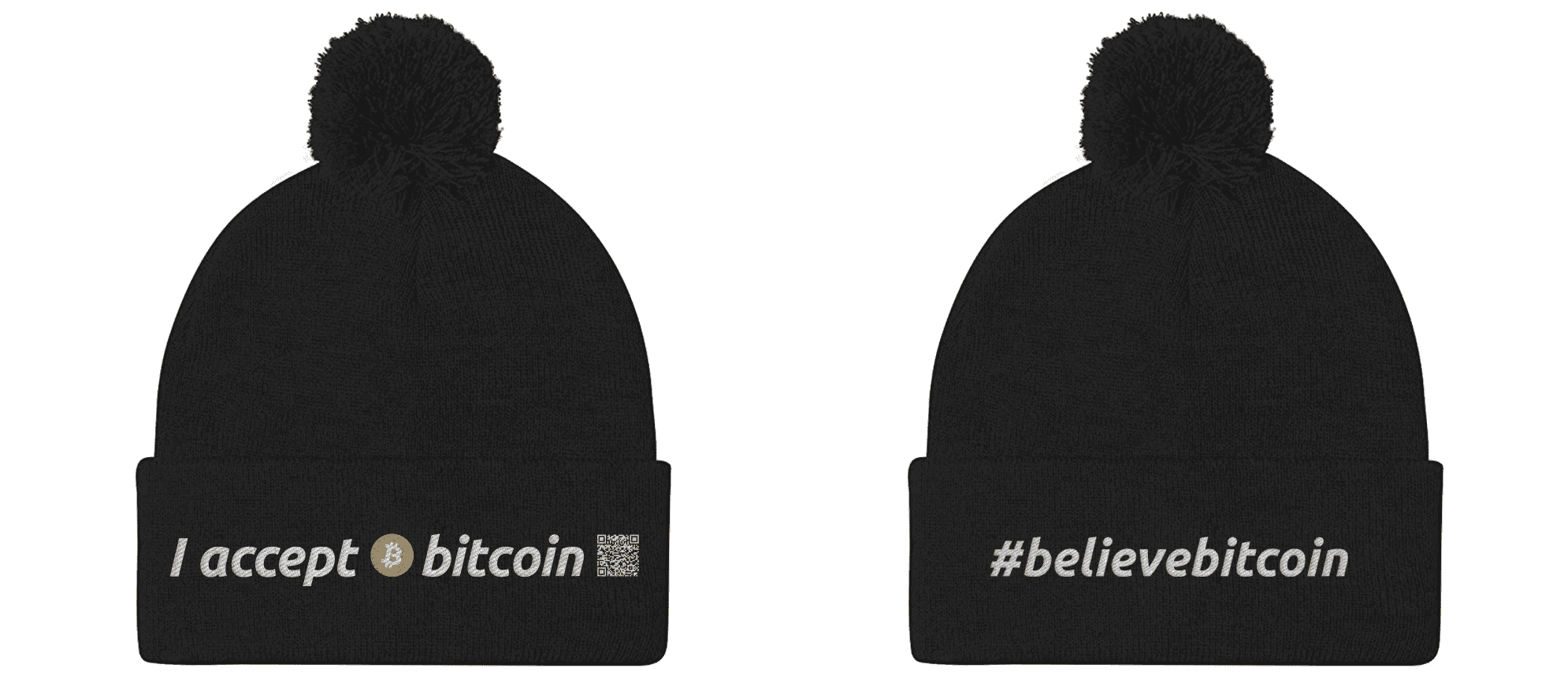
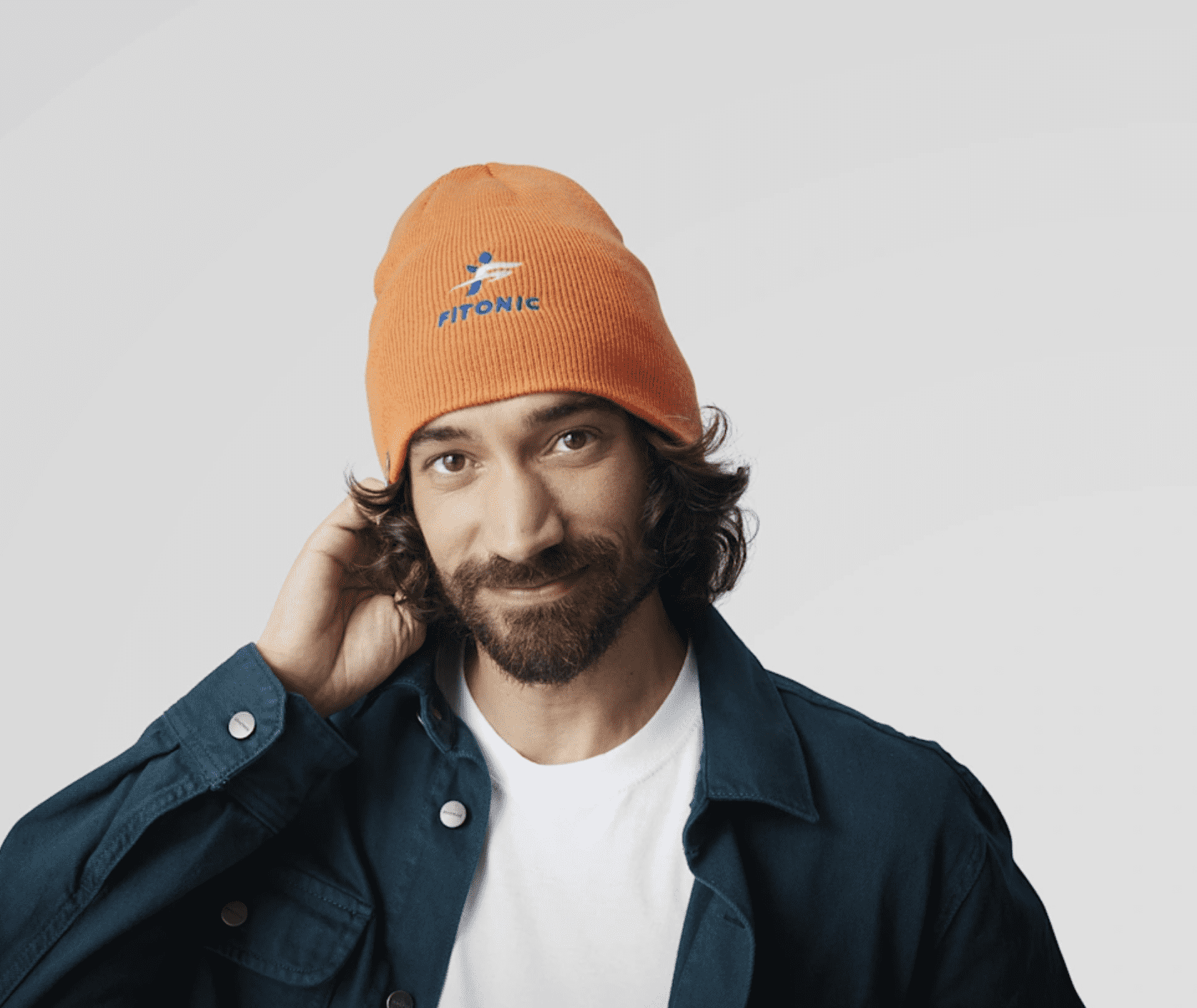
The beanie, a simple wool or acrylic knitted hat, is a good choice for handing out at cold-weather events. It also works for brands connected to winter sports or the outdoors. The beanie style is associated with a dressed-down casual look, bringing comfort to your existing or potential customers’ minds and lives, whatever your business’ offerings.
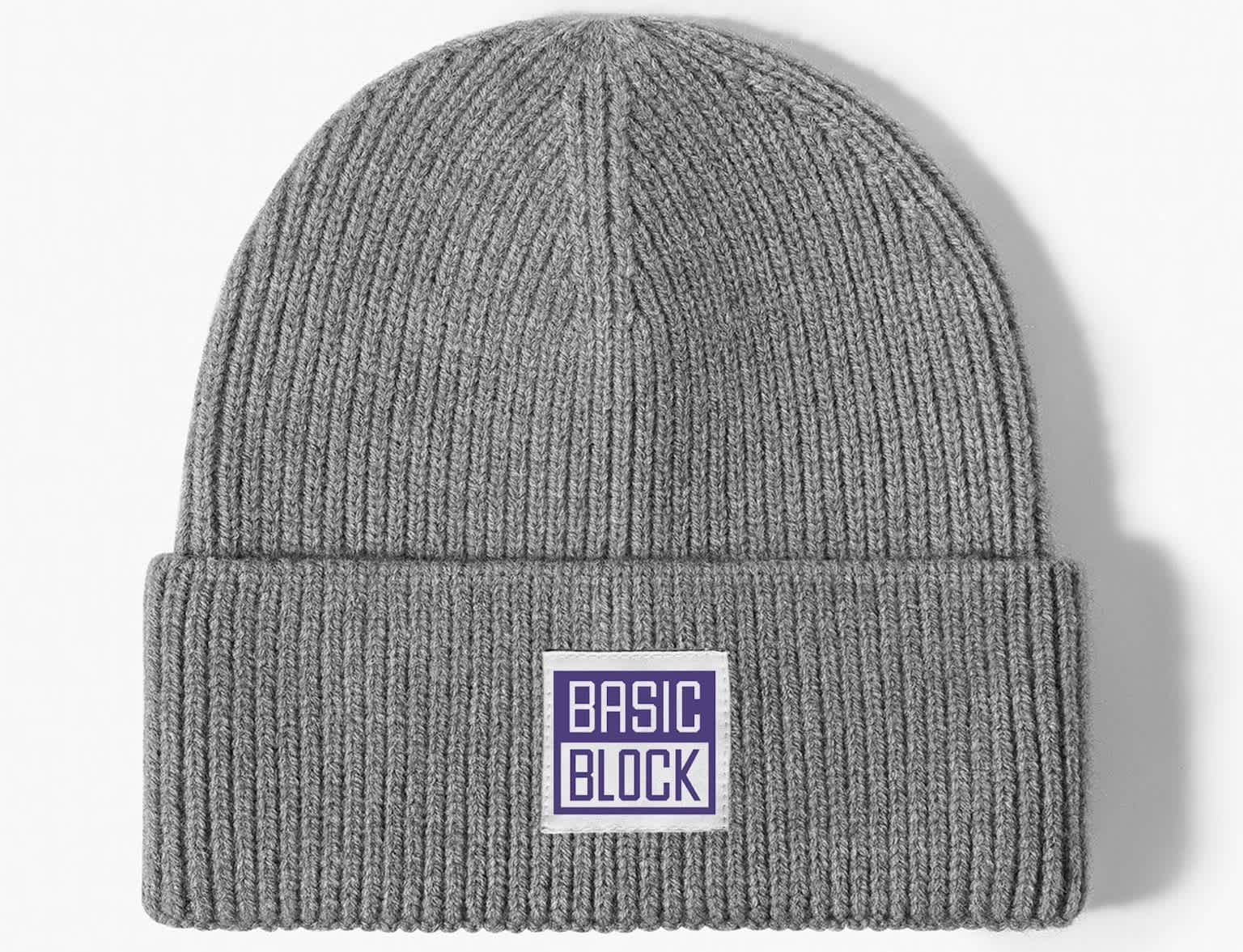
Source: OBΛY via 99designs by Vista
Source: netralicavia 99designs by Vista
There are generally less options with beanies than baseball caps, but you can still personalize them easily:
- Color: Pick one that fits your brand or complements your logo.
- Style: Choose between cuffed (with a folded trim offering more warmth) or uncuffed (with a more contemporary feel).
- Extra features: Add optional pompoms or ear flaps to your beanie.
Bucket hats
Of all brim hats, it’s bucket hats that are most commonly used as branded apparel. But unlike other brim hats, bucket hats are light and can be packed away easily without losing their shape, meaning they’re easy to store and mail out.
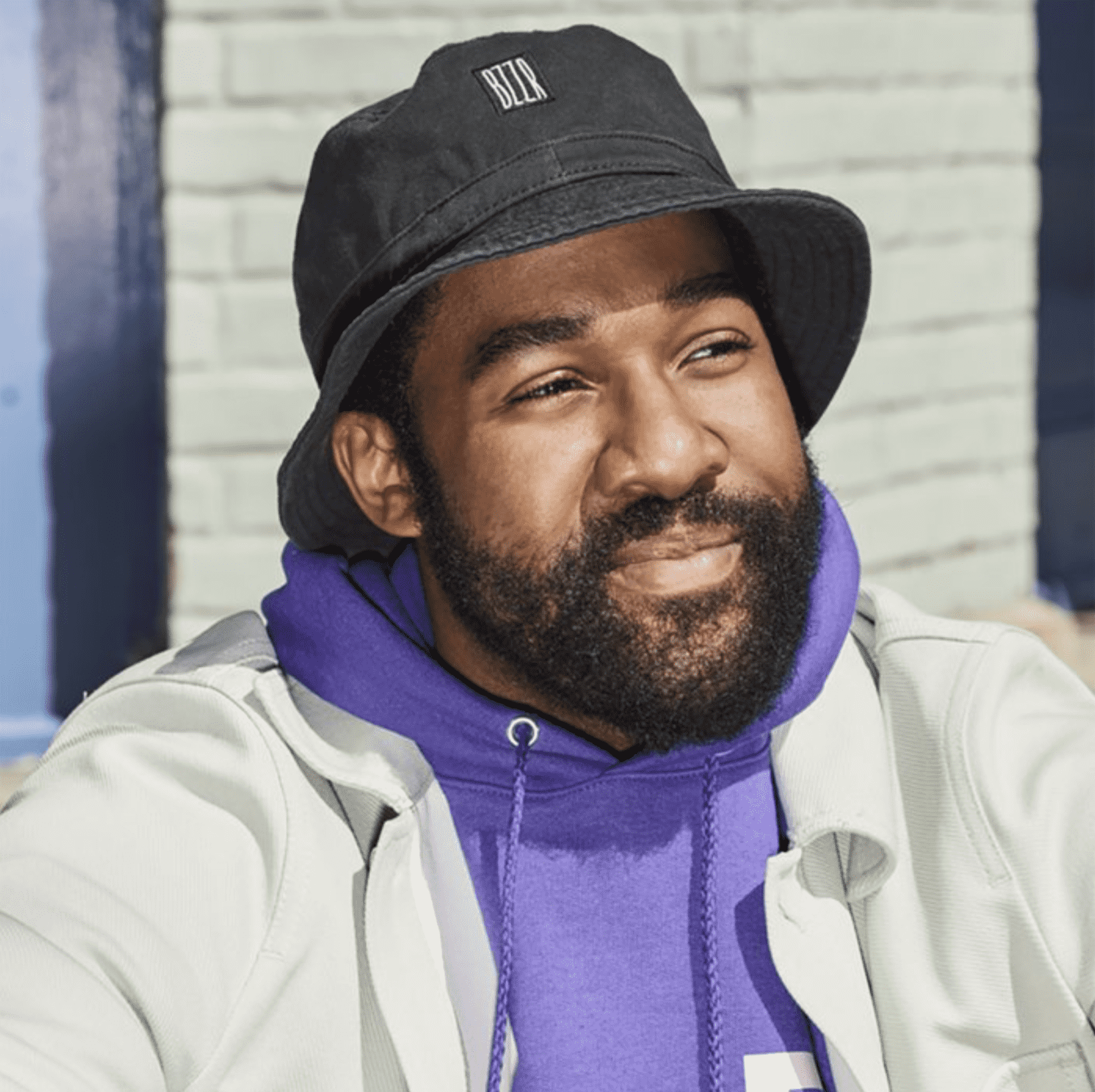
Bucket hats are a little more niche than baseball caps or beanies, which helps them – and by extension your brand – stand out. Originating from Irish fishermen, the style’s associations vary from region to region. In some countries, they gained popularity after the 2022 soccer World Cup. In Tanzania, they are popular among older people, and in the UK they’re associated with the band Oasis and the Manchester music scene.
With the right logo, a broad-brimmed bucket hat can evoke an outdoorsy vibe, while a brighter, narrower design fits the music festival vibe and can be handed out at events with younger brand-appropriate attendees.
Top hat trends for 2026: Earth Tones, Puff Embroidery & Retro Textures
Headwear in 2026 is defined by texture, dimension, and nature-inspired color palettes – three elements that make hats especially effective for merchandising. Earth-toned palettes such as olive, clay, sand, and muted browns are gaining momentum, reflecting the continued influence of outdoor aesthetics and relaxed, lifestyle-driven branding.
At the same time, decoration styles are becoming more tactile. 3D puff embroidery is emerging as a favorite technique for logos and lettering, adding raised dimension that helps designs stand out both in person and in product photography. Retro corduroy caps are also making a comeback, bringing a nostalgic texture that pairs well with modern streetwear and vintage-inspired branding. Together, these trends emphasize natural color, bold texture, and a hint of throwback style—an appealing combination for fresh hat designs in 2026.
How to put your design on a hat
You’ll almost certainly work with a custom print service to bring your hat design ideas to life. Most websites allow you to shop by the style of hat or the type of printing process. If you’re customizing the design, like with your logo, you’ll be given the chance to upload it and see how it works with different colors before making your order. Not every custom print service is the same, so consider:
- The styles and materials they offer
- Personalization options
- Decoration technology
- Pricing per hat
- Delivery charge
- Minimum and maximum order numbers
If you’re learning how to print on hats, save time and avoid expensive re-dos: pick the decoration method first, then tailor your art. Embroidery needs chunkier shapes and bigger text. Printing is friendlier to fine detail, gradients and lots of color.

Embroidered designs
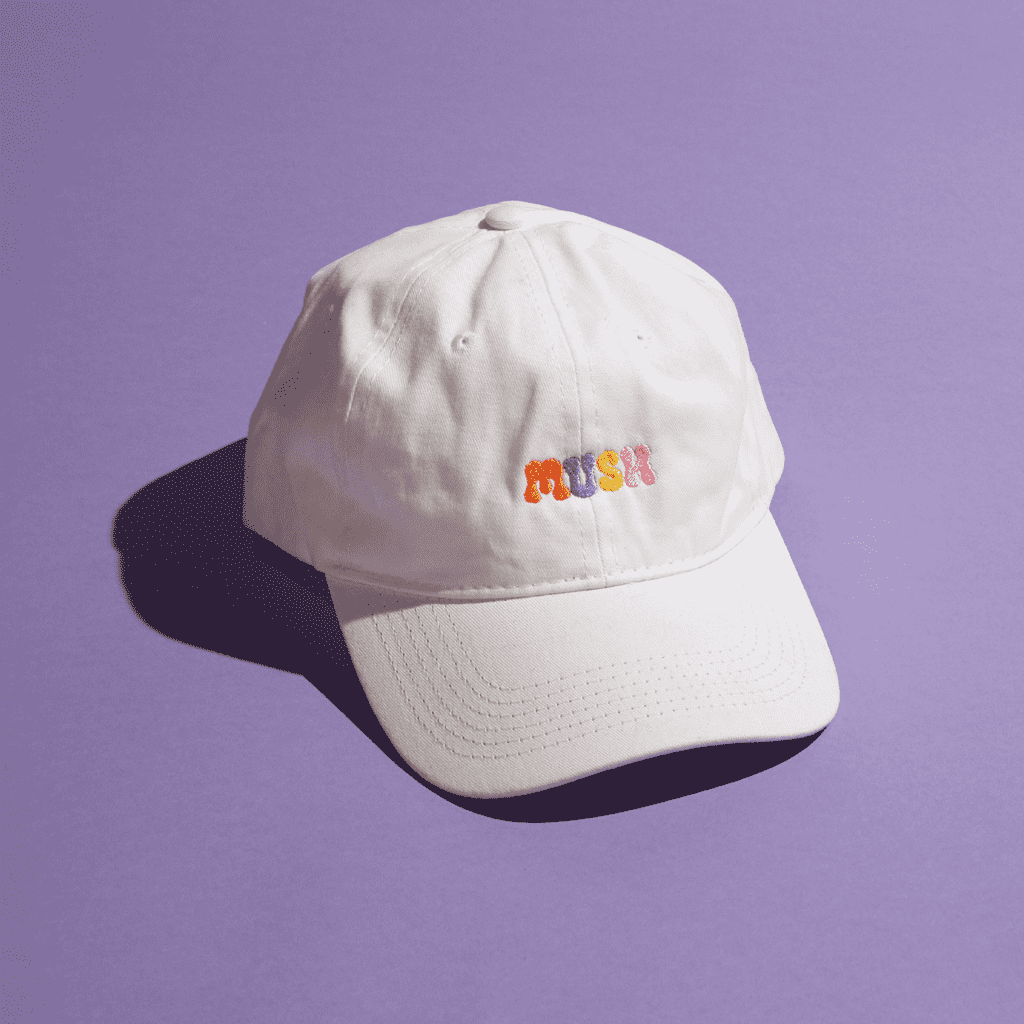
Embroidered designs, machine-drawn with a needle and thread, work best with hats made from cotton and wool, such as beanies, bucket hats and cotton caps. They are:
- Physically stitched into the fabric, giving them a wholly integrated feel
- Durable, even if the fabric is washed many times or crushed
- Useful for creating a formal or professional look, which is why insignia on uniforms are often embroidered
- Able to handle complex designs, though for intricate designs screen-printing is better
Technical hat design specs for embroidery:
- Detail thickness at or above about 0.05″
- Uppercase letters roughly 0.3″ tall
- Lowercase around 0.25″ tall
- Avoid tiny negative spaces that will fill in with thread
Screen printed designs
This method involves ink stamped onto the hat’s fabric. This works best for synthetic materials, although it can be applied to other fabrics. Screen printing is:
- Best for designs with real detail, such as small pieces of text
- Good at capturing fades and gradients
- Generally easier to apply and less expensive than embroidered designs
- Likely to result in a shiny look with a more casual feel
Screen printing is handy when your hat design relies on crisp edges, small icons or lots of color contrast. Especially on trucker fronts, it’s the best method for one-color, big-impact cap design ideas. It is often a great value in bulk.
Heat transfer designs
Heat transfer is a similar method to screen printing although usually more expensive. The design is produced on paper and a heat press melts the ink into the fabric, creating crisp designs and bright colors. This is often the go-to when your hat design includes many colors, gradients or even photos, which is perfect for cool hat design ideas that rely on color transitions.
Why hats are an inspired choice
Hats are one of the best ways to share your brand identity through a logo, slogan or message. They’re robust, inexpensive and easy to customize. And they’re also fun. When people put on a hat – whether it’s a visor at a sunny event or a beanie they received in the mail – they take a little bit of your business with them, passing it on to everyone they meet.
FAQs about hat design
What is the difference between a structured and an unstructured hat?
A structured hat has a stiffer front panel that holds its shape for a crisp, more defined look. An unstructured hat is softer, more relaxed and tends to break in quickly, common in many dad hats.
Can I use a complex logo with many colors for hat embroidery?
Sometimes, but embroidery has real limits: tiny details can blur, gradients don’t translate well to thread and very thin lines can disappear. If your logo is complex or photo-like, printing or a patch is usually the safer route.
Which hat materials are best for outdoor or high-activity employees?
For heat and movement, look for lightweight synthetics like polyester blends with moisture-wicking sweatbands and breathable panels. For sun-heavy jobs, UPF-rated fabrics and longer brims are a plus. For cold conditions, wool or acrylic knits work well.
What are the most popular hat color combinations for 2026?
Earth tones are trending hard: think sand, clay, olive and espresso paired with off-white stitching. Navy with cream is timeless. Black-on-black tonal embroidery is still a go-to for minimalist logo hats.
Do I need to order in bulk, or can I design and buy just one hat?
It depends on the printer and the decoration method. Many vendors offer no-minimum options, but setup fees like embroidery digitizing can make a single unit cost more. If you’re testing hat design ideas, start small, then scale once you know what people actually wear.


